
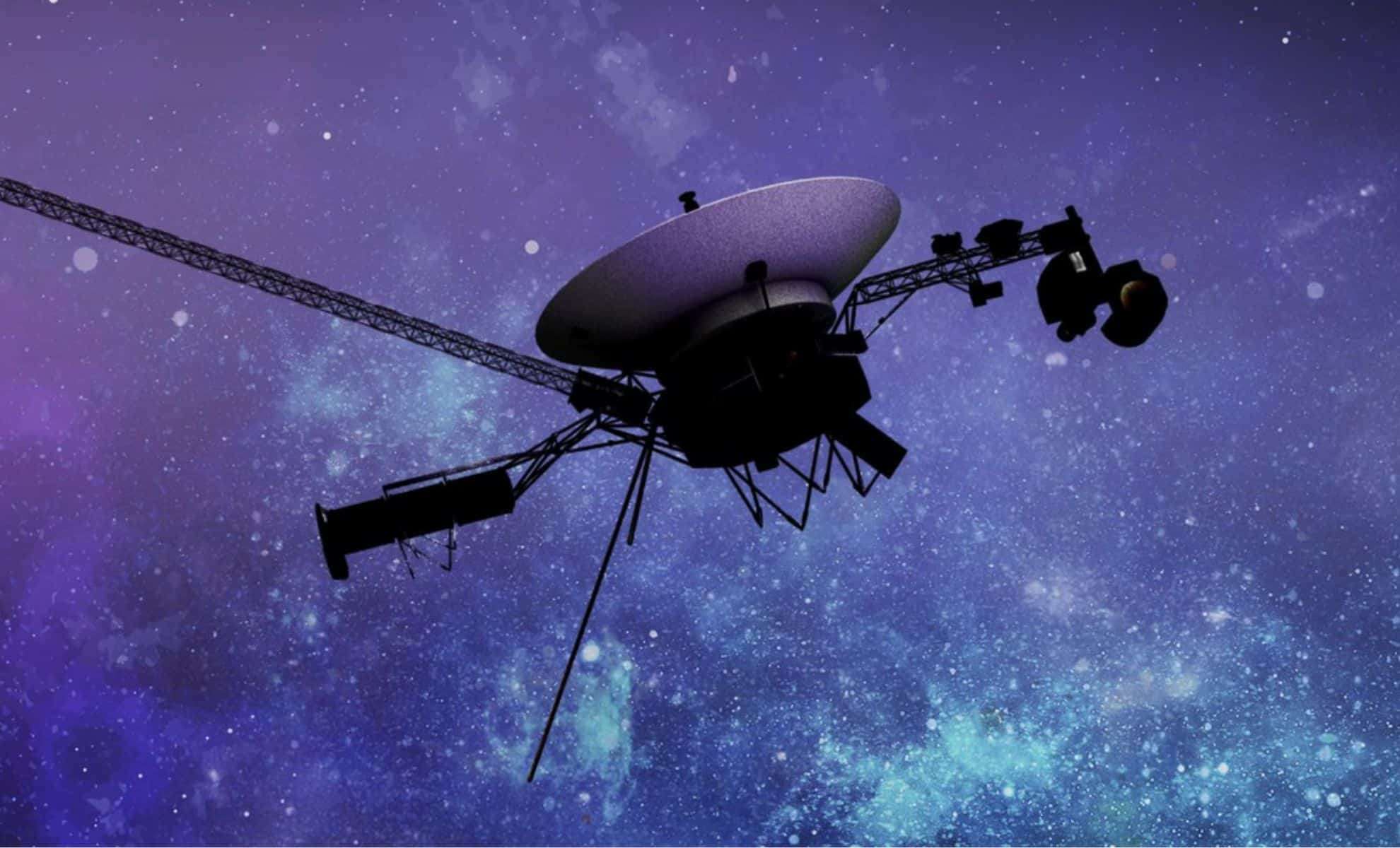
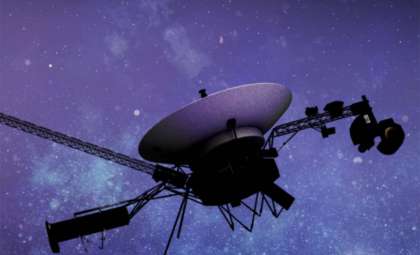
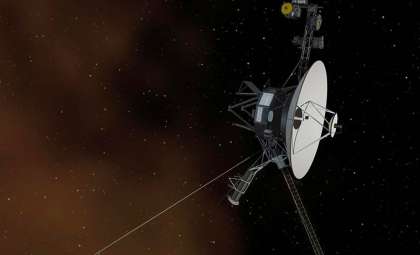
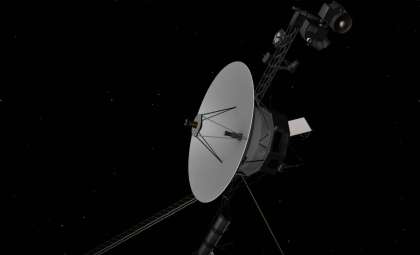
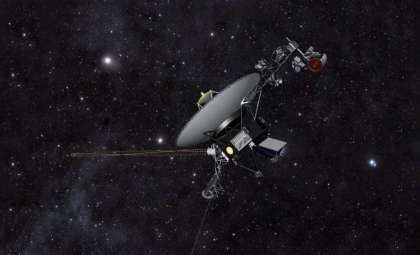
To ensure the longevity of the Voyager spacecraft, NASA has decided to deactivate two scientific instruments onboard, enabling these iconic probes to operate well into the 2030s. As power resources decline on Voyager 1 and Voyager 2, engineers at the Jet Propulsion Laboratory (JPL) are implementing critical energy-saving strategies to conserve the remaining power and maintain their groundbreaking exploration beyond our solar system.
Since their 1977 launch, the Voyager missions have become humanity’s most distant emissaries, with Voyager 1 positioned over 15 billion miles away and Voyager 2 more than 13 billion miles from Earth. The recent decision to reduce energy usage highlights the extraordinary craftsmanship that has allowed these spacecraft to surpass all initial mission expectations.
Deliberate Power Reduction to Sustain Operations
As detailed by JPL, Voyager 1’s cosmic ray subsystem was switched off on February 25, followed by Voyager 2’s low-energy charged particle detector slated for shutdown on March 24. Each probe will now operate three instruments focused on collecting crucial interstellar data.

The spacecraft are powered by radioisotope thermoelectric generators (RTGs) that transform heat from plutonium decay into electricity, but these systems gradually lose about 4 watts annually, necessitating stringent power management to prolong mission life.
Suzanne Dodd, project manager for Voyager at JPL, noted, “Voyagers have been outstanding ambassadors in deep space since launch. With power supplies diminishing, disabling one instrument on each spacecraft now extends their operational lifespan, preventing a premature end to these historic missions.”
Voyager’s Unmatched Contributions Beyond Our Solar Neighborhood
Voyager 1 broke new ground in 2012 by exiting the heliosphere — the Sun’s protective solar wind bubble — making it the first human-made object in interstellar space. Voyager 2 followed suit in 2018, providing scientists with comparative insights into solar system boundaries.
Despite powering down some systems, the Voyagers will keep transmitting valuable information on magnetic fields, plasma waves, and cosmic particles, continuing to enhance understanding of our cosmic environment.
Patrick Koehn, a NASA Headquarters scientist on the Voyager team, praised the mission’s durability: “Originally designed to explore the outer planets, the Voyagers now provide ongoing heliophysics data, a testament to the visionary engineering effort that began nearly half a century ago.”
Projecting Voyager’s Future Lifespan
Recent energy conservation measures are expected to sustain the probes for roughly another ten years, with at least one scientific instrument active on each craft well into the 2030s. Communication delays, exceeding 23 hours for Voyager 1 and 19.5 hours for Voyager 2, complicate controlling the spacecraft across these vast distances.
Linda Spilker, Voyager project scientist at JPL, expressed cautious optimism: “Operating in uncharted territory means every day could be the last, but it might also bring new discoveries about interstellar space. We're taking every possible step to extend the Voyagers’ groundbreaking mission as long as we can.”
- Categories:
- News




0 comments
Sign in to Comment