
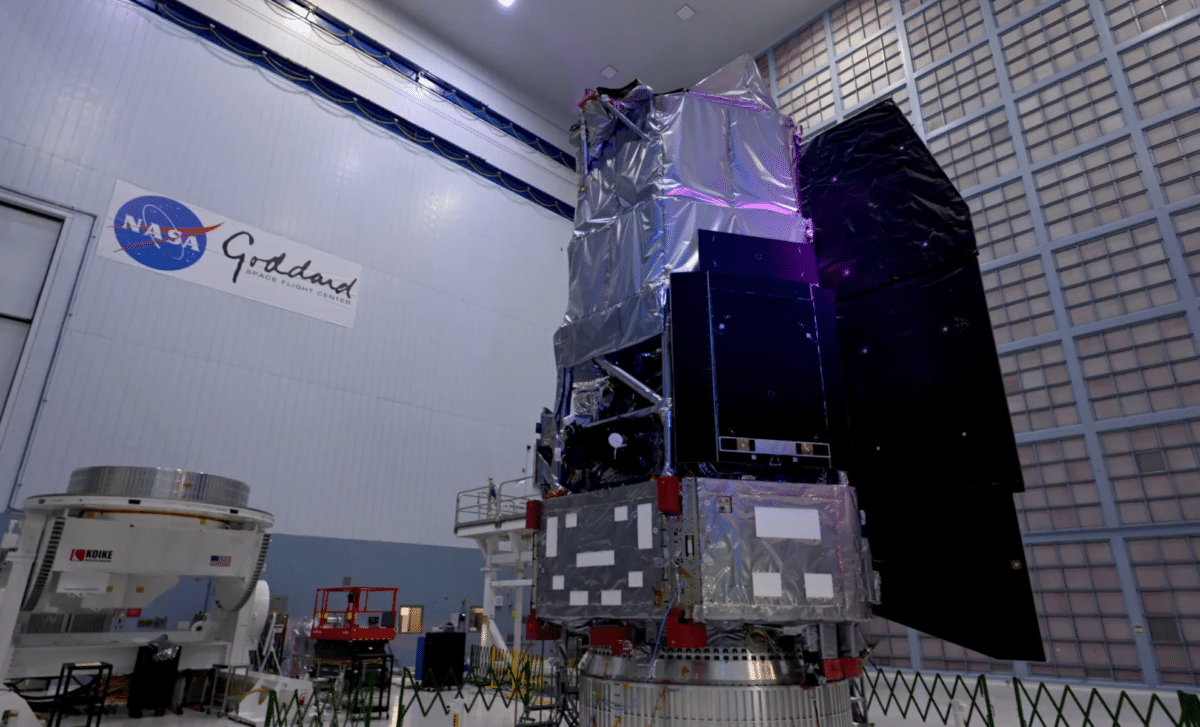
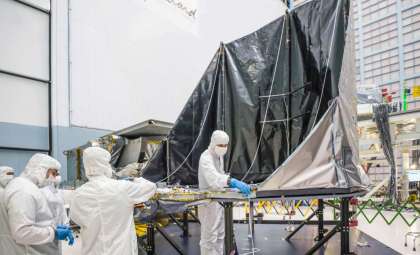
The upcoming Nancy Grace Roman Space Telescope from NASA is ready to transform our cosmic knowledge. Scheduled for launch in early September 2026, this state-of-the-art observatory aims to unlock mysteries surrounding dark matter, dark energy, and exoplanet discovery. Developed through a partnership of government bodies and private companies, the telescope is expected to drive major breakthroughs in space science and exploration.
Fast-Tracked Progress on Roman Space Telescope
NASA has significantly accelerated the timeline for the Nancy Grace Roman Space Telescope, moving the launch up to September 2026 from an earlier planned date. This rapid advancement highlights NASA’s commitment to expanding the frontiers of space research. During a press event on April 21, 2026, at Goddard Space Flight Center, NASA Administrator Jared Isaacman celebrated the swift development progress, emphasizing the power of collaboration among public agencies, experts, and private sector partners. "The fast-tracked Roman mission exemplifies what can be accomplished when diverse expertise and innovation unite to tackle some of the most challenging and impactful missions," Isaacman remarked.
The Roman Telescope initiative is the result of a joint effort involving government agencies, leading research institutions, and industry players such as SpaceX. This mission promises to explore vast and previously uncharted regions of space, pushing the boundaries of what we know. NASA’s model of cooperative investment sets a new standard in driving forward scientific discovery through combined resources and knowledge.

'Roman will investigate dark matter, dark energy and the structure of the universe itself,' NASA Administrator Jared Isaacman said, unveiling the Nancy Grace Roman Space Telescope eight months ahead of schedule pic.twitter.com/ufSe0lndTX
— Reuters (@Reuters) April 22, 2026
Transforming Astronomy with Advanced Observational Tools
The Roman Space Telescope represents a significant advancement beyond conventional observatories. Featuring a vast field of view paired with highly sensitive infrared instruments, the telescope will conduct detailed surveys of the cosmos. Its principal mission is to shed light on dark energy and dark matter, which together constitute nearly 95% of the universe's total mass-energy but remain mostly undetectable by current observational methods.
In addition to its primary focus, Roman’s sophisticated technology will enable the study of diverse cosmic events. From examining galaxy formation to unveiling new exoplanets, the telescope’s extensive capabilities are expected to reveal phenomena never before seen. Its findings will contribute critical knowledge about the universe's composition and the potential habitability of distant worlds.
An Unparalleled Cosmic Data Treasury
A remarkable outcome of the Roman mission will be the unprecedented volume of information collected. Over its initial five-year operation, the telescope is expected to produce an extraordinary 20,000 terabytes of data. This enormous archive will be one of the most comprehensive astronomical datasets ever amassed, allowing researchers to delve into cosmic phenomena with unparalleled detail.
Roman’s rich data trove will aid astronomers in studying upwards of 100,000 exoplanets, hundreds of millions of galaxies, and countless stars. This extensive collection promises to unlock new perspectives on the universe’s history, the life cycles of stars, and the cosmic distribution of matter. As scientists analyze this bounty of information, it is anticipated that transformative discoveries will reshape our understanding of space.
- Categories:
- Nasa








0 comments
Sign in to Comment