
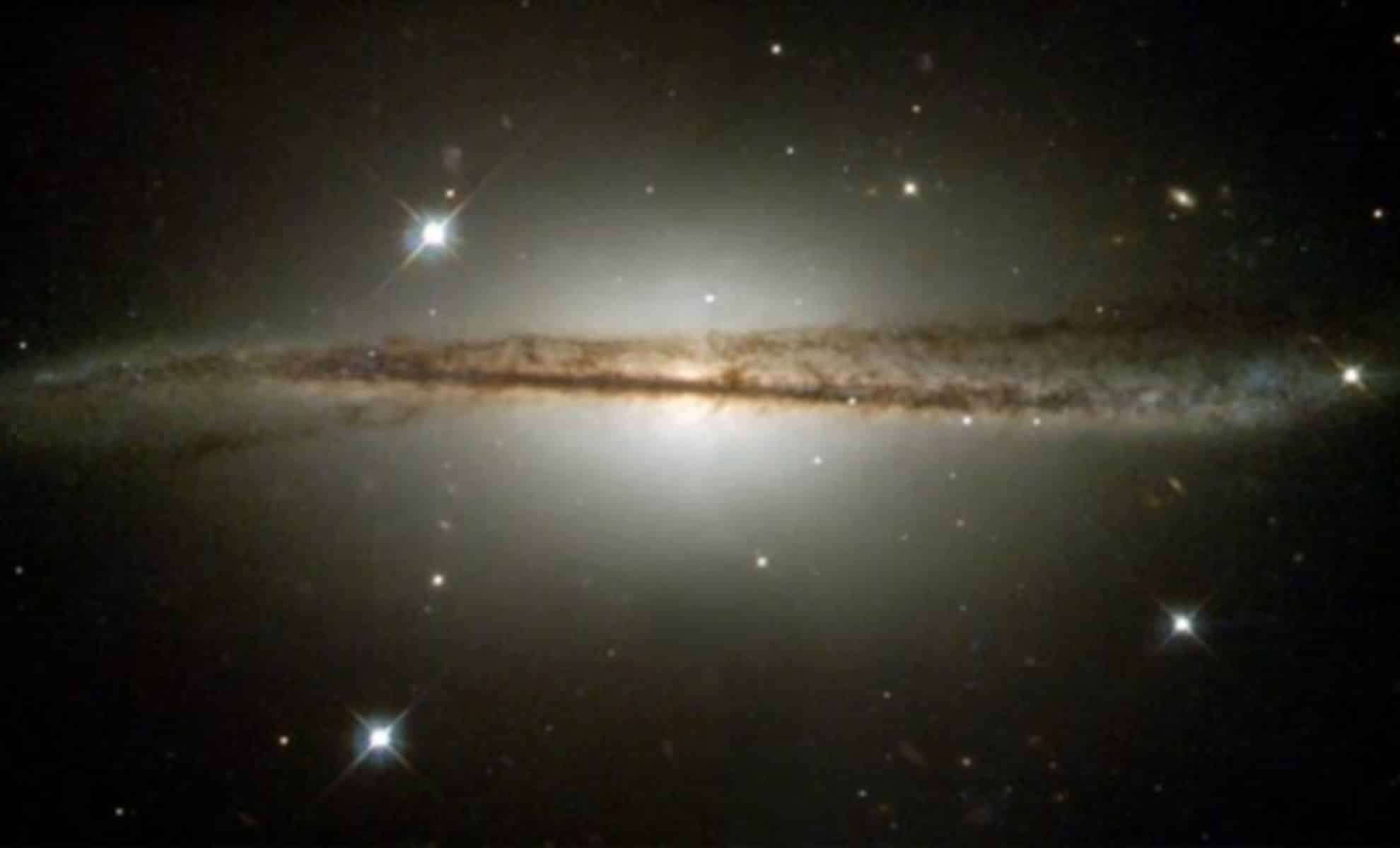
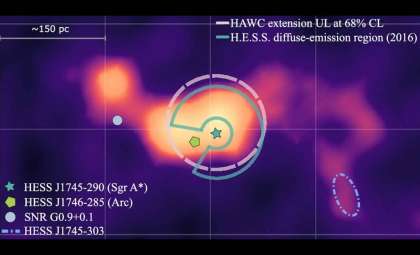
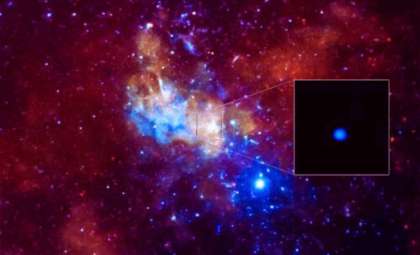
NASA's recent observations at the center of our galaxy have uncovered a puzzling dark halo, challenging current astronomical theories. This enigmatic structure might be tied to the elusive nature of dark matter, one of the universe's most enduring mysteries.
Advancing the Search for Dark Matter
Dark matter remains invisible to direct detection because it neither emits nor interacts with light, revealing itself only through gravitational influence. It is estimated to constitute around 85% of all matter in the cosmos. Despite its prominence, its true nature has defied identification. A new study presents a promising angle.
The investigation, spearheaded by Dr. Shyam Balaji of King’s College London, hypothesizes that the observed dark halo is associated with a lighter class of dark matter. This variant could involve particles with substantially less mass than those conventionally considered. Dr. Balaji notes that this lighter dark matter might connect to the unusual hydrogen gas clouds at the galactic core that have long intrigued astronomers.

Intriguing Ionized Hydrogen Clouds at the Galactic Core
The Milky Way's nucleus, specifically its Central Molecular Zone (CMZ), is known for its bizarre astrophysical phenomena. Among these are massive clouds of positively charged hydrogen, which is unexpected since hydrogen typically exists in a neutral state. These clouds appear to be ionized, prompting questions about the source of the energy responsible for removing electrons from hydrogen atoms.
Data from this region signals a consistent energy source that leads to hydrogen ionization. Early candidates for this energy included cosmic rays and WIMPs (Weakly Interacting Massive Particles).
However, the observed energy profiles in the CMZ suggest a more nuanced mechanism. Cosmic rays are far too energetic, and WIMPs too heavy, to account for the ionization. This points towards a lighter form of dark matter as the likely culprit.
Dark Matter Particle Interactions and Their Effects
An emerging hypothesis posits that dark matter particles may be colliding and annihilating one another. This annihilation process could produce charged particles capable of ionizing hydrogen within the CMZ. Such interactions might also clarify the origin of the enigmatic 511-keV emission line detected in X-ray surveys of the galactic center, which some researchers attribute to low-mass dark matter particles engaging in these annihilations.
Dr. Balaji highlighted the significance of this novel perspective: “The quest to identify dark matter is science’s biggest manhunt, yet most experiments take place on Earth. Observing gas ionization directly at the CMZ allows us to examine conditions right at the source.” If validated, these results could shed light on dark matter’s properties and deepen our understanding of the galaxy’s composition.
This detection of a dark halo at the Milky Way’s center opens exciting new pathways for exploring the universe’s fundamental forces and the processes behind galaxy formation.
- Categories:
- News





0 comments
Sign in to Comment