
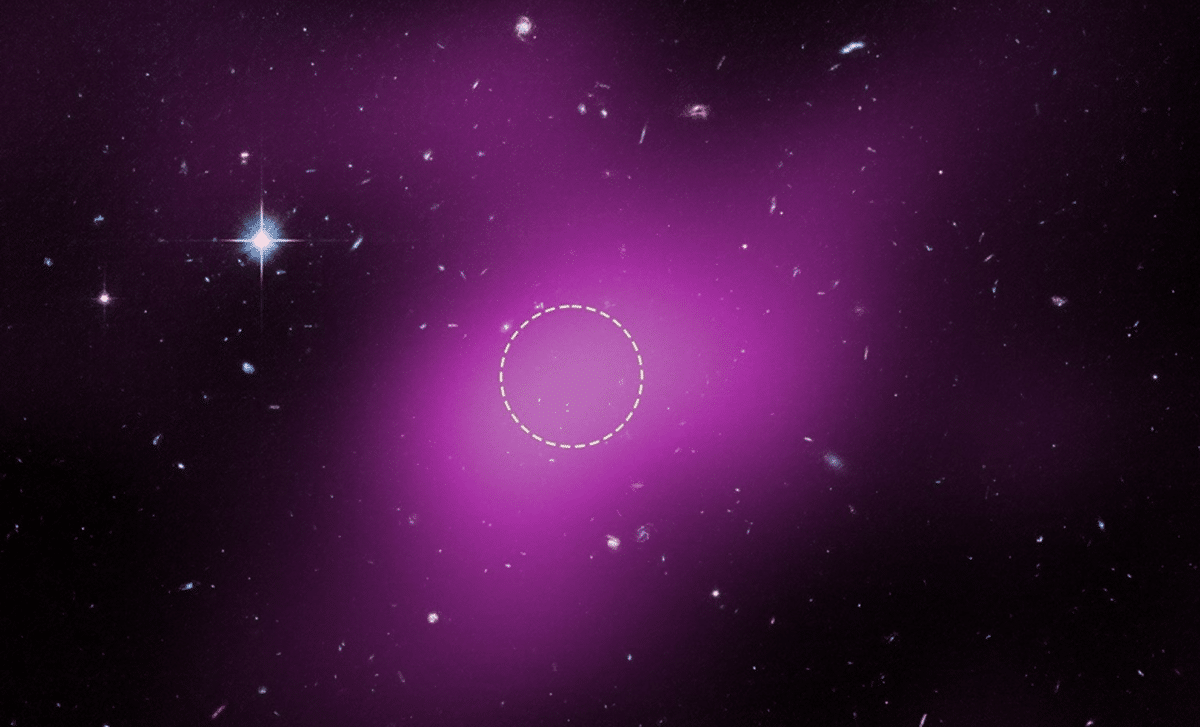
Amidst the vast emptiness of intergalactic voids, some cosmic formations remain concealed—not because of distance, but because they emit no detectable light. These are not typical galaxies or star clusters but elusive celestial shadows. One such entity, recently verified through NASA’s Hubble Space Telescope, has astonished scientists: a starless, dark matter-dominated nebula that has apparently never ignited star formation.
An Unprecedented Discovery: A Star-Free Relic from the Dawn of Time
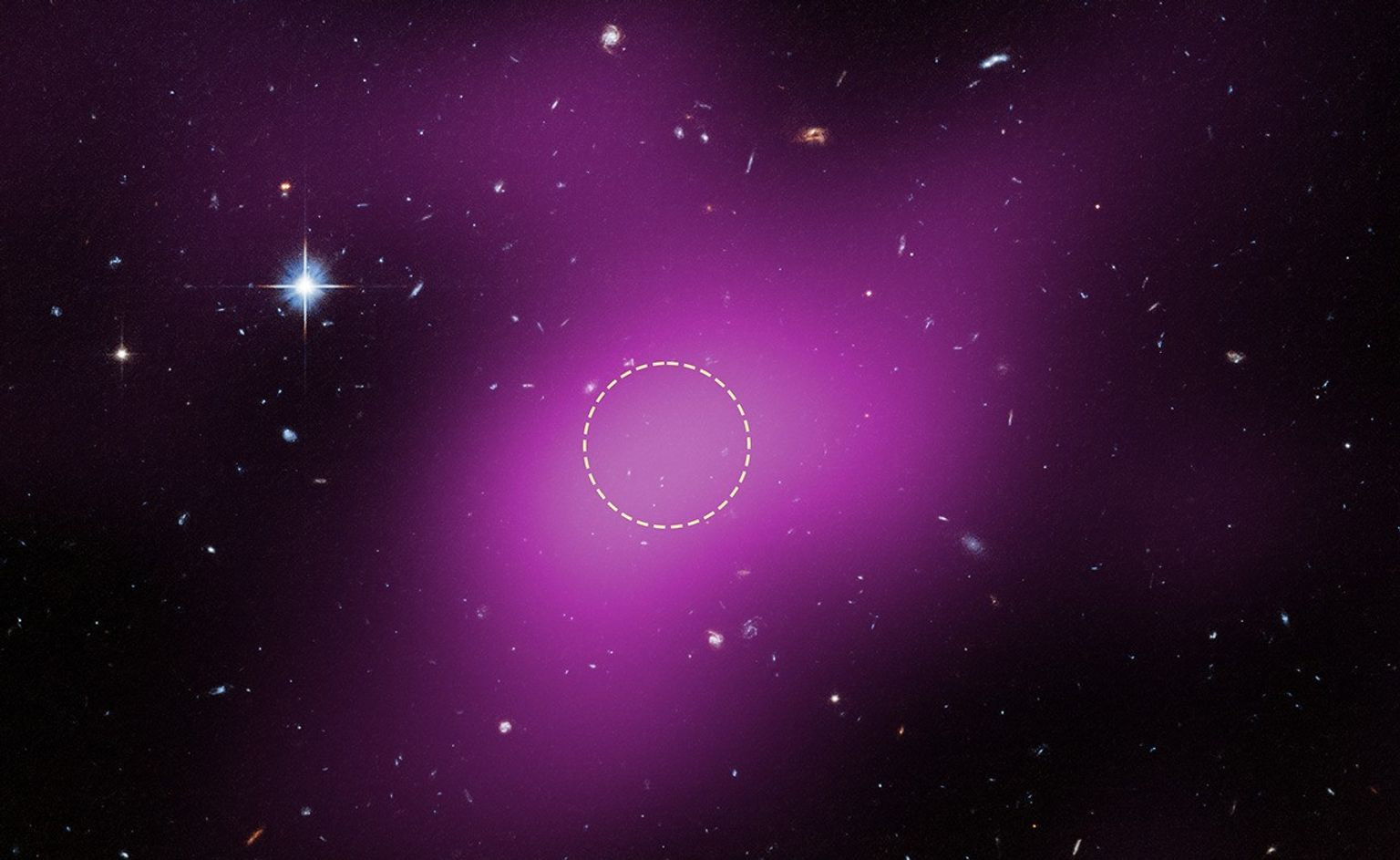
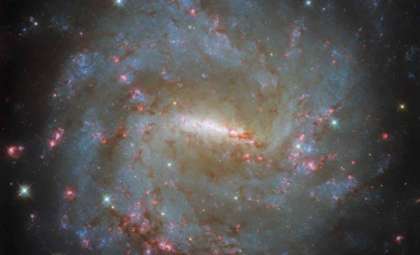
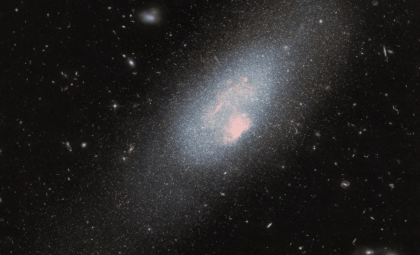
Known as Cloud-9, this object falls under the classification of a Reionization-Limited H I Cloud (RELHIC)—a compact, spheroidal concentration mainly of neutral hydrogen gas completely lacking stars. Situated about 14 million light-years from Earth near the spiral galaxy Messier 94 (M94), this dark, hydrogen-rich cloud exemplifies an extremely rare case of a “failed galaxy.” Unlike luminous star systems, Cloud-9 remains cloaked in darkness, evading detection by ground-based telescopes.
Definitive observations from Hubble’s Advanced Camera for Surveys revealed no stellar presence within the radio signal-defined confines of this gas cloud.

“This is a tale of a failed galaxy,” said Alejandro Benitez-Llambay, principal investigator of the program from Milano-Bicocca University in Milan. “In science, we usually learn more from the failures than from the successes. In this case, seeing no stars is what proves the theory right. It tells us that we have found in the local universe a primordial building block of a galaxy that hasn’t formed.”
The void of stars serves not as emptiness but as evidence that Cloud-9 may represent an early universe galactic fragment that never fully developed.
Illuminating the Role of Dark Matter via Cloud-9
The importance of Cloud-9 lies not just in its absence of stars, but in its considerable reservoir of dark matter. Scientists assess the dark matter content to be roughly five billion times the mass of the Sun, inferred from the hydrogen gas's pressure equilibrium. This aligns with predictions of starless halos, dark matter and gas conglomerates that never ignited star formation.
“This cloud is a window into the dark universe,” said Andrew Fox of AURA/STScI for the European Space Agency. “We know from theory that most of the mass in the universe is expected to be dark matter, but it’s difficult to detect this dark material because it doesn’t emit light. Cloud-9 gives us a rare look at a dark-matter-dominated cloud.”
Published in The Astrophysical Journal Letters, this research marks the first confirmed identification of a RELHIC within our observable cosmos.
This finding bolsters longstanding cosmological models proposing that many small dark matter halos emerged during the universe’s infancy, with only a fraction amassing enough gas and mass to spawn stars and evolve into full galaxies. Cloud-9 stands as tangible proof that some primordial structures halted their evolutionary course.
Opening New Paths in Galaxy Formation Studies
Beyond its individual significance, Cloud-9 offers critical clues to galaxy formation. Its isolation, symmetrical shape, and compact nature distinguish it from typical hydrogen clouds seen near the Milky Way, which are generally larger and morphologically irregular. Researchers suspect many similar starless objects may exist throughout the universe, unseen by current surveys.
“Among our galactic neighbors, there might be a few abandoned houses out there,” said Rachael Beaton of STScI, evoking the poetic image of primordial structures left behind during galaxy formation. These “abandoned” clouds could hold vital clues to how galaxies evolve and what factors determine whether a cloud becomes a galaxy or remains in a dark limbo.
Detecting these faint entities remains a significant challenge due to the limitations of ground-based telescopes, which struggle with sensitivity and interference from brighter background galaxies. It was only through Hubble’s exceptional resolution that astronomers conclusively determined Cloud-9’s starless nature, certifying it as a failed galaxy.
- Categories:
- News





0 comments
Sign in to Comment