
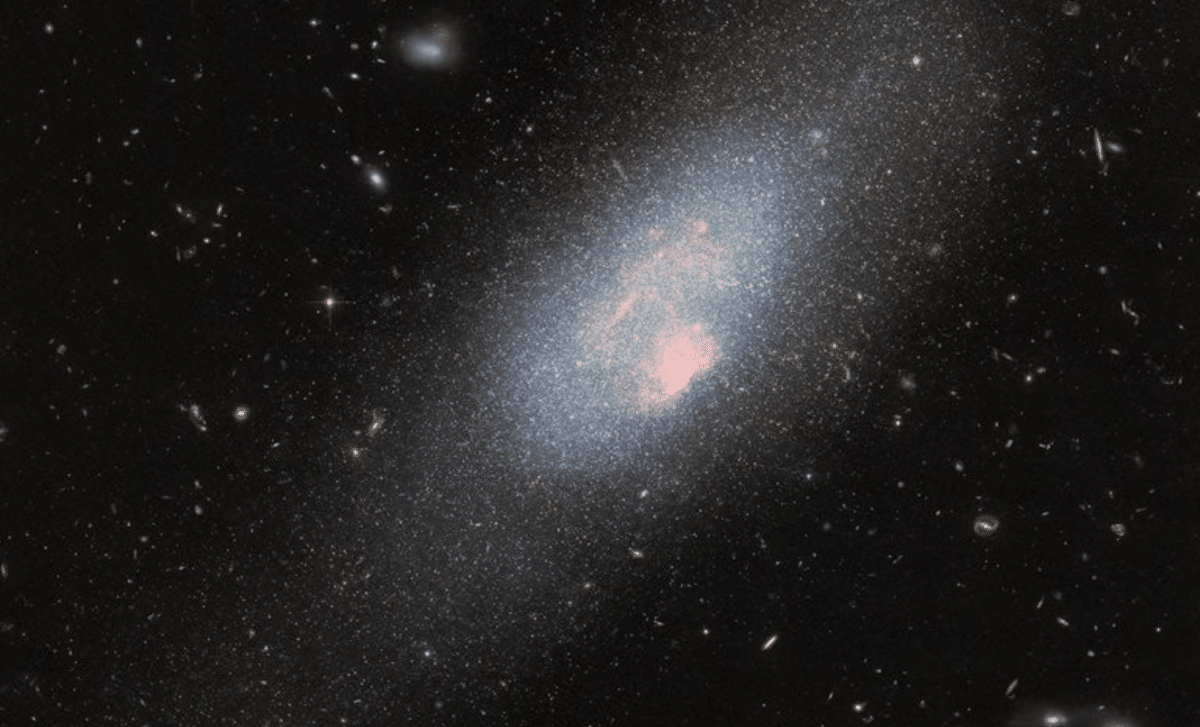
A striking new image from the Hubble Space Telescope unveils captivating insights into the uncommon galaxy Markarian 178 (Mrk 178), situated 13 million light-years away within the Ursa Major constellation. This investigation, spotlighted by NASA, delves into the impact of massive stars—particularly the rare and energetic Wolf–Rayet stars—that sculpt the galaxy’s distinctive look. Centered around vigorous starbirth, the secrets of this galaxy are beginning to emerge.
Markarian 178’s Vibrant Stellar Landscape
The dwarf galaxy known as Markarian 178 (Mrk 178) shines as a blue dwarf, illuminated by its youthful, hot stars. Compared to larger galaxies like our Milky Way, Mrk 178 is much smaller, spanning only a fraction of its size. Hubble’s detailed imagery highlights the galaxy’s unusual stellar setting. Beyond its luminous blue core, the telescope revealed notable structures at its periphery, home to rare Wolf–Rayet stars. These powerful stars significantly influence both the galaxy’s coloration and formation with their immense energy output.
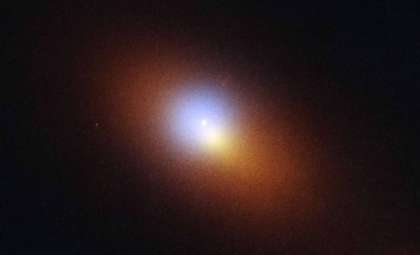
The galaxy’s most noticeable characteristic is the sharp difference between its intensely blue star cluster in the center and the reddish glow surrounding its margins. This red tint originates from the presence of Wolf–Rayet stars, which are massive stars in the final phases of their lives. They expel their outer layers through fierce stellar winds, a process that imparts the reddish hue to Mrk 178—contrasting vividly with the surrounding young blue stars.

Wolf–Rayet Stars and Their Influence on Galactic Development
The identification of Wolf–Rayet stars in Mrk 178 has intensified interest in their contributions to galaxy evolution. These extremely hot, massive stars are thought to be nearing the end of their life cycles before collapsing into black holes or neutron stars. Their powerful stellar winds and distinctive emission lines clearly mark their presence in the galaxy’s light spectrum.
As noted by NASA, Wolf–Rayet stars within Mrk 178 play a crucial role in shaping the galaxy’s chemical makeup and structure. By releasing heavy elements such as oxygen and nitrogen into surrounding space, they enrich the galactic environment, fostering the birth of future stars and planetary systems. Discovering these stars underscores a vital stage in galaxy evolution, especially in star-forming dwarf galaxies like Mrk 178. Despite their brief lifespans, massive stars are key drivers of change in their host galaxies.
Origins of the Starburst Activity in Mrk 178
A central enigma surrounding Mrk 178 is the trigger behind its recent intense star formation. Although relatively isolated with no nearby large galaxies, Mrk 178 has undergone a remarkable surge in star-producing activity. This burst is thought to result from external influences such as a collision with a cloud of gas or disturbances from the intergalactic medium as the galaxy traverses space.
This revelation challenges the idea that galaxy collisions are the main drivers of star formation. Instead, astronomers are exploring other causes for the sudden starburst in this otherwise tranquil galaxy. Factors like interactions with gas clouds or cosmic radiation may have created the conditions necessary to spark new stellar generations. Ongoing observations aim to pinpoint the precise mechanism behind this star-formation event.
- Categories:
- News


0 comments
Sign in to Comment