
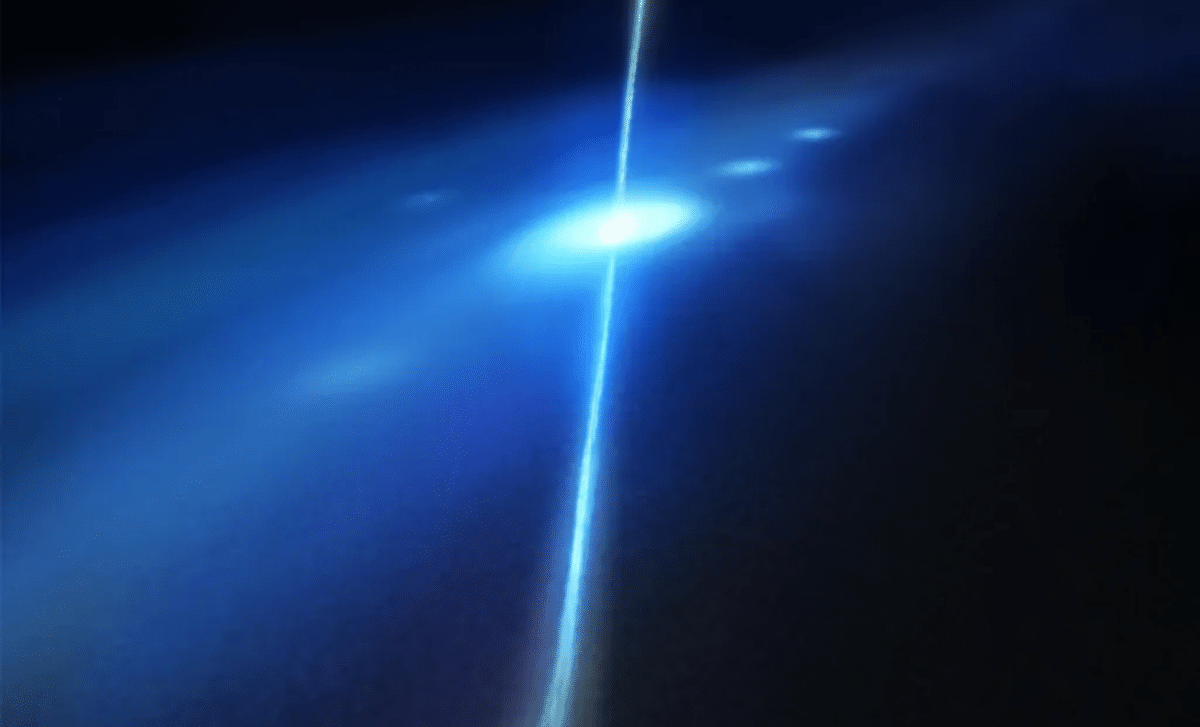
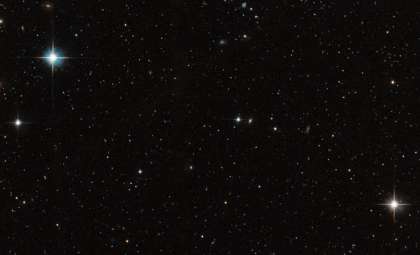
Scientists have identified a neutron star merger occurring in an unusually small and dim galaxy, located about 4.7 billion light-years away. This event took place within an enormous gas filament extending roughly 600,000 light-years across space. Led by Simone Dichiara from Penn State University, this discovery overturns previous assumptions regarding where such intense cosmic phenomena might arise.
An Unexpected Site for a Stellar Cataclysm
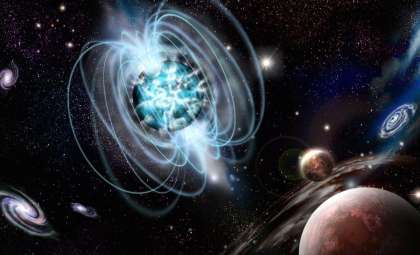
Neutron stars, dense remnants from supernova explosions, have fascinated astronomers due to their extreme nature. These stellar corpses measure just a few dozen miles across but can possess more mass than our Sun. Previously, neutron star mergers were mainly detected in medium to large galaxies. However, this recent observation in a faint dwarf galaxy far from typical galactic environments challenges that understanding.
“Finding a neutron star collision where we did is game changing,” said Simone Dichiara, the lead scientist of the study. “It may be the key to unlocking not one, but two important questions in astrophysics.”
Add Cosmo Herald as a Preferred Source

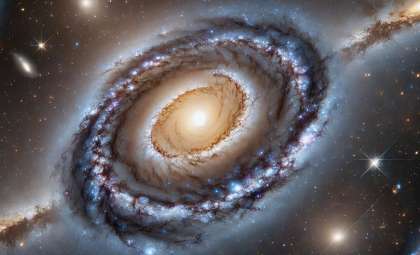
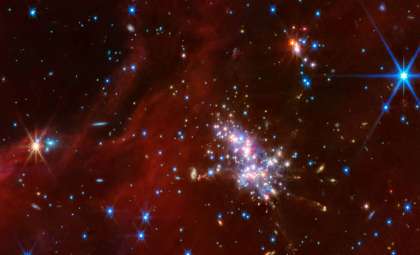
The detected smashup occurred inside a small, dim galaxy embedded within an expansive gas stream—resulting from a cosmic collision of galaxies many millions of years ago. This gaseous structure is nearly twice the diameter of the Milky Way and harboring the birthplace of this stellar explosion.
This revelation is important not only due to its surprising location but also because it potentially resolves two major astronomical puzzles. One pertains to gamma-ray bursts (GRBs), which are powerful high-energy events often linked to neutron star mergers. Some GRBs have enigmatic origins, appearing with no apparent host galaxy or in remote galaxy outskirts. This finding suggests that such bursts may originate from faint dwarf galaxies too dim to be noticed by optical telescopes. The related research is detailed in a forthcoming The Astrophysical Journal Letters article and is currently available via the arXiv preprint server.
Illuminating the Origins of Mysterious Gamma-Ray Bursts
Gamma-ray bursts have puzzled astronomers since their discovery. These sudden, intense emissions of gamma rays are thought to arise from merging neutron stars or collapsing massive stars. In mere seconds, GRBs can outshine the energy output of the Sun over its entire lifespan. Yet, many GRBs lack clear host galaxies, or are found far from galactic centers. The identification of GRB 230906A within a tiny, faint galaxy offers a potential answer to this enigma.
“We found a collision within a collision,” said Eleonora Troja, co-author of the study from the University of Rome. “The galaxy collision triggered a wave of star formation that, over hundreds of millions of years, led to the birth and eventual collision of these neutron stars.”
The ancient merger of galaxies ignited waves of star formation, eventually giving rise to neutron stars that collided to produce a gamma-ray burst detected by NASA’s Fermi Gamma-ray Space Telescope.
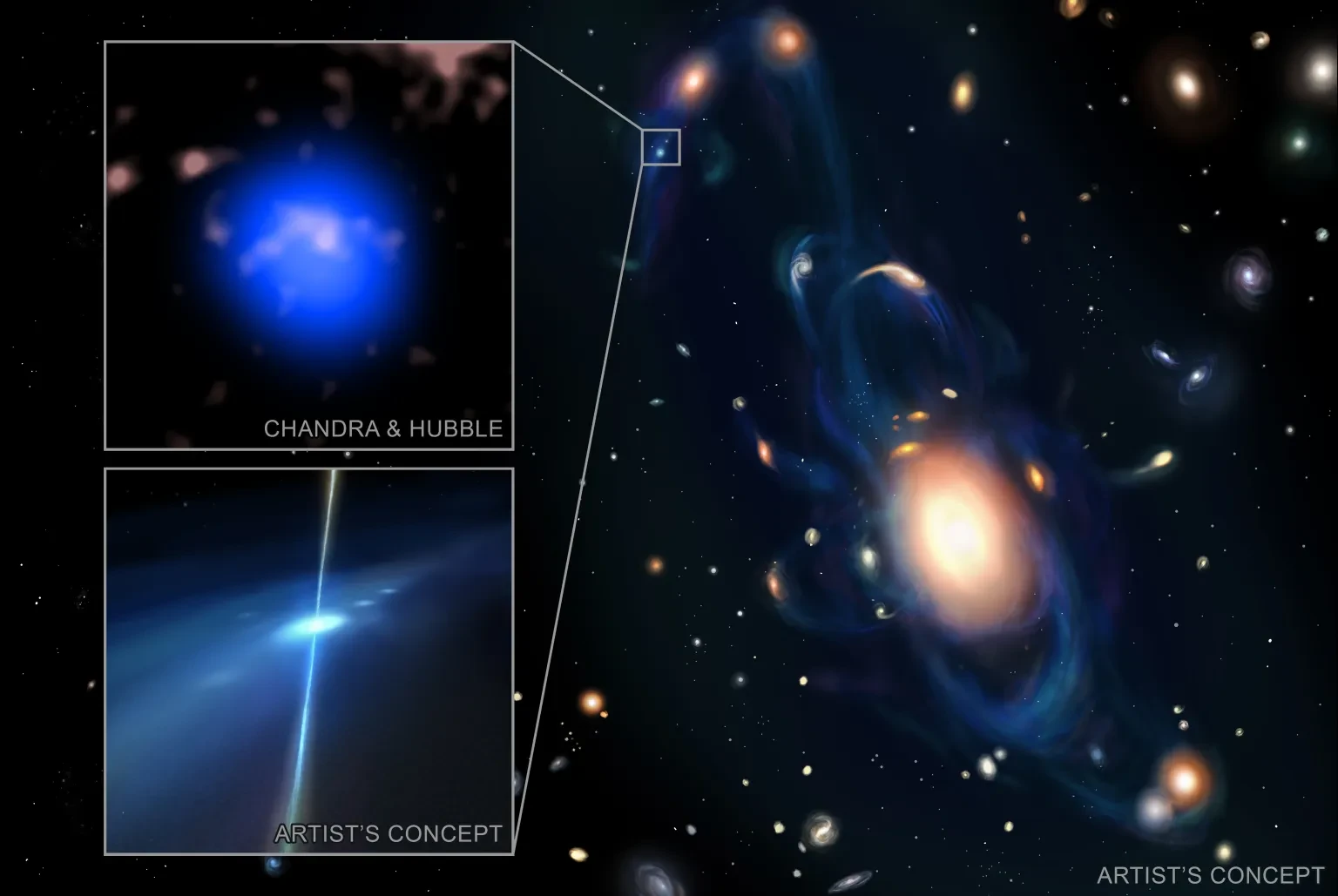
This milestone illustrates that dramatic cosmic occurrences producing gamma-ray bursts can happen even in tiny, faint galaxies. It also proposes that future GRBs may emerge from similarly elusive host galaxies that remain undetected due to their low brightness.
NASA’s Telescope Network Unveils the Event
Uncovering this neutron star merger depended on the combined effort of several NASA observatories. The Fermi Gamma-ray Space Telescope captured the initial gamma-ray flash announcing the collision. Subsequent monitoring by NASA’s Chandra X-ray Observatory, Swift, and Hubble Space Telescope precisely located the event within the small galaxy.
“Chandra’s pinpoint X-ray localization made this study possible,” said Brendan O’Connor, co-author of the study and McWilliams Postdoctoral Fellow at Carnegie Mellon University. “Without it, we couldn’t have tied the burst to any specific source. And once Chandra told us exactly where to look, Hubble’s extraordinary sensitivity revealed the tiny, extremely faint galaxy at that position. We were only able to make this discovery after we put all the pieces together.”
The synergy of these space telescopes was critical for accurately identifying the burst’s origin, underscoring the power of collaborative astronomy in unravelling deep space phenomena.
This finding not only unveils new clues about gamma-ray bursts and their sources but also hints that neutron star mergers may be more prevalent throughout the cosmos than previously assumed. Exploring these collisions sheds light on how heavy elements—such as gold and platinum—are synthesized in the universe.
The Cosmic Origin of Precious Metals Revealed
Neutron star mergers are recognized as prime sites for the creation of heavy elements, including valuable metals like gold and platinum. These collisions generate intense nuclear reactions that forge these elements, confirmed during a 2017 observed event.
Discovering such an event inside a small, faint galaxy could clarify how older, distant stars contain these heavy metals. These ancient stars formed from gas less impacted by earlier supernovae. The heavy elements produced by neutron star mergers are later mixed into their environs, ultimately becoming incorporated into new generations of stars far from galactic centers.
- Categories:
- Space


0 comments
Sign in to Comment