
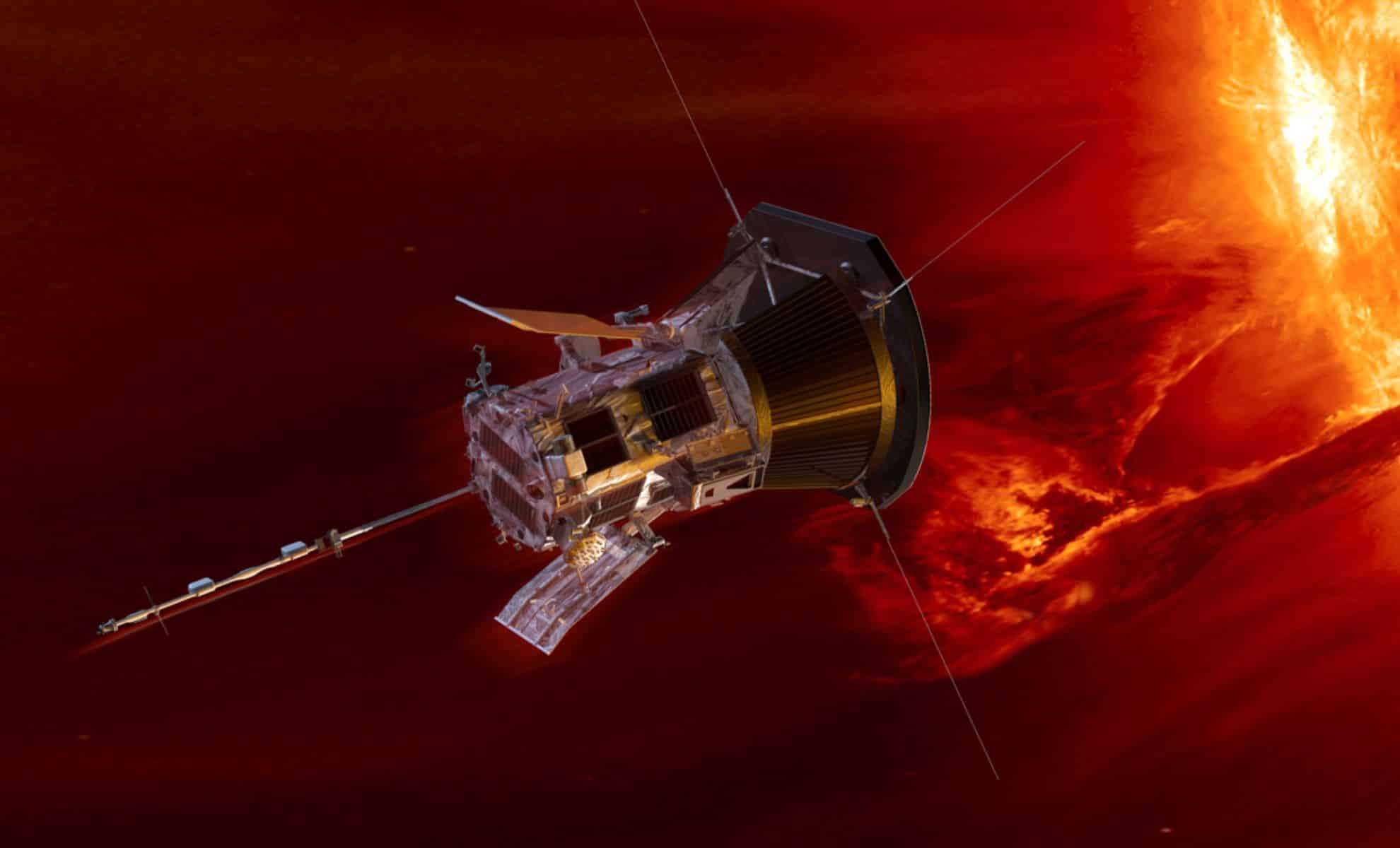
NASA’s Parker Solar Probe has achieved a landmark accomplishment by completing its third and last approach within just 3.86 million miles (6.1 million kilometers) from the Sun’s surface, setting an unprecedented record. This feat has been highlighted by a recent study published recently that sheds light on the dynamics of magnetic reconnection near our star. This final close orbit arrives at a pivotal moment in solar science, expanding our understanding of the Sun’s influence on space weather phenomena that affect Earth and beyond.
Since its launch in August 2018, the Parker Solar Probe has gathered invaluable information about the Sun’s outer layer, known as the corona, which is paradoxically much hotter than the surface beneath it. Approaching closer than any mission before, it has started to solve enduring questions in solar physics. A central mystery has been the corona’s extreme temperature compared to the Sun’s visible surface, as well as the mechanisms propelling the solar wind, including the role of magnetic reconnection. This knowledge is crucial for anticipating space weather events that can interfere with satellites, power infrastructure, and the safety of space explorers.
Pushing the Limits: The Parker Solar Probe Mission
The Parker Solar Probe’s journey was crafted to tackle some of the Sun’s greatest unknowns by making multiple close passes—or perihelions—bringing it closer to the Sun than any other spacecraft in history. Reaching a minimum distance of 3.86 million miles signifies a historic milestone, but the mission’s impact transcends mere proximity. The data collected during these encounters have already revolutionized how scientists perceive solar activity and the structure of the corona.

The spacecraft follows an elliptical path that allows repeated daring close approaches, traveling at blistering speeds up to 430,000 miles per hour (690,000 kilometers per hour). To put its velocity in context, Parker could traverse the distance from Philadelphia to Washington D.C. in just one second. Despite this velocity, the spacecraft endures extreme heat, facing temperatures between 1,600 and 1,700 degrees Fahrenheit (870 to 930 degrees Celsius). Its survival hinges on an advanced carbon composite shield that offers vital protection against the intense heat and harsh solar radiation.
Revealing the Secrets of Solar Wind and Magnetic Reconnection
The solar corona, the Sun’s outer atmosphere, remains one of the most intriguing puzzles in heliophysics. Its temperatures soar to millions of degrees—far hotter than the Sun’s visible surface—a contradiction that has long challenged researchers. Understanding the corona is essential to grasp the origins of solar wind, a stream of energized particles that influence Earth and other planets, sometimes causing disruptions in satellites and geomagnetic storms.
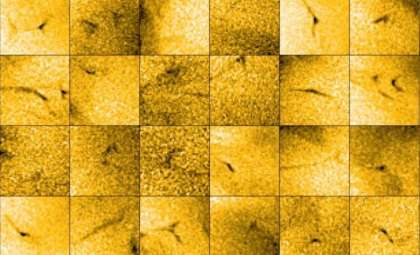
A groundbreaking study, utilizing Parker Solar Probe's close-in data, focused on the process called magnetic reconnection. This process involves magnetic field lines breaking and reconnecting, unleashing vast energy that accelerates particles within the solar wind and triggers intense solar phenomena such as solar flares and coronal mass ejections. Dr. Mihir Desai, the study’s lead and a researcher at the Southwest Research Institute in San Antonio, Texas, stated, “We’ve seen how magnetic reconnection behaves near Earth, but Parker has now shown how potent it is near the Sun, where magnetic fields are significantly stronger.”
This revelation is a crucial advancement, providing new perspectives on the origins of solar events and granting scientists unprecedented access to conditions that cannot be observed from Earth. As Parker continues its mission, ongoing discoveries will reveal even more about the Sun’s intense magnetic environment and complex behavior.
The Legacy and Future Prospects of the Parker Solar Probe
Although the Parker Solar Probe is approaching the conclusion of its active mission phase, its legacy in advancing solar physics will endure. The spacecraft is locked into a solar orbit that will keep it circling the Sun indefinitely. Without additional gravitational boosts from Venus, however, it won’t be able to venture any closer than it has already achieved.
Ultimately, the craft will exhaust its fuel and disintegrate, but its heat shield may persist in orbit around our star for millennia. Before its decommissioning, Parker will continue to relay critical information that will influence solar science and the prediction of space weather for years ahead. As this final perihelion closes a chapter, researchers will dig deep into the treasure trove of data amassed, shaping new pathways for solar research and technology safeguarding Earth’s space environment.
- Categories:
- News




0 comments
Sign in to Comment