

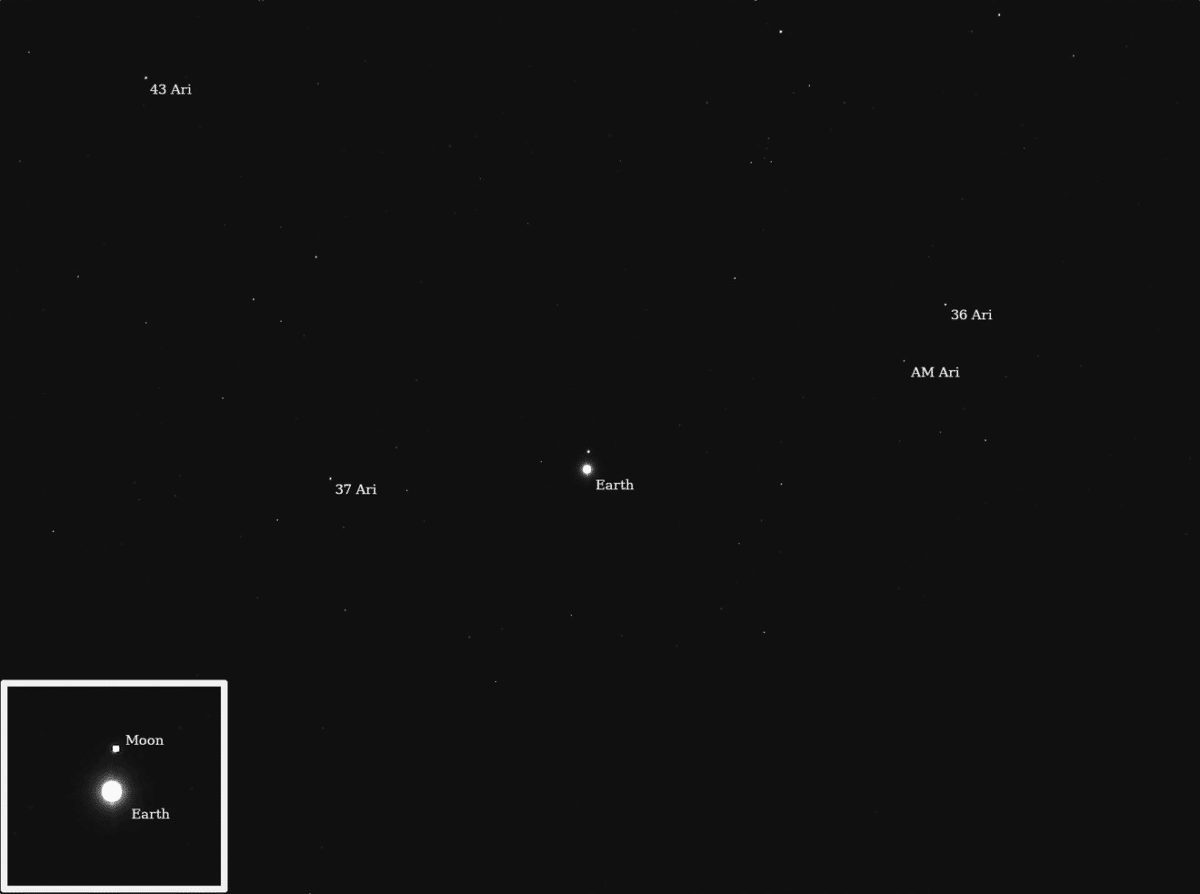
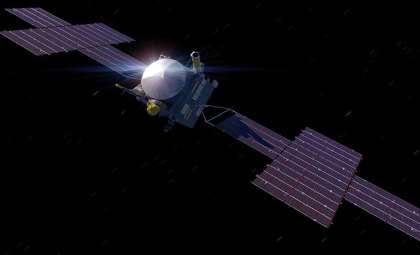
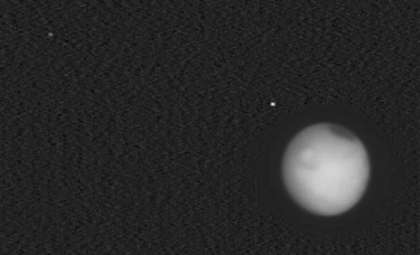
NASA’s Psyche spacecraft, which is set to investigate the metal-rich asteroid 16 Psyche, recently transmitted extraordinary images of Earth and the Moon taken from nearly 180 million miles away. Captured during a routine check of the spacecraft’s instruments, these striking photos represent a key milestone in fine-tuning its sophisticated imaging technology. As Psyche continues its voyage farther into space, its main mission is to explore an asteroid that could unlock secrets about how planets form.
An Advancement in Spacecraft Imaging Capabilities
The Psyche spacecraft, specialized to analyze this peculiar asteroid, has garnered attention with its ability to capture high-quality visuals. The recent snapshots of Earth and the Moon, taken at the extraordinary distance of 180 million miles, demonstrate the probe’s growing imaging proficiency. These photographs didn’t just showcase technology; they were part of a crucial camera calibration routine to guarantee peak performance when Psyche approaches its asteroid target. During these initial mission phases, NASA’s team is concentrating on optimizing the multispectral camera critical for revealing detailed surface features of 16 Psyche.
The photos are included in ongoing tests assessing the camera’s performance in capturing faint light and dense star fields. As Arizona State University scientist Jim Bell notes,

“After this, we may look at Saturn or Vesta to help us continue to test the imagers.”
This meticulous calibration ensures the instruments are ready for the dimmer, more distant asteroid. The data from these tests allow mission engineers to make vital adjustments needed for ultimate mission success. According to NASA’s Jet Propulsion Laboratory (JPL), such calibration also confirms the camera’s ability to accurately image faint objects under challenging conditions.
The Psyche Mission’s Role in Unraveling Planetary Origins
The core objective of the Psyche mission is an in-depth examination of asteroid 16 Psyche, a rare metallic body believed to be the remnant core of an early planetesimal. By studying this asteroid, researchers aim to deepen understanding of the foundational components that form rocky planets like Earth. It is of special interest because it may preserve traces of a molten core that once sustained a magnetic field—key to insights into planetary differentiation processes.
While imaging Earth and the Moon served as vital calibration targets, these pictures also symbolize the broader goals of the mission. Bob Mase, project manager at NASA’s Jet Propulsion Laboratory, remarked, “We are up and running, and everything is working well.” The spacecraft is outfitted with state-of-the-art instruments, including a gamma-ray and neutron spectrometer, which will uncover the asteroid’s elemental makeup, such as iron and nickel abundance, enhancing knowledge about how metallic planetary cores originate.
How Precise Calibration is Crucial to Psyche’s Mission
Calibration might sound routine, but for ambitious deep-space explorations like Psyche, it’s absolutely vital. The onboard camera, which captures images across various wavelengths, must be finely tuned to manage everything from faint astronomical glows to bright reflections off the asteroid itself. The Earth and Moon images were essential in evaluating the camera’s adaptability to these diverse lighting conditions.
“We’re sort of collecting solar system ‘trading cards’ from these different bodies and running them through our calibration pipeline to make sure we’re getting the right answers,” says Bell.
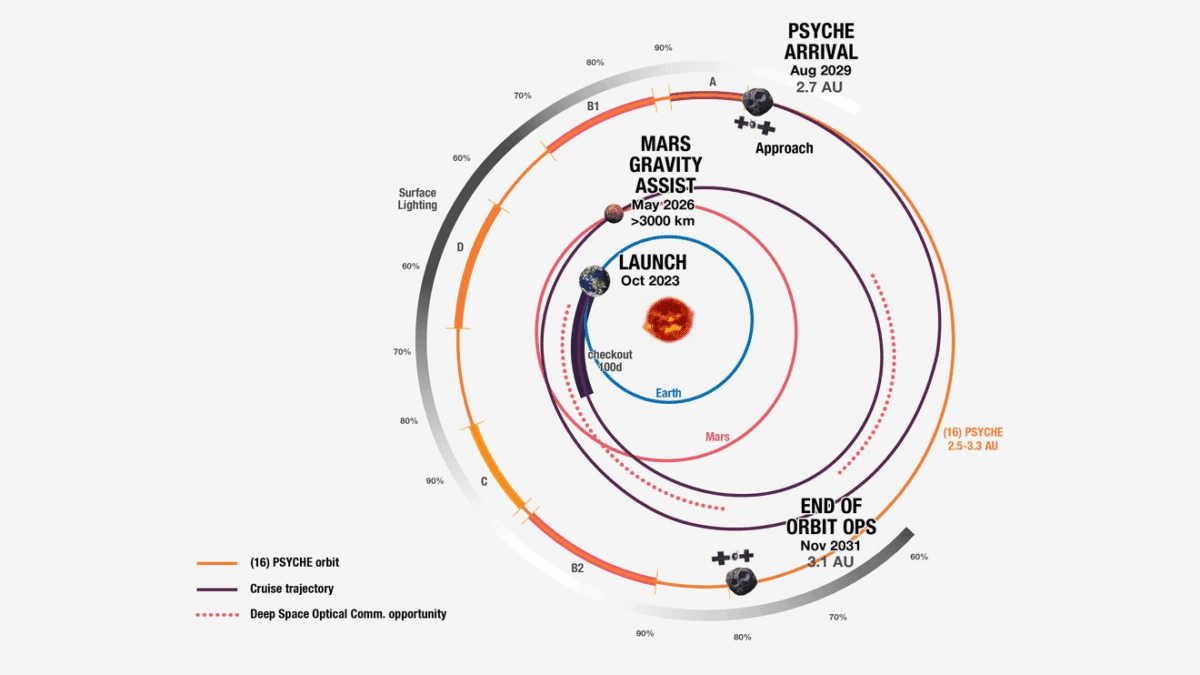
Such a deliberate approach guarantees that once Psyche nears its asteroid destination, it will deliver the most accurate possible data without surprises caused by instrument errors. Engineers will persist in testing and refining the spacecraft’s systems throughout the mission’s duration, readying Psyche to conduct a detailed survey of asteroid 16 Psyche upon its anticipated arrival in 2029.
An Expedition into Our Solar System’s Origins
The Psyche mission represents more than a voyage to a distant asteroid; it’s a scientific quest to uncover how our solar system formed. If 16 Psyche is indeed an exposed planetary core fragment, studying it promises to shed new light on the birth and development of terrestrial planets. Using cutting-edge instruments to analyze composition and magnetic history, NASA strives to solve the mysteries of these cosmic building blocks.
The mission’s success depends heavily on rigorous calibration and testing of its advanced instruments, ensuring Psyche gathers the highest quality data possible. As the spacecraft journeys through space, it continues to perfect its systems, gearing up for an unprecedented close-up investigation of one of the solar system’s most extraordinary objects.
- Categories:
- News






0 comments
Sign in to Comment