
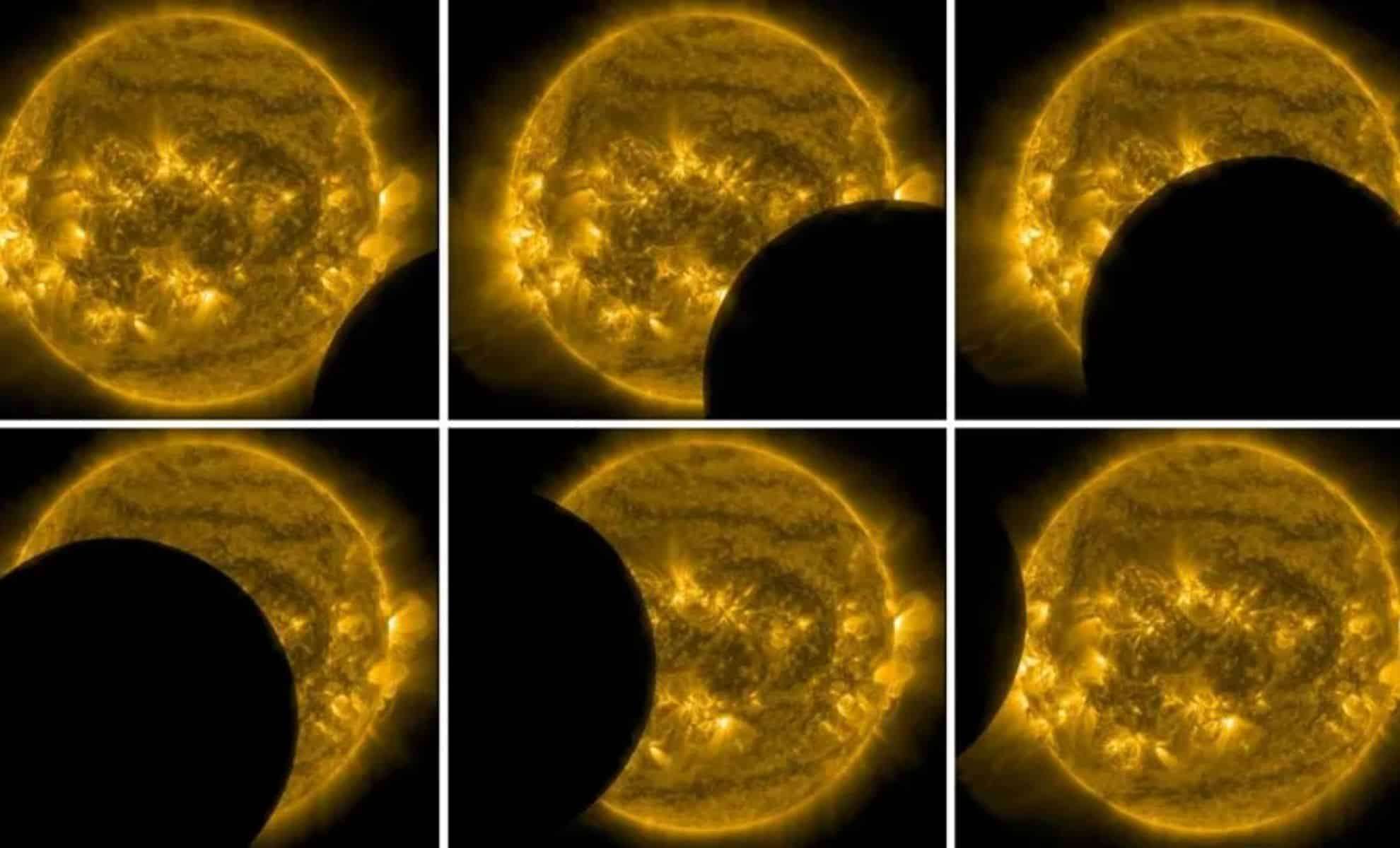
On July 25, 2025, NASA’s Solar Dynamics Observatory (SDO) observed a unique solar eclipse from its space-based vantage point. From this orbiting observatory, approximately 62% of the sun was obscured by the moon. Lasting about 35 minutes, this extraordinary event provided researchers with invaluable data on solar dynamics. Thanks to SDO’s continuous sun monitoring from Earth’s orbit, scientists received an unprecedented view far beyond ground-level observations.
SDO’s Exceptional Role in Solar Eclipse Observations
The Solar Dynamics Observatory, deployed by NASA, serves as a vital tool for investigating solar phenomena. Operating in geosynchronous orbit, it offers constant solar surveillance across a spectrum of wavelengths. Unlike terrestrial telescopes, SDO’s remote orbit avoids atmospheric distortion, capturing solar activity with superior clarity and detail.
The partial eclipse captured was visible solely from the SDO’s vantage point as the moon passed between it and the sun, blocking a significant portion of sunlight momentarily. The observatory’s orbit, synchronized with Earth’s rotation, ensures uninterrupted solar observation. While the eclipse caused a brief reduction in sunlight reaching the spacecraft, SDO’s fully charged solar-powered battery system maintained uninterrupted functionality throughout the event.

Though the SDO frequently detects lunar transits, this eclipse was especially notable for its infrequency and the insights gained into solar processes. Positioned above Earth’s atmosphere, SDO could continuously capture detailed images of the solar corona—the sun’s outer layer typically only observable from Earth during special circumstances like a solar eclipse.
How SDO Manages Reduced Solar Input During Eclipses
An important feature demonstrated during the July 25 eclipse was how the Solar Dynamics Observatory managed a sudden decrease in solar power. Equipped with solar panels essential to its operation, the temporary shading of the sun could have disrupted its systems. However, NASA anticipated this and ensured the spacecraft’s batteries were fully charged beforehand, allowing it to function seamlessly despite the momentary eclipse shadow.
This capability highlights the sophisticated engineering onboard SDO, which not only captures vital solar imagery but continues operating continuously despite brief losses of sunlight. Maintaining this consistent surveillance is crucial to the observatory’s mission of constant solar monitoring.
Future Solar Eclipse Events to Watch
NASA’s observations have spotlighted upcoming solar eclipses. The next partial solar eclipse visible from Earth will occur on September 21, 2025. On this date, viewers in locations such as New Zealand, Tasmania, parts of the Indian Ocean, and Antarctica could see up to 80% of the sun obscured. Safety measures such as eclipse glasses and solar filters on optical devices are highly recommended for viewing.
For those eager to witness a total solar eclipse, the next opportunity comes on August 12, 2026. Regions including Greenland, western Iceland, and northern Spain will experience totality, with Iceland’s total eclipse lasting about 2 minutes and 18 seconds. Total eclipses present a rare chance to admire the sun’s corona in full splendor, an extraordinary sight exclusive to these events.
- Categories:
- News










0 comments
Sign in to Comment