
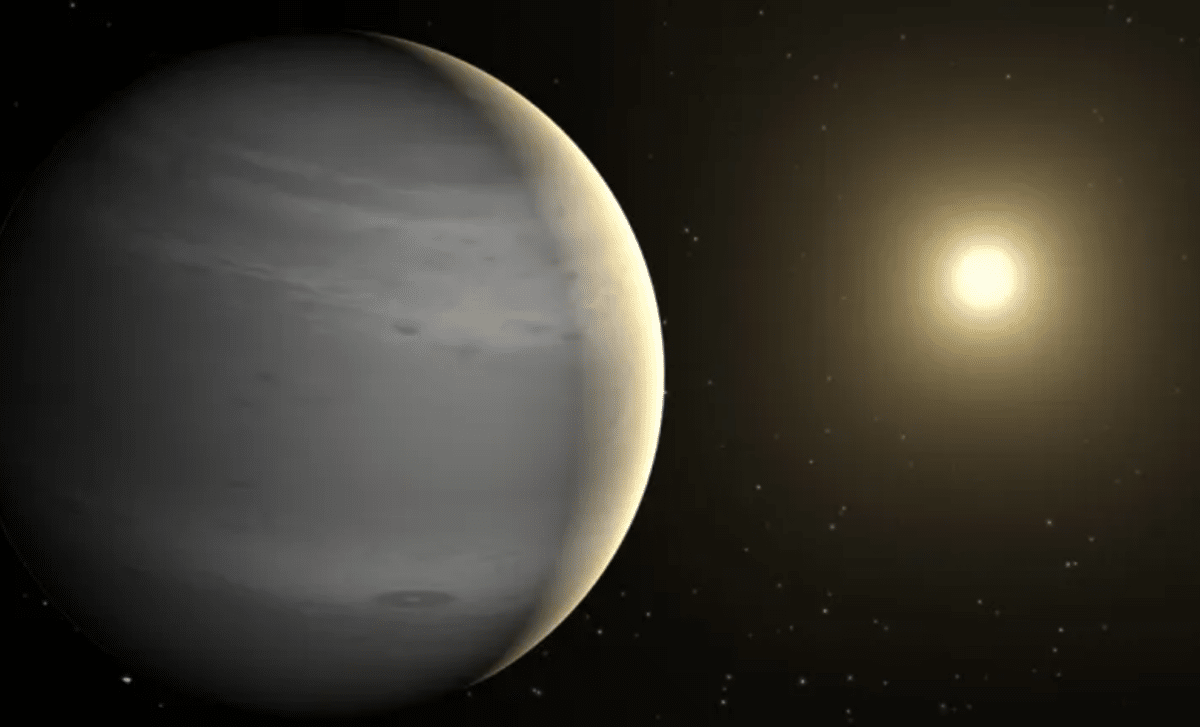
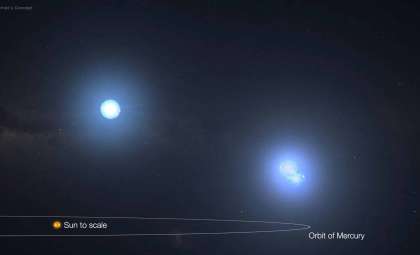
A recent discovery made by NASA’s TESS mission has unveiled a planetary system that challenges our traditional views on planetary formation and development, as reported in Science. Unlike the typically aligned and orderly systems, the TOI-201 system showcases a highly irregular structure, granting astronomers a special opportunity to observe planetary dynamics in an early reshaping phase.
An Unconventional Planetary Arrangement
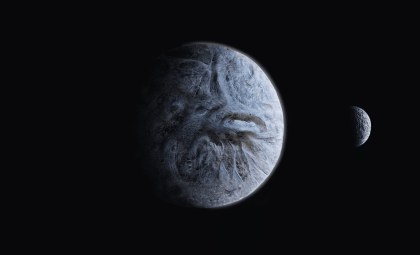
Commonly observed planetary systems tend to display coherence: planets form within a flat disk and maintain aligned orbits with comparable sizes and spacing. The TOI-201 system, however, defies these norms by featuring three distinctly different bodies with tilted orbits that engage in strong gravitational interplay, actively influencing each other’s paths.
“Most planetary systems appear as ‘peas in a pod,’ meaning the planets have a similar range of parameters and share a similar orbital plane,” said Amaury Triaud of the University of Birmingham. “This is not the case in the TOI-201 system, which contains three orbiting objects very distinct from one another, and which interact gravitationally.”
Add Cosmo Herald as a Preferred Source

This peculiar setup hints that what scientists generally view as a settled planetary system may actually be the product of previous turbulent phases. The TOI-201 displays that chaos in real time, with each planet traveling along an inclined orbit, in stark contrast to the near-coplanar configuration of our solar system. According to Tristan Guillot from the Observatoire de la Côte d’Azur,
“In the solar system, almost all planets are coplanar, but here, this is not the case and each planet is different.” He added that this configuration “points to some active orbital reorganisation within the system, providing us a glimpse of what happens shortly after planet formation.”
Orbital Anomalies Trigger Global Scientific Focus
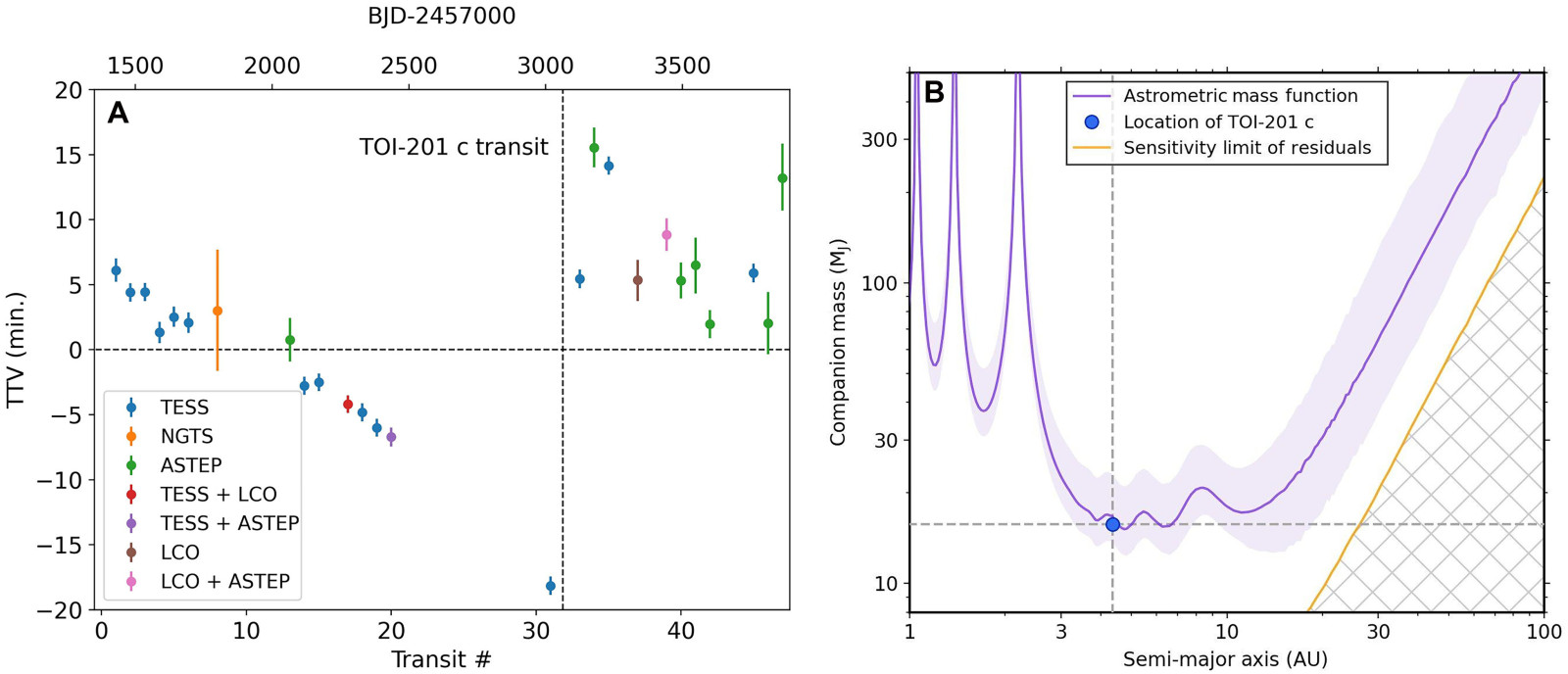
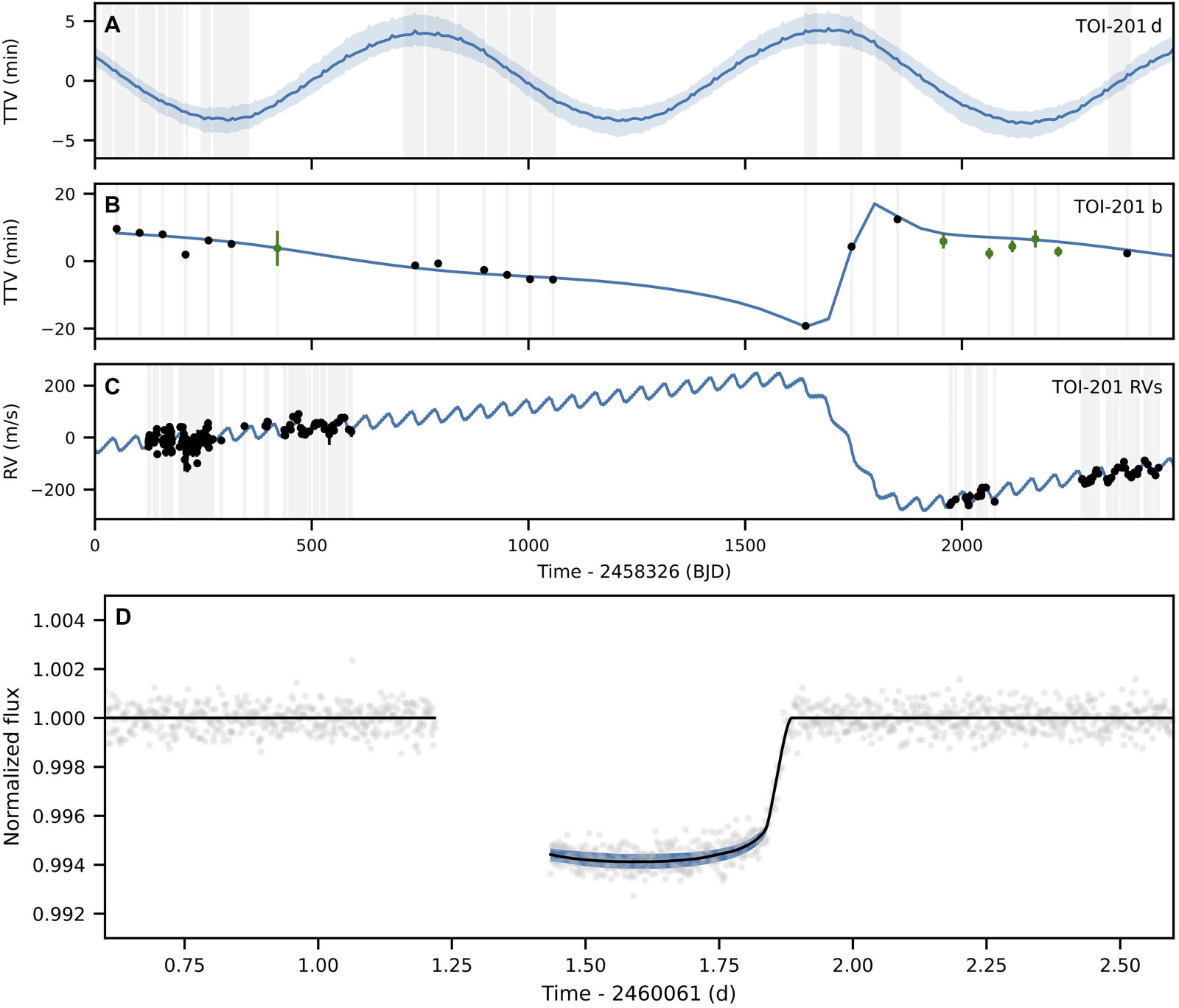
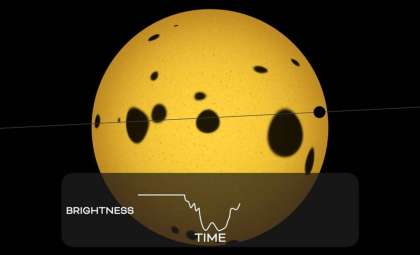
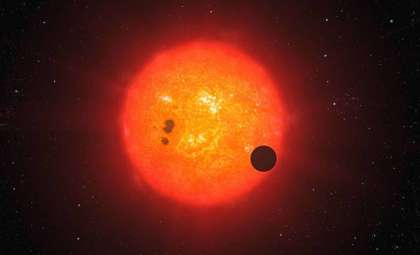
Attention to this system surged when researchers observed an unexpected phenomenon: the planet TOI-201b began transiting its star later than predicted, with delays reaching nearly 30 minutes, a significant shift in orbital timing.
“Usually, planets are like metronomes with each transit in front of the star happening exactly one orbital period after another,” Triaud explained. “However, we were following TOI-201b, and suddenly the planet started transiting about half an hour late.”
This unexpected timing variation led to a worldwide collaborative observing effort. Multiple observatories coordinated to track the system, confirming that the planets’ gravitational interactions are dynamically modifying their orbits. These transit timing fluctuations provide a crucial insight into the ongoing gravitational tug-of-war within the system.
Extreme Conditions Enable Critical Observations
A pivotal factor enabling this discovery was the placement of a telescope in Antarctica. This remote location offers unparalleled conditions, including long, uninterrupted observation windows essential for detecting subtle orbital modifications.
“This discovery was enabled by having a telescope in Antarctica,” Triaud noted. “Whilst the logistics involved are difficult, its unique situation and its access to optimal astronomical conditions are key to studying exoplanetary systems with long orbital periods such as TOI-201.”
The continuous darkness of Antarctic winters allows for extended monitoring periods that are difficult to achieve elsewhere, critical for observing planets with long orbits and their interactions. Without this vantage point, the intricate nature of the system might have gone unnoticed.
Insights Into Planetary Formation Dynamics
The research, published in Science, extends beyond profiling an unusual planetary assembly. It offers a rare live glimpse into planetary system evolution, showing active gravitational sculpting in progress rather than a settled configuration.
“Our objective was to detail the TOI-201 system to understand not only the planets present but their dynamical interactions,” said Ismael Mireles, the study’s principal investigator from the University of New Mexico. “This advances our knowledge of how planetary systems like ours develop and change over time.”
By observing a system amid orbital rearrangement, astronomers obtain concrete evidence of processes typically derived from theoretical models. This indicates that systems like our solar system might be the results of earlier disruptive phases rather than initial conditions.
Implications for Exoplanet Exploration Moving Forward
Far from being a mere curiosity, the TOI-201 system represents a fundamental piece in understanding planetary system formation. Its irregular orbits and gravitational complexities challenge existing simplified frameworks and encourage scientists to reconsider how frequently such chaotic arrangements might occur.
As detection techniques become more refined and long-term studies expand, it is expected that more systems like TOI-201 will be discovered. Each new find enriches our comprehension of how planets either settle into harmony or remain dynamically active. For now, TOI-201 clearly illustrates that cosmic arrangements often defy tidy expectations.
- Categories:
- News



0 comments
Sign in to Comment