
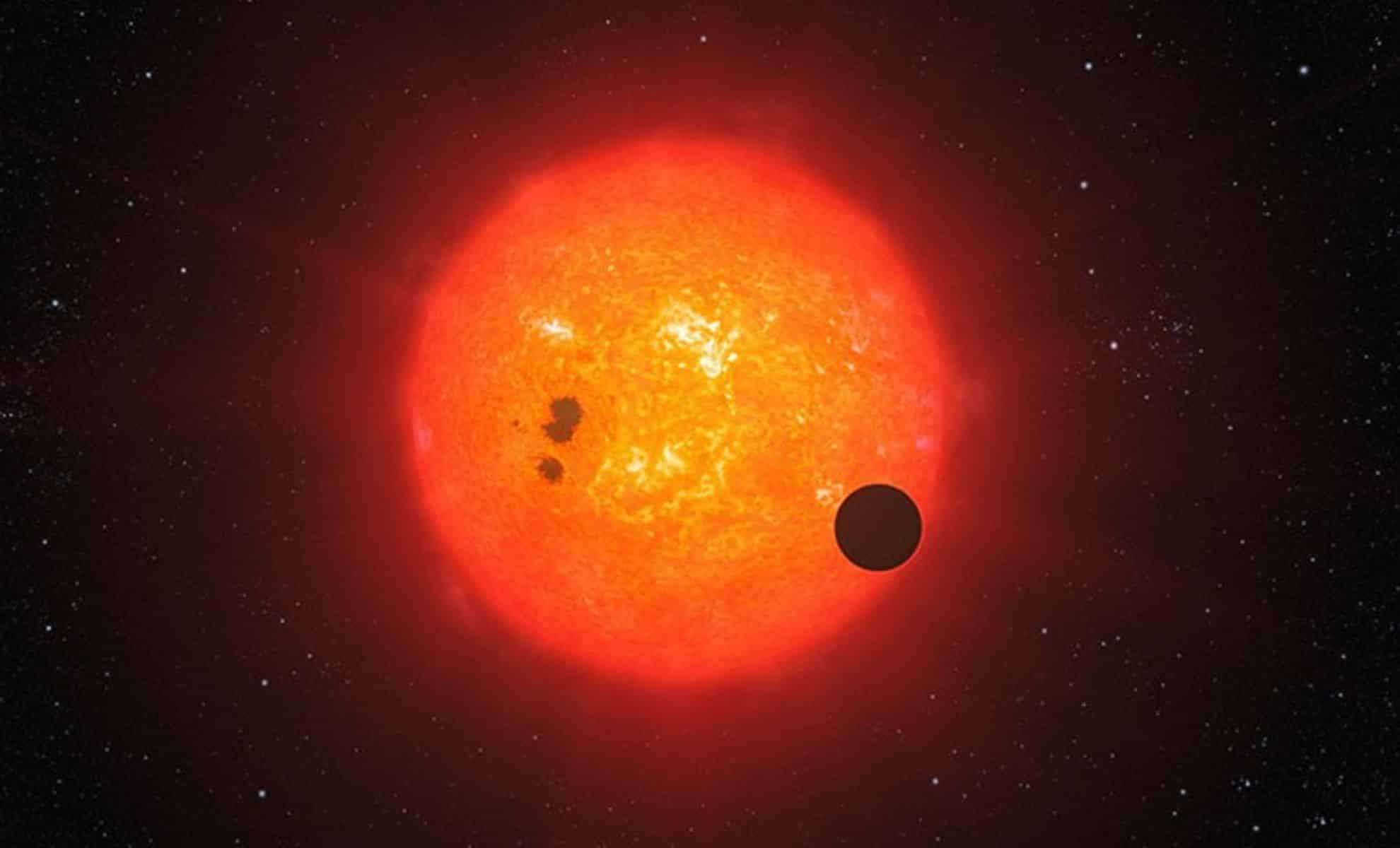
Utilizing the advanced capabilities of the James Webb Space Telescope (JWST), astronomers have identified an extraordinary planet that challenges traditional planetary categories. The exoplanet, named GJ 1214 b, lies approximately 48 light-years from Earth within the Ophiuchus constellation and has quickly become a subject of intense scientific interest. Distinct from any planets in our own solar system, GJ 1214 b is enveloped by a thick atmosphere rich in carbon dioxide, earning it the moniker “super-Venus.” This paradigm-shifting find offers fresh insights into a previously unexplored type of planet, posing significant questions about planetary genesis, atmospheric makeup, and the variety of worlds beyond our solar neighborhood. Its unusual characteristics present a valuable opportunity for researchers to deepen their knowledge of planetary development and surface environments under extreme conditions.
Exploring an Untapped Class of Exoplanets
The James Webb telescope continues to revolutionize exoplanet science, with GJ 1214 b standing out as a particularly intriguing case. This planet's size places it between rocky Earth-like planets and the ice giants similar to Neptune, a position that has long mystified astronomers. Its relatively close proximity, just 48 light-years away in Ophiuchus, facilitates detailed examination.
Through the telescope’s transit spectroscopy technique, scientists examined how the star's light filters through the planet’s thick atmospheric layers during its orbit. The analysis uncovered significant amounts of carbon dioxide, revealing a unique atmospheric profile. “The detected CO2 signal from the first study is tiny, and so it required careful statistical analysis to ensure that it is real,” explains Kazumasa Ohno from the National Astronomical Observatory of Japan. This precision highlights how transformative James Webb’s observations are for exoplanet research.

Introducing the Super-Venus Phenomenon
Originally, GJ 1214 b was hypothesized to be a hydrogen-rich super-Earth or covered by a thick atmosphere laden with water vapor. However, James Webb’s findings reveal a different narrative: the atmosphere is predominately carbon dioxide, resembling that of our solar system’s Venus. This has led to its classification as a “super-Venus,” sparking new discussions on planetary atmospheres and transformations.
Ohno describes the approach to confirming these results. “At the same time, we needed the physical and chemical insights to extract the true nature of GJ 1214 b’s atmosphere from Schlawin’s study.” Leading simulations, Ohno tested numerous scenarios to understand the planet’s atmospheric composition. Models featuring a carbon-heavy atmosphere matched the observations most accurately.
Despite these advances, the discovery raises further questions about GJ 1214 b’s origin and development. Its dense atmosphere may create surface conditions exceeding even Venus’s heat. Elevated carbon dioxide concentrations hint at complex geological and atmospheric histories that remain largely elusive.
Reconsidering Planetary Formation Theories
GJ 1214 b’s distinctive nature challenges prevailing planetary formation models. Scientists have debated whether intermediate-sized planets are primarily rocky worlds with thick gaseous layers or icy bodies rich in water. The James Webb data introduces a new class: a carbon-dominant hybrid with atmospheric features unlike previously categorized planets.
“The ones that best fit the data all suggest a carbon-dominated atmosphere, like a ‘super-Venus,’” Ohno comments. This insight broadens our understanding of planetary diversity and suggests planets like GJ 1214 b may represent an evolutionary bridge from terrestrial to gaseous worlds.
Observational complexities add to the challenge. Ohno compares the quest to confirm such findings to locating a single altered sentence within a voluminous novel like War and Peace. This analogy underscores the extraordinary precision and patience required to analyze distant exoplanets.
Peering into Uncharted Cosmic Terrain
The study of GJ 1214 b underscores the value of sustained astronomical exploration. James Webb’s capacity to probe dense planetary atmospheres marks a new chapter in exoplanetary science, enabling investigations of planet types once thought inaccessible. Future observations promise to refine our picture of GJ 1214 b and similar mysterious worlds.
This “super-Venus” challenges existing notions of planetary classification and evolution, compelling astronomers to reimagine what planets can be. Continued scrutiny aims to reveal more about its formation, atmospheric dynamics, and potential weather phenomena.
GJ 1214 b serves as a vivid reminder of the enormous variability among planets beyond our solar system. As James Webb keeps unveiling cosmic secrets, the discovery of this remarkable exoplanet foreshadows exciting breakthroughs in understanding the universe's complexity.
- Categories:
- News





0 comments
Sign in to Comment