
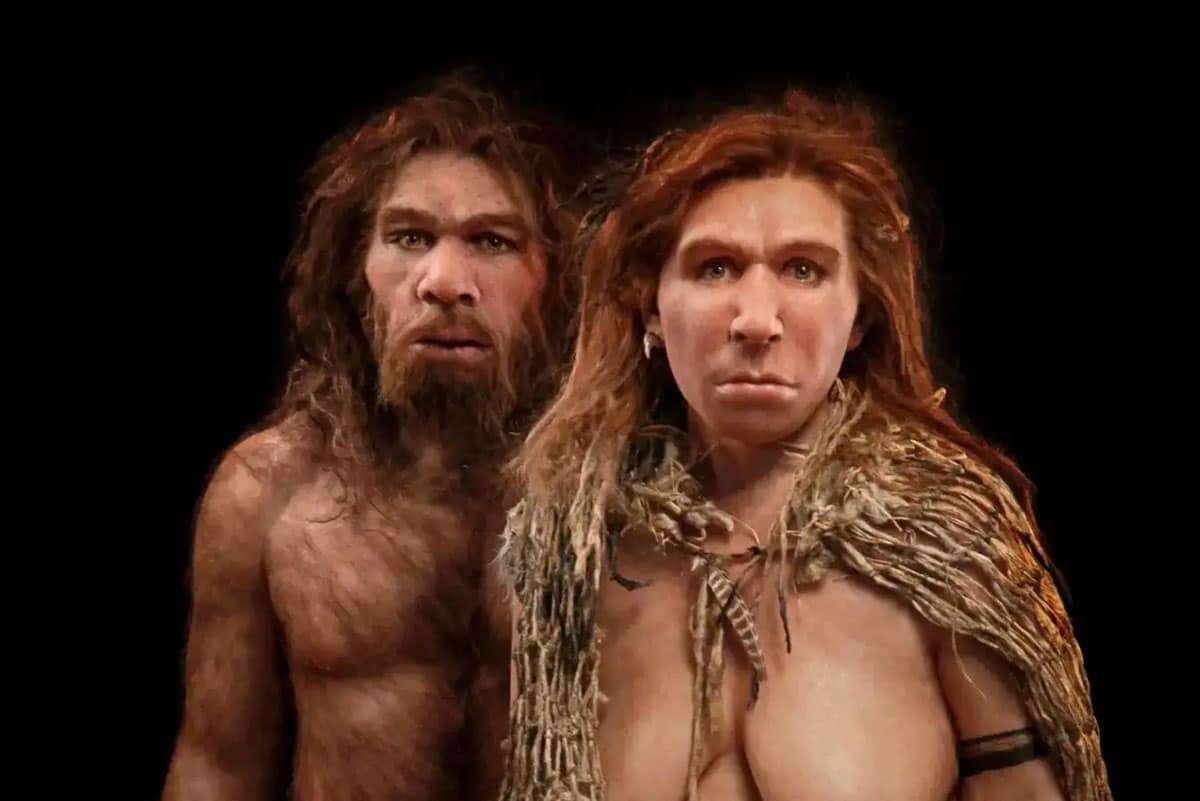
For many years, Neanderthals have intrigued researchers as close relatives of modern humans. Recently, a transformative study led by Joshua Akey from Princeton’s Lewis-Sigler Institute for Integrative Genomics has provided fresh perspectives on our intertwined past with these archaic hominins.
Employing cutting-edge genetic methodologies alongside artificial intelligence, Akey’s group has identified evidence supporting several distinct episodes of interbreeding between modern humans and Neanderthals. This challenges the earlier belief that these populations lived largely apart and suggests a far more intricate relationship lasting tens of thousands of years.
Published in the journal Science, the investigation leveraged a machine learning-powered tool known as IBDmix to analyze genomic data. By studying DNA from 2,000 present-day humans, three Neanderthals, and a Denisovan, the researchers traced patterns of genetic exchange spanning up to 250,000 years.

The study reveals three separate periods of interaction:
- Between 200,000 and 250,000 years ago
- Approximately 100,000 to 120,000 years ago
- The most substantial event around 50,000 to 60,000 years ago
This revised timeline overturns previous models that suggested modern humans remained confined to Africa for 200,000 years prior to dispersing 50,000 years ago. Instead, it portrays early Homo sapiens as more migratory and regularly engaging genetically with Neanderthal groups.
The enduring genetic imprint of Neanderthals in humans
A key discovery from this work is that Neanderthals were not outright replaced but rather merged into the modern human genome through an assimilation process. This concept, initially proposed in 1989 by anthropologist Fred Smith, now has robust genetic backing.
Akey’s team innovatively searched for traces of modern human DNA within Neanderthal genomes, uncovering that descendants from initial interbreeding likely stayed within Neanderthal communities, resulting in no immediate genetic legacy in present-day humans until later admixture events.
Today, roughly 1-2% of the genetic material in people of Eurasian heritage stems from Neanderthals, influencing characteristics such as:
- Improved immune responses
- Differences in skin pigmentation
- Adaptations suitable for colder climates
This inherited DNA has been instrumental in human evolutionary successes and technological developments, underscoring the lasting influence of Neanderthal ancestry throughout our species’ history.
Reevaluating Neanderthal populations and their eventual integration
Another notable insight from the study is the reduced size estimate of the Neanderthal population. Utilizing IBDmix, researchers found that much of the genetic diversity attributed to Neanderthals was actually from modern human DNA. Consequently, the effective Neanderthal population size is now thought to be closer to 2,400 rather than the previously estimated 3,400 breeding individuals.
This smaller population may have played a role in the gradual blending of Neanderthals into Homo sapiens, rather than their abrupt extinction. Akey describes this integration as “waves washing over a shore, progressively absorbing Neanderthals into modern human groups.”
The findings carry significance beyond Neanderthal history, offering fresh perspectives on human migration patterns and cultural evolution. From the emergence of clothing to advances in tools and artistic expression, these interactions were pivotal in shaping early human societies and innovation.
Contrasts and commonalities between Neanderthals and modern humans
While the study emphasizes important genetic overlaps, Neanderthals and modern humans also displayed significant differences due to diverse evolutionary pressures and habitats.
Despite these distinctions, the genetic data indicate that the two groups were more alike than previously recognized, facilitating genetic mixing and cultural exchange that enriched human evolution.
As ongoing archaeological discoveries continue to surface, our comprehension of humanity’s origins deepens. The intertwined story of Neanderthals and Homo sapiens highlights the complex and shared legacy that defines our evolutionary journey revealed through ancient remains.
- Categories:
- Evolution


0 comments
Sign in to Comment