
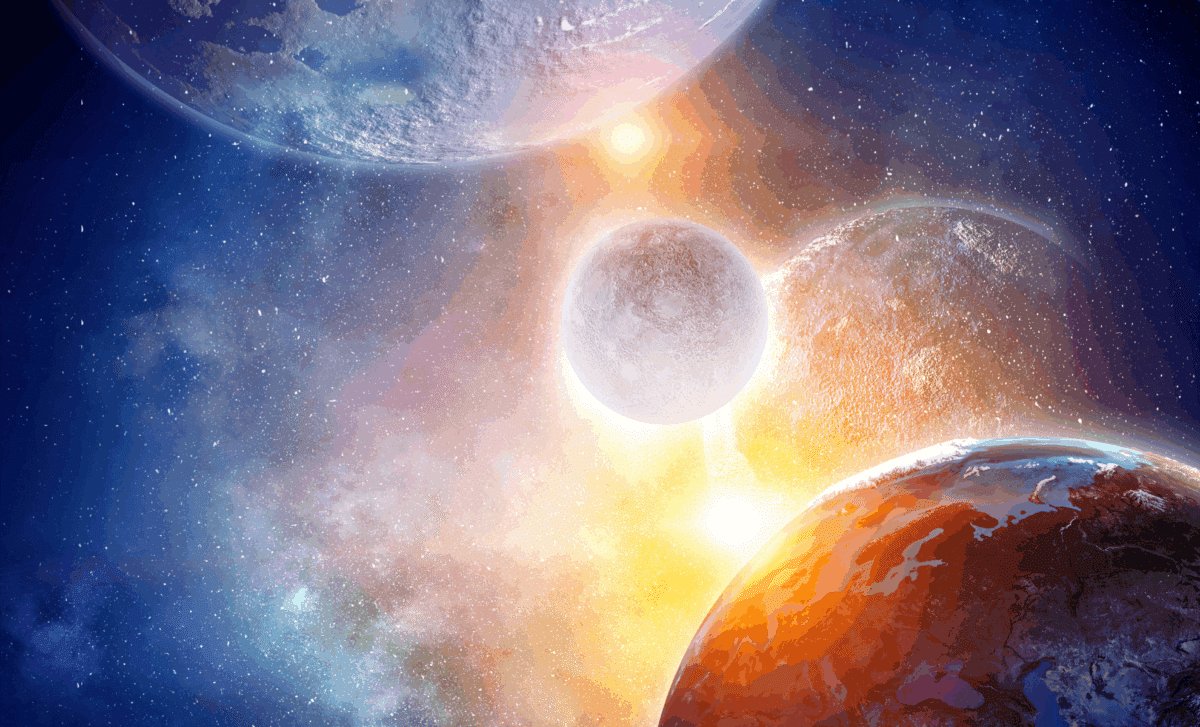
For centuries, the question of how the universe began has intrigued scientists. In an innovative paper featured in Physical Review Research, a team of scientists from Spain and Italy presents a fresh model that could significantly change our perception of the universe’s inception. This research questions the classic Big Bang theory and the role of rapid cosmic inflation, proposing instead a more straightforward explanation based on gravitational waves, a phenomenon that Einstein himself theorized.
Gravitational Waves: A New Lens on the Birth of the Universe
Early investigations into how the cosmos began brought cosmic inflation to the forefront as a leading explanation. This idea suggests that the universe expanded extraordinarily quickly just moments after the Big Bang, powered by an unknown force. Yet, over time, doubts emerged as the inflationary theory hinges on hypothetical factors that cannot be directly measured or verified.
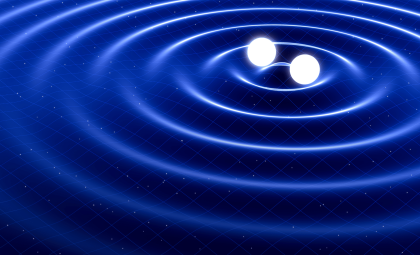
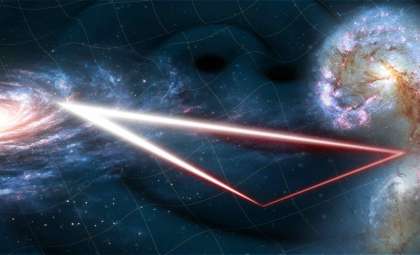
Featured in Physical Review Research, the research led by Dr. Raúl Jiménez offers a different viewpoint that eliminates reliance on unseen forces. The team argues gravitational waves—subtle distortions in space-time—could have been the primary drivers behind the universe’s formation. Originally predicted by Einstein’s general relativity, these waves are caused by massive cosmic events like black hole collisions or supernova explosions. Despite their elusive nature, gravitational waves provide a solid, physics-based foundation for explaining the emergence of galaxies, stars, and planets.

Embracing Simplicity: The Significance of Gravitational Waves
An appealing feature of this proposed model is its simplicity. According to Dr. Jiménez, “For years, scientists have relied on models built upon theoretical elements we have not observed.” Critiquing these speculative approaches adds to the attractiveness of the gravitational wave hypothesis. Rather than constructing complex scenarios based on uncertain phenomena, this explanation depends on gravitational waves, which are grounded in well-established physical laws. The team contends these waves, theorized by Einstein over a century ago, could explain how the universe’s large-scale structure took shape.
This theory not only simplifies a complicated topic but also paves the way for experimental verification. Utilizing current understanding of gravity and quantum physics, it moves us nearer to comprehending the formation of cosmic structures without relying on unverifiable assumptions. This fresh look at a longstanding enigma highlights the value of revisiting classic concepts with modern insights.
Einstein’s Enduring Influence: Linking Historic Ideas to Contemporary Research
Albert Einstein’s work fundamentally revolutionized our grasp of space, time, and gravity. His 1916 prediction of gravitational waves laid the groundwork for ongoing scientific breakthroughs. Although initially a speculative notion, their detection by the Laser Interferometer Gravitational-Wave Observatory (LIGO) in 2015 marked a monumental advance, opening new paths to explore the cosmos.
A crucial part of connecting gravitational waves to the universe’s origin involves the less-known concept of De Sitter space, a framework developed in the 1920s by Willem De Sitter, influenced by his collaboration with Einstein. Revisiting De Sitter’s ideas allowed the study’s authors to bridge gravitational waves with cosmic beginnings, providing a novel interpretation of an age-old scientific question. This integration of early 20th-century and current research showcases the enduring relevance of foundational physics.
Why Understanding Cosmic Beginnings Is Vital
Carl Sagan once remarked, “The cosmos is within us. We are made of star-stuff. We are a way for the universe to know itself.” This eloquent statement captures why deciphering the universe’s origin remains more than just a scientific quest—it is a journey into philosophical reflection. Each new insight brings humanity closer to grasping its position within the vast cosmic landscape. Understanding the processes that shaped galaxies, stars, and planets helps illuminate the foundations of our existence.
Exploring the role of gravitational waves in cosmic creation also reinforces our deep connection with the universe. It intimates that the interplay between gravity and quantum mechanics may have been sufficient to initiate the universe’s evolution. The clarity and elegance of this new framework mirror the inherent order emerging from cosmic complexity itself.
- Categories:
- News


0 comments
Sign in to Comment