
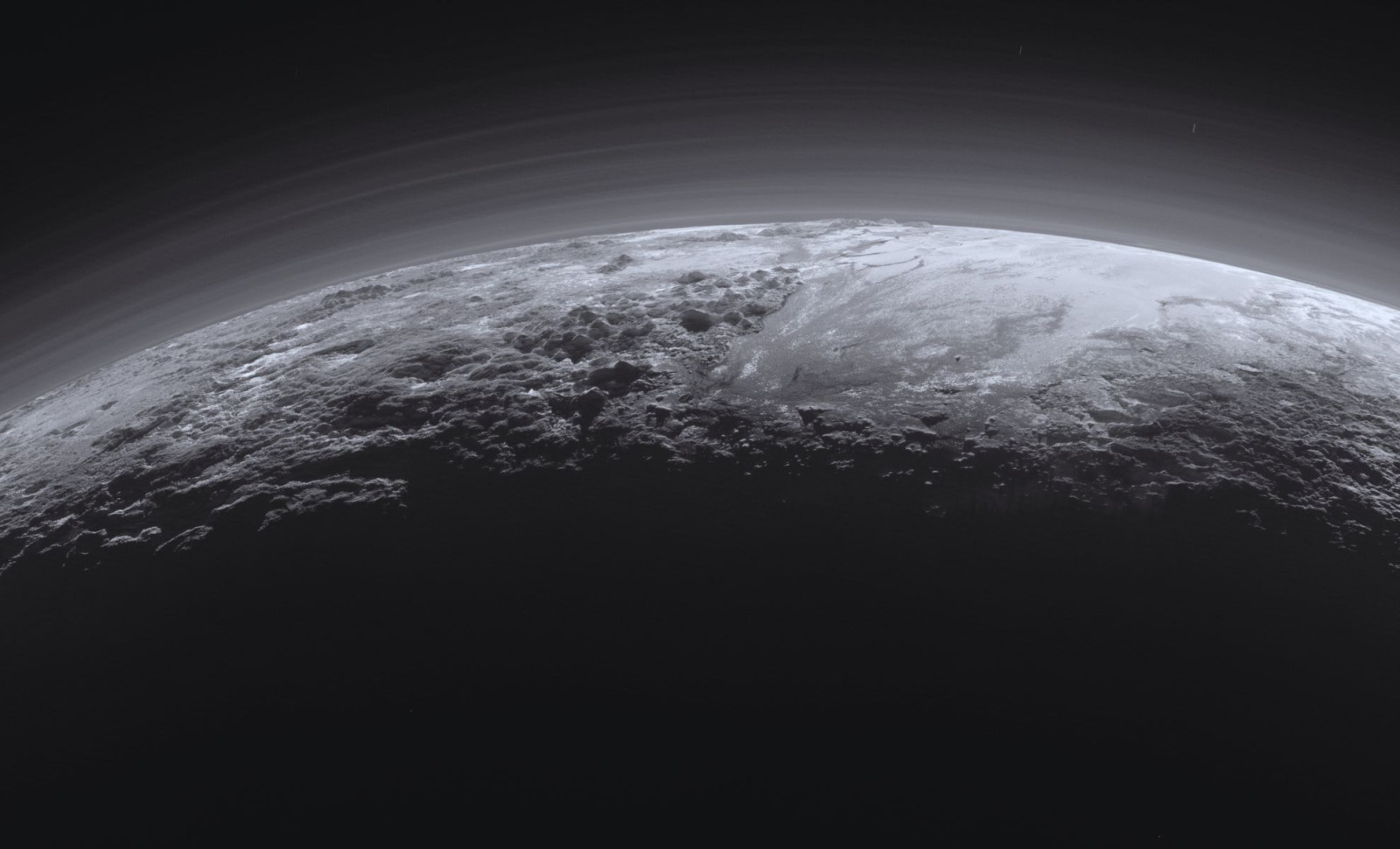
NASA’s New Horizons probe has returned breathtaking video footage revealing towering ice formations on Pluto’s satellite Nix. These icy peaks, some soaring up to 11,000 feet, consist of solid water ice that acts like rock due to the extreme cold temperatures.
The close-up views provided by New Horizons offer unparalleled insight into Nix, a small moon that has intrigued scientists for years. Situated in the cold, distant region of the solar system, Nix’s ice mountains present not only a striking appearance but also valuable scientific data. While ice is common on Pluto and its moons, Nix displays extraordinary geological features. The latest observations shed light on the dynamic forces sculpting its surface.
Exploring Nix’s Frozen Peaks
NASA explains that the ice composing Nix’s mountains is comprised purely of water ice, which in the harsh cold behaves like solid rock. These spectacular structures, reaching heights of up to 11,000 feet, represent a notable example of ice in its most rigid, rock-like state.

“This observation is so tantalizing, I’m finding it hard to be patient for more Nix data to be downlinked,” stated Carly Howett, mission scientist at Southwest Research Institute in Boulder, in a NASA statement.
Temperatures on Nix linger near a frigid -280°F (-173°C), locking the water ice into a solid form that resembles rock. Scientists estimate that these icy features may be relatively recent, with an age of roughly 100 million years, which is quite young compared to the solar system’s 4.56 billion-year age.

New Horizons Sheds New Light on Pluto’s Mysterious Moon
The imagery and videos from NASA’s New Horizons mission play a vital role in broadening our knowledge of Pluto’s satellite system. Since its launch in 2006, New Horizons conducted a landmark flyby of Pluto in 2015, and it continues to send back groundbreaking information regarding the dwarf planet and its moons.
It took 9 years and 3 billion miles to get this shot.
— Curiosity (@MAstronomers) December 27, 2025
Pluto’s icy Mountains.pic.twitter.com/jpj3kSYQoz
The spacecraft’s LEISA spectral imaging instrument has been essential in revealing the detailed composition of Nix’s surface. This technology enables in-depth analysis of the icy terrain’s makeup, helping scientists unravel how these geological features emerged and continue to evolve in the cold expanse of space.
Comparing Pluto’s Moons: Nix and Hydra
Although Nix shares some traits with another moon of Pluto, Hydra, their surfaces have notable contrasts.
“Nix and Hydra – the second and third moons to be discovered – are approximately the same size, but their similarity ends there.” explained NASA in the same statement.
According to findings from New Horizons, Nix’s surface is mostly composed of water ice, whereas Hydra exhibits greater brightness in visible light, which indicates a difference in its surface materials. These variations are crucial clues for researchers investigating the formation and geological evolution of Pluto’s moons.
“New Horizons’ findings on the surface characteristics and other properties of Nix and Hydra will help scientists understand the origins and subsequent history of Pluto and its moons,” as explained by the U.S space agency.

- Categories:
- Space










0 comments
Sign in to Comment