
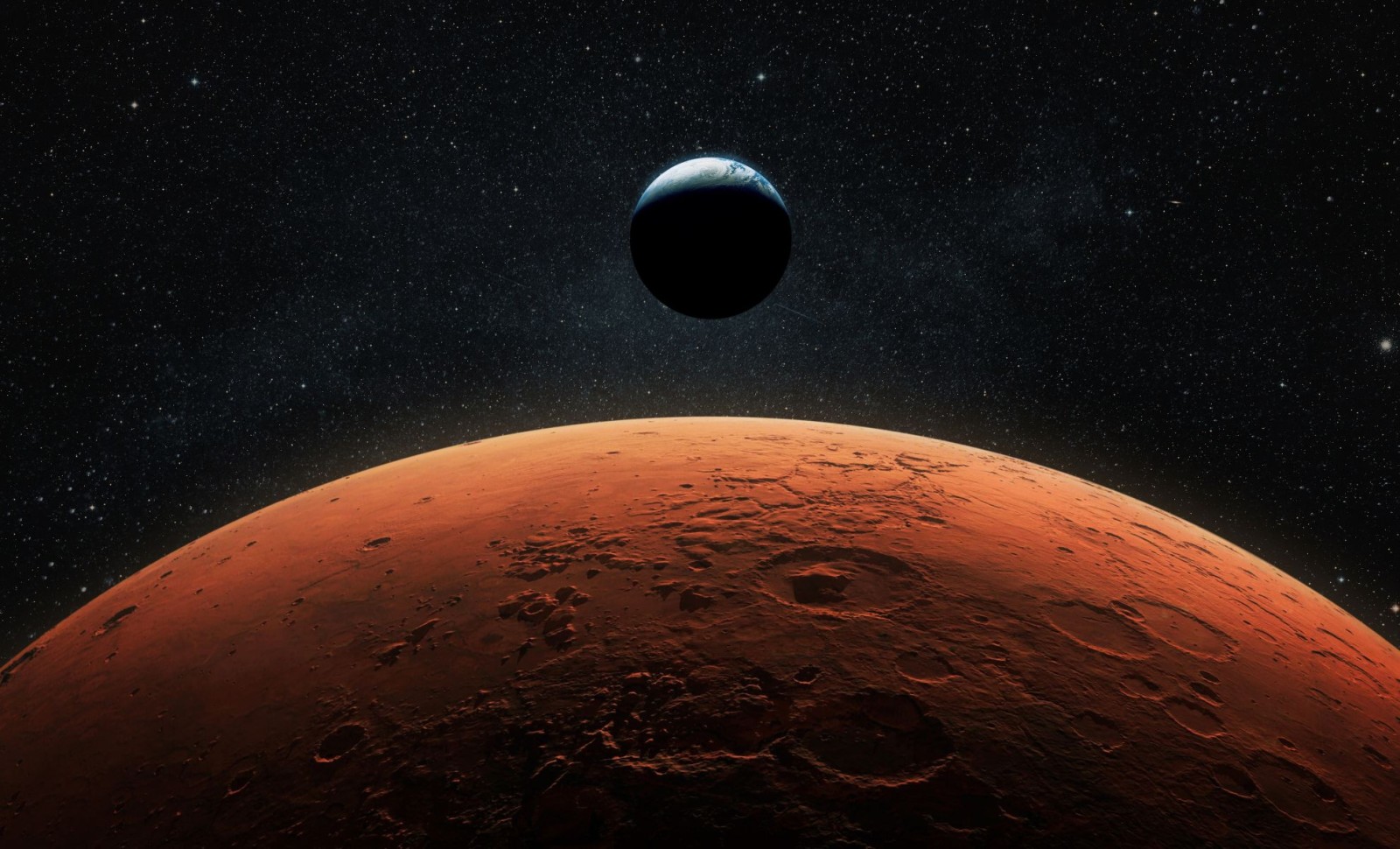
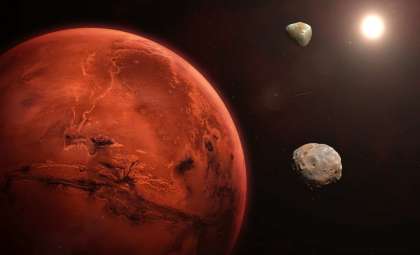
Mars, often seen as the enigmatic neighbor of Earth, may have a deeper connection to our planet’s climate than previously thought. A recent study led by astronomer Stephen Kane, published on ArXiv, reveals that the gravitational forces exerted by the Red Planet influence Earth’s climatic cycles, including the timing of ice ages and the duration of seasons. This discovery highlights Mars as a subtle but significant player in Earth’s climate system.
Mars’s Orbital Influence on Earth’s Climate Dynamics
Though Mars is smaller and less massive than giants like Jupiter, its gravitational impact on Earth is more meaningful than once believed. Simulations by Stephen Kane and his team show that changes in Mars’s mass distinctly affect Earth's orbital parameters over millions of years, thereby influencing climate cycles.
The research published on ArXiv demonstrated that Mars plays a key role in maintaining the 100,000-year climate cycles related to glacial periods. Increasing Mars’s simulated mass intensifies these cycles, while decreasing its mass causes them to disappear altogether.

This insight challenges the traditional view that Earth’s climate is governed predominantly by the Sun, underscoring the gravitational influence of its planetary neighbors. Without Mars, the Earth’s climate patterns could be radically different.
Mars, our neighboring planetary body, offers crucial insights into planetary evolution and potential future challenges for Earth. Although extensive robotic exploration has deepened our understanding, a human landing on Mars would be transformative.
Mars is approximately 140… pic.twitter.com/avfbXAB3oL— Erika (@ExploreCosmos_) June 21, 2024
Understanding the Milankovitch Cycles
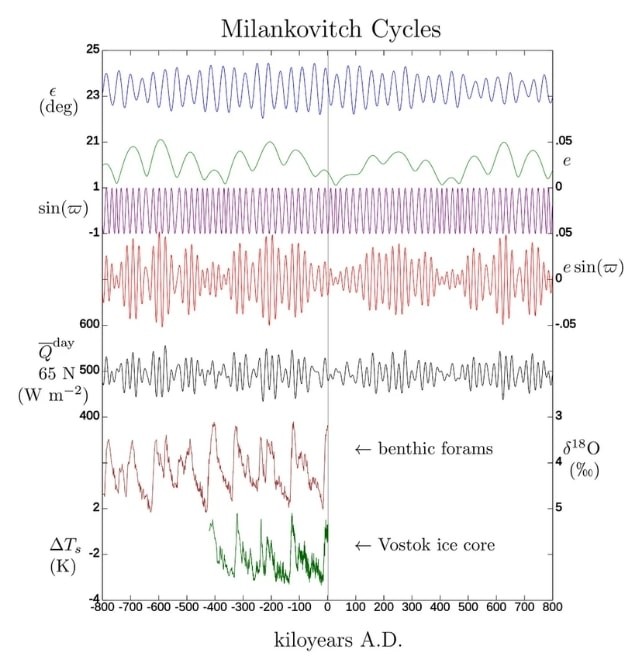
According to Science Alert, the well-established Milankovitch cycles describe how variations in Earth’s orbit, tilt, and wobble influence long-term climate changes by affecting solar energy distribution. Notably, the 405,000-year eccentricity cycle, influenced mainly by interactions between Venus and Jupiter, remains steady, but Mars’s gravitational effect dominates more prominent, shorter cycles.
Kane’s team revealed that amplifying Mars’s mass strengthens the 100,000-year cycles, boosting these climate shifts and possibly influencing ice age timings. Reducing Mars’s mass in models leads to the disappearance of these cycles.
Mars’s Impact on the Duration of Earth’s Seasons
The study also uncovers Mars’s effect on Earth’s axial tilt, known as obliquity, which dictates our seasons and varies on a roughly 41,000-year timeframe. Research by Kane suggests that if Mars were ten times more massive, this cycle would extend to between 45,000 and 55,000 years.
Altering the obliquity cycle length would influence the growth and recession of ice sheets, potentially causing greater variability in Earth’s climate. This exemplifies how changes in Mars’s characteristics could ripple through and affect Earth’s environmental rhythms.
- Categories:
- Astronomy




0 comments
Sign in to Comment