
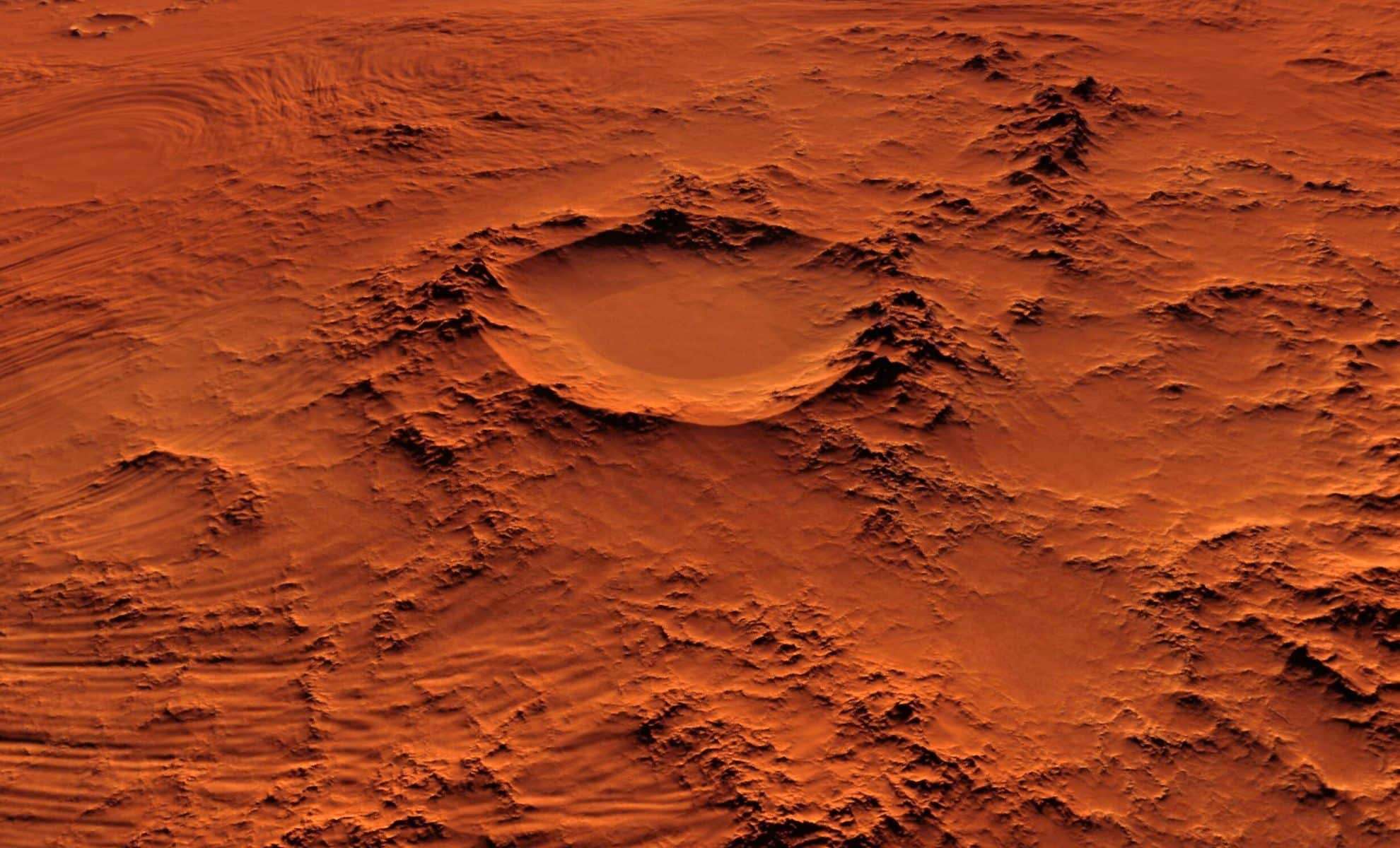
Mars, once thought to harbor flowing rivers and liquid water, has long mystified scientists as to why it transformed into the cold, arid world we observe today. A groundbreaking study led by University of Chicago planetary expert Edwin Kite, recently published in Nature, introduces a model suggesting that Mars’ evolution into a desert planet was unavoidable. Kite and his collaborators propose that the planet naturally maintains a desert-like state, with its habitability being a rare and temporary occurrence.
This research marks a pivotal advancement in decoding Mars’ climatic past. Analysis from NASA’s Curiosity rover, which identified carbonate-rich minerals on the planet's surface, plays a crucial role. These minerals reveal vital information about the disappearance of Mars’ thick atmosphere, a puzzle that has perplexed researchers for years. The rover's findings, alongside data from other missions, continue to enrich our understanding of Martian conditions.
Unraveling Mars’ Lost Potential for Life
Mars has captivated the scientific community due to its Earth-like attributes: a rocky core, available carbon, past presence of water, and its position within the solar system’s habitable zone. Yet today, it lies frozen and barren, encased by evidence of once-flowing water through ancient valleys and desiccated lakes. The central enigma remains why this planet, seemingly ripe for life, lost its hospitable environment over time.

"The longstanding mystery has been why Earth retained its life-supporting climate while Mars did not," noted Kite, associate professor of geophysical sciences and Curiosity mission participant. His team’s hypothesis emphasizes that Mars’ habitability was fleeting and sporadic, marked by occasional wet episodes punctuated by enduring dry conditions. This points to a natural, self-regulating mechanism that hindered Mars from sustaining long-term life-friendly climates.
Mars’ Habitability Was Transient, New Model Shows
Kite’s model suggests Mars’ wet intervals were anomalies rather than norms. Unlike Earth’s climate, which has stayed relatively stable for billions of years, Mars oscillated between ephemeral warm phases supporting liquid water and prolonged desert-like epochs. This hinges on the distinct behavior of the planets’ carbon cycles.
"Findings indicate Mars usually operates as a self-sustaining desert planet, with momentary habitability episodes," Kite explained. The difference largely springs from volcanic activity: Earth’s ongoing eruptions release carbon dioxide that helps keep temperatures warm, but Mars’ volcanic processes have diminished drastically, undermining its ability to maintain atmospheric warmth.
The Carbon Cycle Driving Mars’ Climate Toward Aridity
The essence of Mars’ climate story is its disrupted carbon cycle. Earth benefits from a steady exchange where volcanoes emit carbon dioxide that is absorbed by surface materials, stabilizing global temperatures. Mars, lacking active volcanoes, experiences a unidirectional lockup of carbon dioxide into carbonate minerals. Though the sun’s gradual brightening can occasionally thaw ice, these warmer spells trap carbon dioxide in solid minerals, resetting the planet to a cold, desolate state.
"Unlike Earth’s persistent volcanic activity, Mars is largely dormant, with very low outgassing rates," Kite said. This absence of replenishment leaves Mars unable to sustain the greenhouse gases necessary to support long stretches of warmth and liquid water, leading to a cycle characterized by brief wet episodes followed by extended dry phases.
Carbonate Rocks Unlock Mars’ Atmospheric History
Curiosity’s detection of carbonate minerals offers powerful evidence supporting the team's theory. These rocks act as a record of Mars’ once-dense atmosphere. Over time, carbon dioxide was absorbed and sequestered within these minerals, thinning the air to the sparse atmosphere detected today.
“Mars bears the evidence of these dramatic environmental shifts in its rocky crust,” Kite observed. “Thanks to modern rovers powered by plutonium and an array of orbiters, we’re witnessing a golden era in Martian exploration that is revealing these long-hidden secrets.” The carbonate findings mark a significant advance in uncovering why Mars’ environment became hostile to life.
The Crucial Link Between Water, Carbonates, and Mars’ Decline
The study emphasizes the interplay between minimal liquid water presence and carbonate formation in sealing Mars’ fate. Even small quantities of water could draw carbon dioxide from the atmosphere into rocks, intensifying the atmospheric thinning. Unlike Earth, Mars lacks sufficient volcanic activity to offset this removal by releasing new carbon dioxide.
"This imbalance in the carbon cycle, where the outflow of carbon dioxide exceeds the inflow, means Mars couldn’t retain a stable, warm climate," Kite explained. This insight clarifies why Mars’ periods of liquid water were short-lived and why it ultimately settled into a predominantly inhospitable desert state.
- Categories:
- News








0 comments
Sign in to Comment