
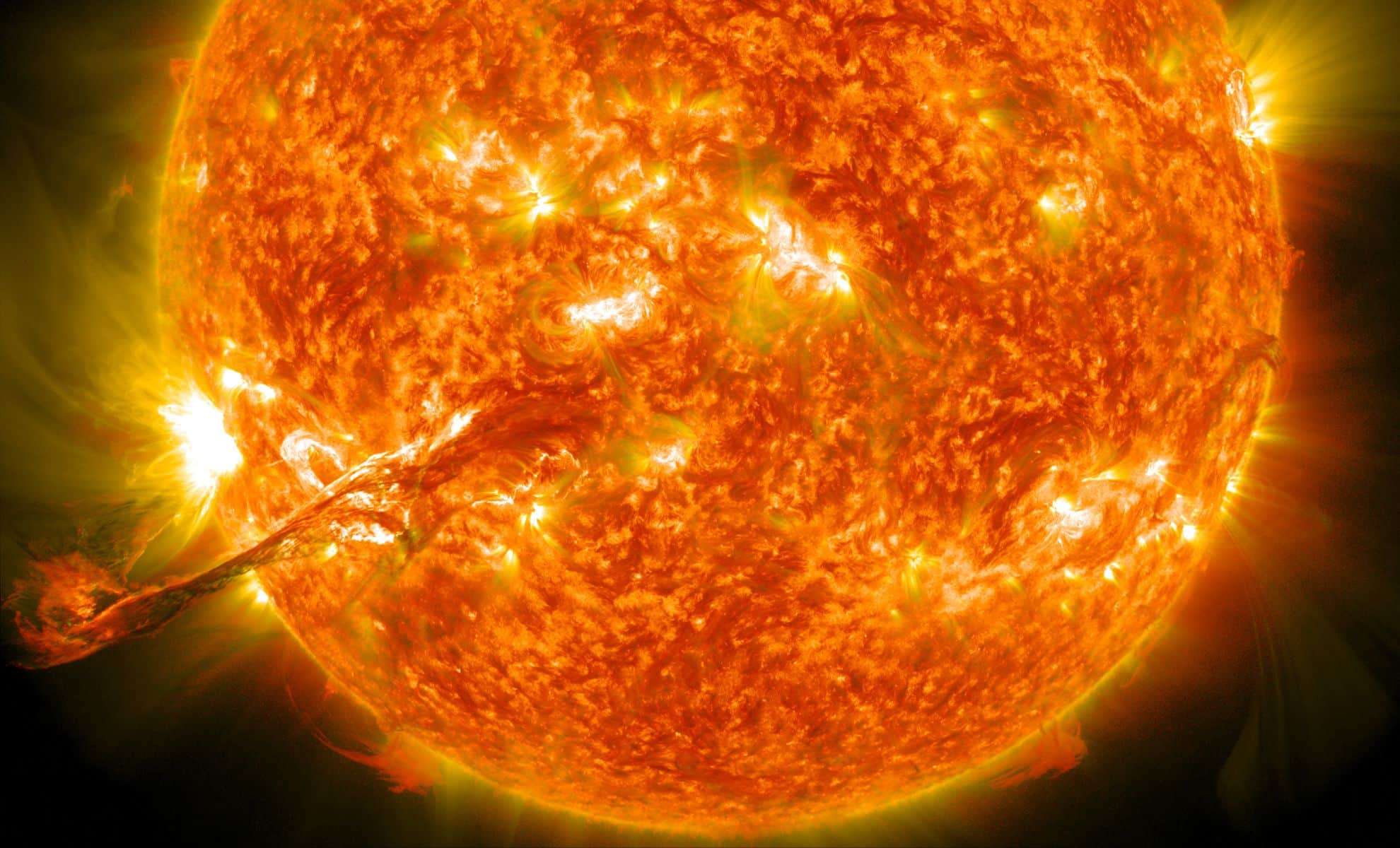
A recent publication in The Astronomical Journal details how bursts of stellar radiation—known as solar flares—can dramatically influence the climates of Earth-like exoplanets far from our solar system. This innovative research offers valuable perspectives not only on alien atmospheres but also on how solar activities could shortly affect weather patterns on our own planet. Led by scientists from the Hebrew University of Jerusalem, NASA, and partnering organizations, the project reveals that solar flares may play a far more critical role in shaping planetary climates than previously believed.
The investigation demonstrates that these flare events can instigate noticeable climatic variations on exoplanets within days. These insights are vital for evaluating planetary habitability and for improving Earth’s atmospheric forecasts by adding a fresh layer to our understanding of solar-driven climate variability.
Influence of Solar Flares on the Weather of Distant Planets
Exoplanets closely orbiting their stars face unique challenges from stellar radiation, especially from solar flares. The study concentrated on tidally locked exoplanets such as TRAPPIST-1e, where one side permanently faces the star, making them perfect natural laboratories for studying stellar weather effects on planetary atmospheres.

The findings reveal that solar flares initiate swift atmospheric reactions: the upper atmosphere cools rapidly due to radiation emitted by molecules like nitrogen oxide (NO) and carbon dioxide (CO2), while the lower atmosphere heats up as greenhouse gases such as water vapor (H2O) and nitrous oxide (N2O) increase in concentration. This dual effect leads to pronounced shifts in climate characteristics, prominently increasing wind velocities beyond 140 km/h on the planet’s dark side, underscoring the potent influence of these stellar events.
Exploring the Unexpected Connection Between Solar Activity and Climate Dynamics
Though centered on exoplanetary environments, the study offers significant implications for Earth’s climate. Dr. Assaf Hochman, a principal investigator, remarked, “While long-term climate change is mainly driven by human-induced greenhouse gases, this research reveals that short-term solar fluctuations also affect regional climate patterns.”
The evidence implies that solar flares can prompt temporary, yet meaningful, disturbances in a planet’s atmospheric circulation. These fluctuations don’t redefine overall climate trends but can intensify localized weather phenomena, such as escalating storm activity or modifying temperature swings, especially in regions susceptible to such variability.
Although these transient effects don’t rival the magnitude of anthropogenic climate influences, their significance is tangible and measurable. Dr. Hochman advises that solar variability be integrated into future atmospheric modeling efforts to better anticipate short-term atmospheric responses.
Earth’s Climate Through a New Lens: The Role of Solar Flares
Insights from exoplanet studies could enhance our grasp of how solar flare activity influences Earth’s atmosphere. While human activities remain the chief driver of global climate change, flare-induced solar events might still trigger brief anomalies impacting weather in specific fragile regions.
This research also illustrates the complex interplay between stars and their planets: stars not only provide warmth but can actively modulate weather conditions. For Earth, this insight suggests that solar disturbances might be linked to regional extreme weather events even if they don’t substantially alter long-term climate trajectories.
These findings emphasize the need for astronomers and climate scientists to refine predictive models by incorporating solar flare effects. Recognizing their measurable influence on other worlds invites reconsideration of their possible contributions to atmospheric phenomena on Earth, particularly concerning extreme weather occurrences.
- Categories:
- News








0 comments
Sign in to Comment