
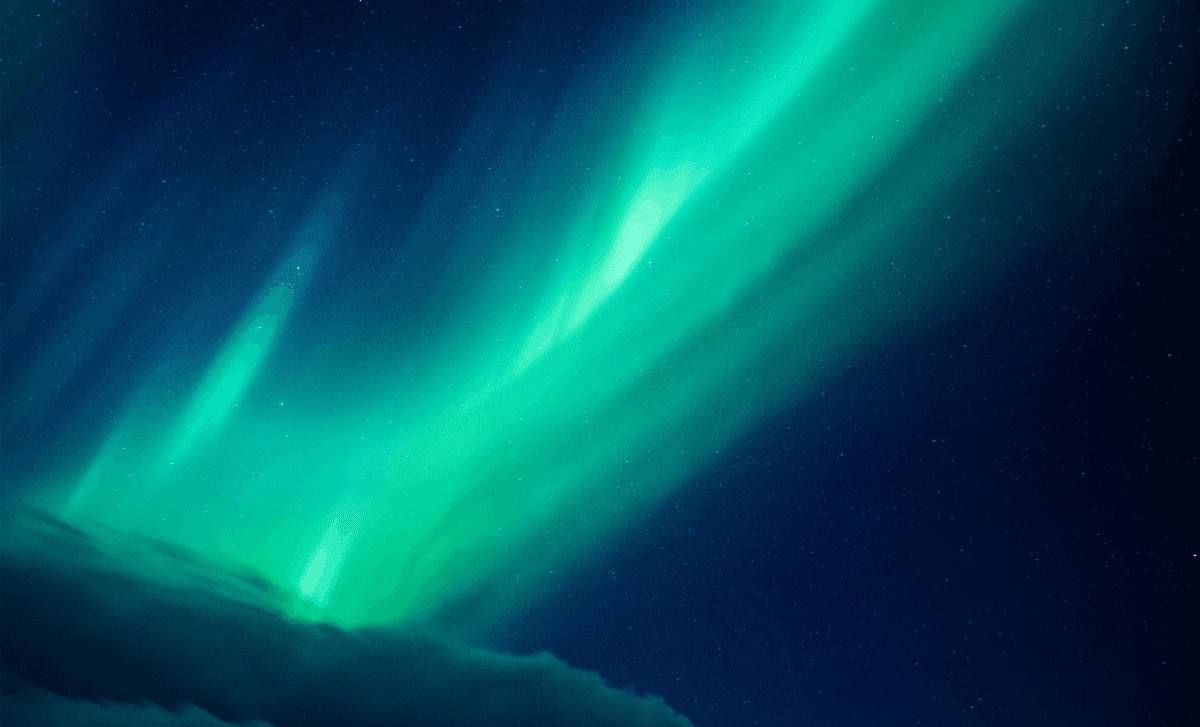
Auroras rank among Earth's most striking natural light shows, illuminating the night sky with brilliant hues. Despite extensive research, the exact altitudes and particle interactions involved in these displays have remained partly unclear. A pioneering study featured in Geophysical Research Letters breaks new ground by mapping the elevation of blue nitrogen ion (N₂⁺) auroras with exceptional accuracy, using a state-of-the-art hyperspectral imaging system.
Hyperspectral Technology Transforms Aurora Altitude Mapping
Auroras are often regarded simply as a visual marvel, but their examination delves into complex atmospheric and ionospheric processes. Conventional techniques for determining auroral height typically rely on triangulation from multiple camera sites, which often limits precision. This new investigation leverages the Hyperspectral Camera for Auroral Imaging (HySCAI), deployed by the Institute for Fusion Science in Kiruna, Sweden, to revolutionize altitude measurement.
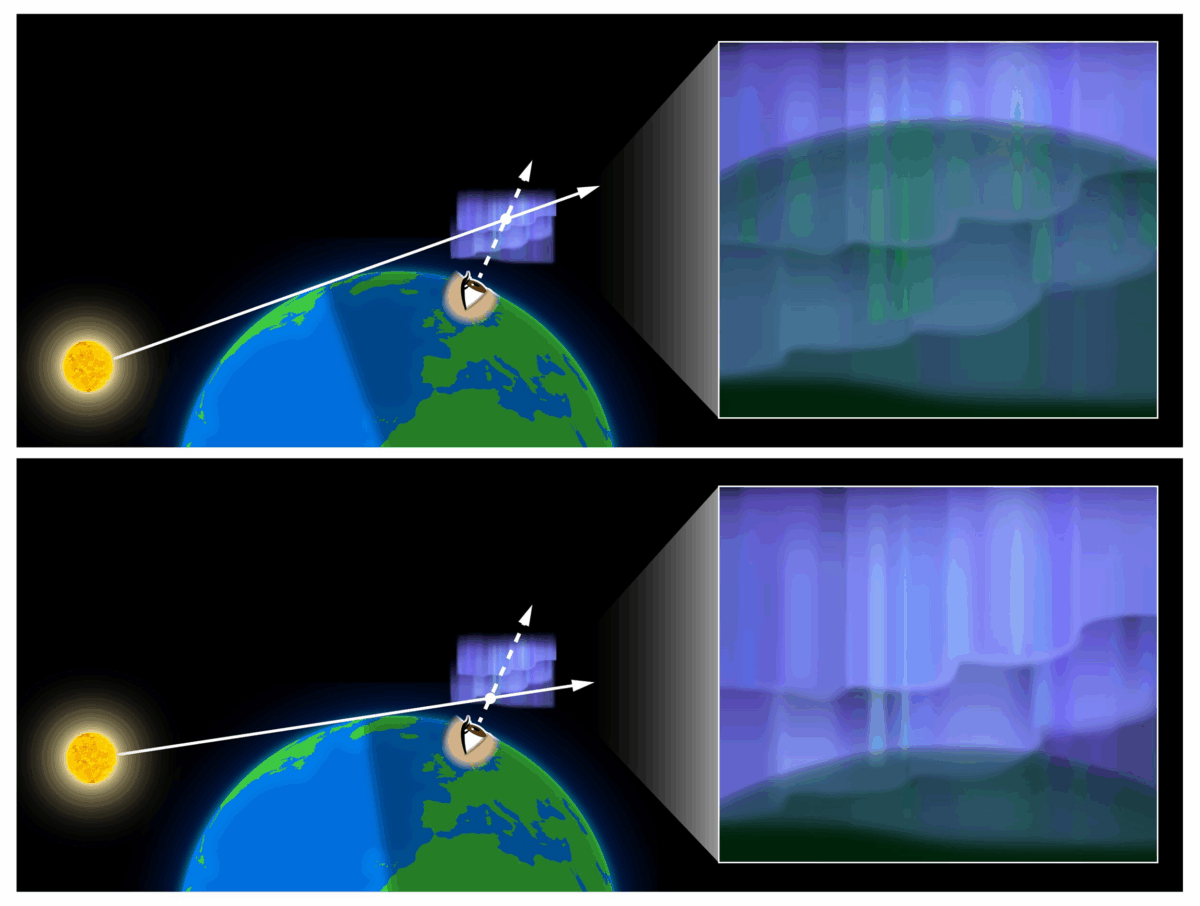
Operational since September 2023, this sophisticated instrument captures a wide range of wavelengths, allowing researchers to detect subtle differences in auroral light emissions. Crucially, it can distinguish auroral signals from solar illumination even during challenging twilight conditions, a capability that surpasses standard optical methods.

The findings, detailed in Geophysical Research Letters, show that blue nitrogen ion emissions peak near 200 km altitude. This is a notable revision from past estimates, which placed maximum intensity closer to 130 km. These results imply nitrogen ions exist higher in the atmosphere than previously thought and prompt new investigations into auroral formation mechanisms.
Reevaluating Nitrogen Ion Emission Heights
Auroras occur when energetic charged particles collide with atmospheric gases, notably nitrogen and oxygen. These collisions trigger emissions in different colors, each corresponding to specific atomic or molecular transitions. While green and red auroras, linked to oxygen, are well-known, blue emissions arising from nitrogen ions have been less extensively studied.
This latest research centers on blue lights produced by nitrogen ions excited by solar radiation, releasing photons as they return to lower energy states. The team discovered a significant emission increase from these ions at approximately 200 km altitude during astronomical twilight, challenging prior altitude assumptions.
This refined altitude profile alters our comprehension of nitrogen ions’ presence in the ionosphere, suggesting they play a more influential role at elevated regions. The precise hyperspectral measurements enhance auroral physics studies, improving atmospheric models and advancing space weather forecasting.
Advancing Aurora Science with Precision Altitude Data
Directly measuring auroral altitude profiles with this degree of precision represents a significant advance. Previously, researchers depended on indirect approaches like stereoscopic imaging, which had inherent resolution constraints. The HySCAI camera's hyperspectral functionality permits detailed observation of altitude-dependent light variations across multiple wavelengths.
This breakthrough enhances understanding of how nitrogen molecular ions (N₂⁺) originate and disperse within the ionosphere, a critical but not well-characterized process. Mapping the emission altitudes of these ions offers fresh insights into their role in space weather interactions and their influence on Earth’s magnetic environment.
These findings lay groundwork for future investigations into how Earth’s ionosphere evolves in response to solar activity. Utilizing cutting-edge technology like the HySCAI, scientists aim to refine ionospheric models further, improving forecasts of space weather events that could affect satellites, GPS, and global communications networks.
- Categories:
- News



0 comments
Sign in to Comment