
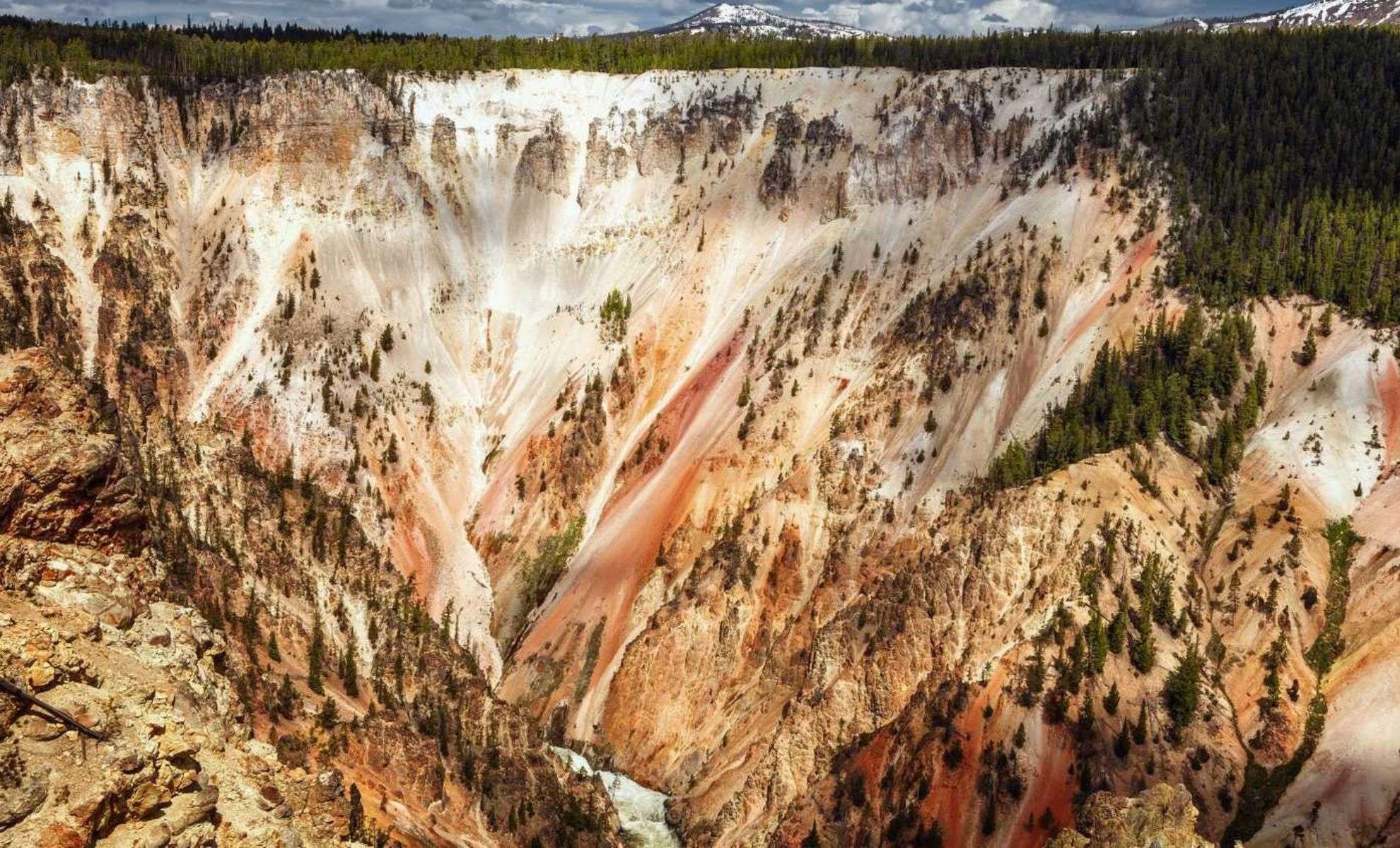
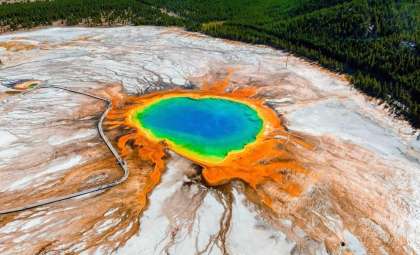
Yellowstone National Park continues to fascinate both scientists and the general public, especially because of its massive supervolcano, a geological marvel that has often been portrayed in movies and speculative discussions about natural disasters.
Spanning multiple states, any eruption from this volcanic giant could have widespread consequences. Recent studies, however, indicate a shift in the probable eruption zone, suggesting Yellowstone’s volcanic dynamics are migrating towards the northeast.
Northeastward Shift in Yellowstone’s Volcanic Center
A team of scientists has applied advanced electromagnetic sensing techniques to examine Yellowstone’s magmatic system in unprecedented detail. Their work reveals that volcanic activity, traditionally dominant in the park’s western sectors, is transitioning northeastward.

By leveraging magnetotellurics—a method that captures electromagnetic waves from natural events like lightning and solar storms—the team could effectively illuminate Yellowstone’s subsurface magma chambers. This approach essentially uses natural electromagnetic phenomena as “flashlights” to peer into the Earth’s depths.
Data indicate that while the western magma zone is cooling, the northeastern area remains firmly linked to hotter, deeper magma sources. This implies that any future eruption might diverge from historic locations and instead originate in the park’s northeast.
Implications for Yellowstone’s Volcanic Future
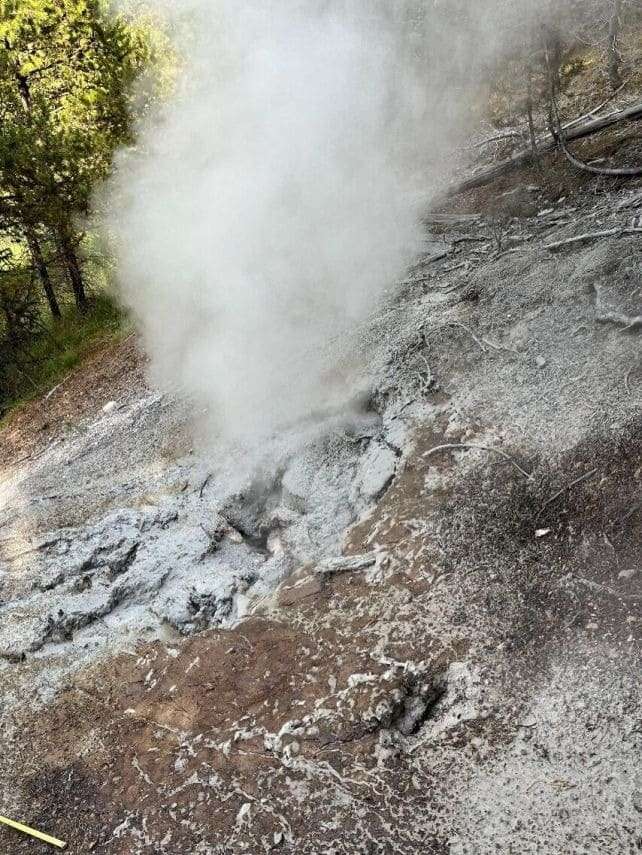
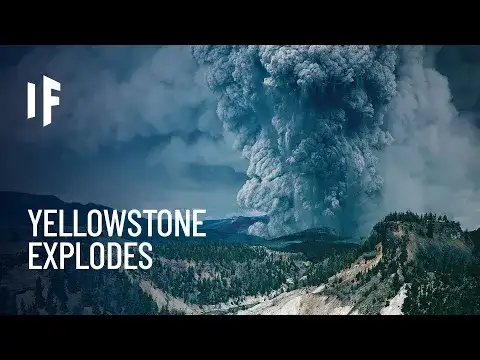
Even with this shift, a volcanic eruption is not expected anytime soon. The findings suggest that reaching the critical heat and pressure to ignite a major eruption could take hundreds of thousands of years. Although lengthy by human measures, this is relatively brief in geological terms.
The Yellowstone caldera last erupted roughly 640,000 years ago, and the most recent lava flows date to about 70,000 years in the past, moments in Earth’s timeline but distant from today’s perspective.
Currently, Yellowstone’s magma remains semi-solid, meaning it will require a substantial span of time before conditions align for a significant volcanic event.
Exploring Yellowstone’s Magma with Magnetotellurics
Magnetotellurics was central to this recent research, a technique utilizing natural electromagnetic signals from lightning and solar activity to investigate the Earth's internal structures.
As these waves travel through the Earth's crust, variations in conductivity caused by molten versus solid rock create measurable signal changes.
Because molten rock conducts electricity much more effectively than solid materials, these signals help map the precise locations of subterranean magma chambers.
At Yellowstone, this method uncovered seven distinct magma reservoirs at various depths, revealing a complexity previously unseen.
The cooling of the western magma bodies contrasted with the persistent heat connection in the northeast suggests that volcanic activity may increasingly favor the latter region.
Long-Term Outlook for Yellowstone’s Volcanic Evolution
This discovery of a shifting volcanic focus does not herald an imminent eruption but enriches our understanding of Yellowstone’s volcanic behavior over time.
While the timeline extends far beyond human lifespans, these insights improve forecasts about where and when eruptions might eventually occur.
The Yellowstone supervolcano operates on a geological clock vastly different from human experience, underscoring that any forthcoming eruption remains a distant prospect.
The newly characterized magma reservoirs imply that an eruption influenced by the northeastern magma zone won’t occur until it heats sufficiently, a process expected to span many millennia.
Continuous Monitoring and Future Research Directions
This breakthrough opens avenues for ongoing investigation. Researchers plan to track temperature changes in Yellowstone’s northeastern magma chambers over extended periods—a process akin to gradually heating a slow cooker.
Upcoming studies will integrate magnetotellurics with approaches like seismic analysis, ground movement tracking, and gas chemistry assessments from geothermal features.
This comprehensive strategy promises to deepen scientific knowledge of Yellowstone’s volcanic system and refine predictions regarding its future activity.
- Categories:
- News





0 comments
Sign in to Comment