
Following extensive genetic studies, scientists have unveiled a new bird species in Japan— the Tokara Leaf Warbler. This elusive bird closely resembles its known relative but has now been recognized as distinct, marking Japan’s first avian species discovery since 1982.
Previously, the Ijima’s Leaf Warbler (Phylloscopus ijimae) was thought to inhabit both the Izu and Tokara island groups as a single species due to their nearly identical appearances. Traditional taxonomy did not distinguish between these populations for many years.
However, the application of genomic analyses has changed this view. Published in PNAS Nexus, the genetic data highlighted significant differences between the island populations.

Genetic Evidence Spurs a Decade of Research
Initial genetic data surfaced around ten years ago when researchers sequenced DNA from warblers in both island groups. These findings indicated the populations were “noticeably distinct,” prompting intensified study.
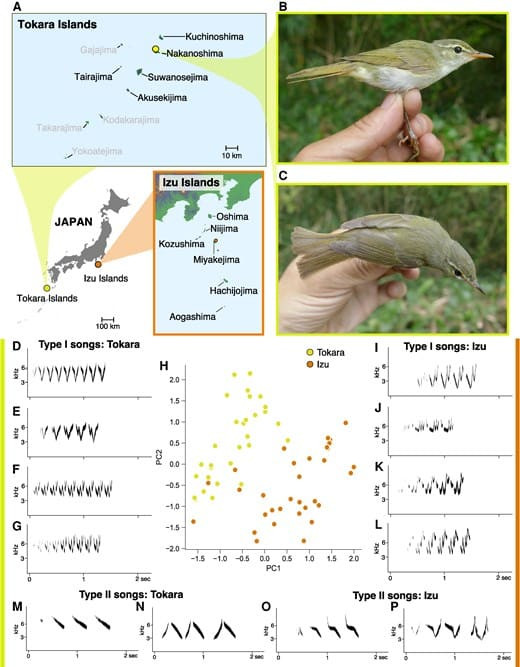
Fieldwork and lab analysis—including museum specimen comparison—further supported these results. As detailed in the recent publication, comprehensive genome sequencing validated that the Tokara birds represent a separate species, now named Phylloscopus tokaraensis.
“This shows how important it is to use genetic methods to reveal hidden biodiversity at a time of global biodiversity crisis. These methods can help provide more complete knowledge on which to base future nature conservation efforts,” said Per Alström, a professor at Uppsala University in Sweden.
Species Differentiated by Vocalizations Over Appearance
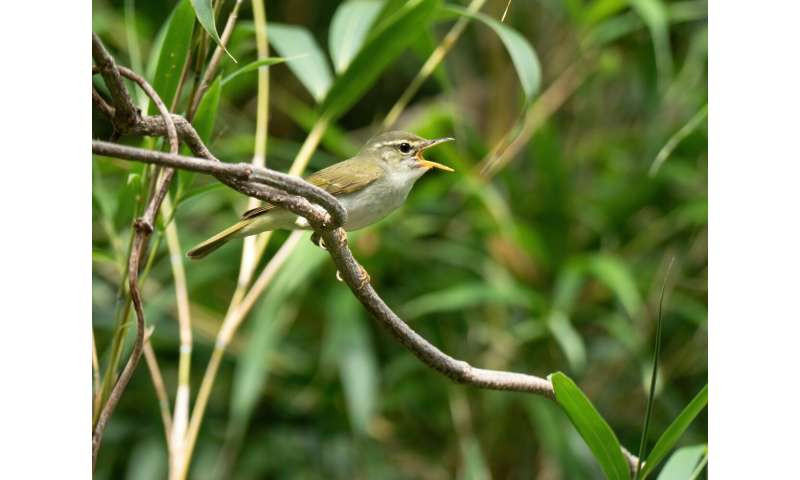
Despite considerable genetic differences, the two warblers look nearly identical. Scientists describe the Tokara Leaf Warbler as “cryptic,” meaning it is challenging to tell apart from Ijima’s Leaf Warbler visually.
In contrast, their songs present clear differences. Recordings analyzed by Alström reveal that the Tokara population emits simpler sound patterns. This acoustic divergence, alongside genetic findings, provided sufficient justification for separating the species.
Island Habitats and Conservation Implications
Both species are confined to small island habitats. The Tokara Islands span just over 100 square kilometers distributed over twelve islands, limiting their population sizes naturally.
The study noted that both warblers show low genetic diversity, which may heighten their vulnerability to environmental shifts and diseases. According to the team:
“Ijima’s Leaf Warbler is already classified as Vulnerable as well as a “Natural Monument” in Japan, and we propose that the Tokara Leaf Warbler should retain this status, with continued focused monitoring.”
The researchers advocate for similar protective measures for the Tokara Leaf Warbler, emphasizing the need for ongoing observation given its restricted range and rarity.
“Our study not only highlights the importance of integrating genomics with taxonomy for uncovering cryptic avian diversity but also provides a critical foundation for future conservation efforts,” concluded the authors.
- Categories:
- News











0 comments
Sign in to Comment