
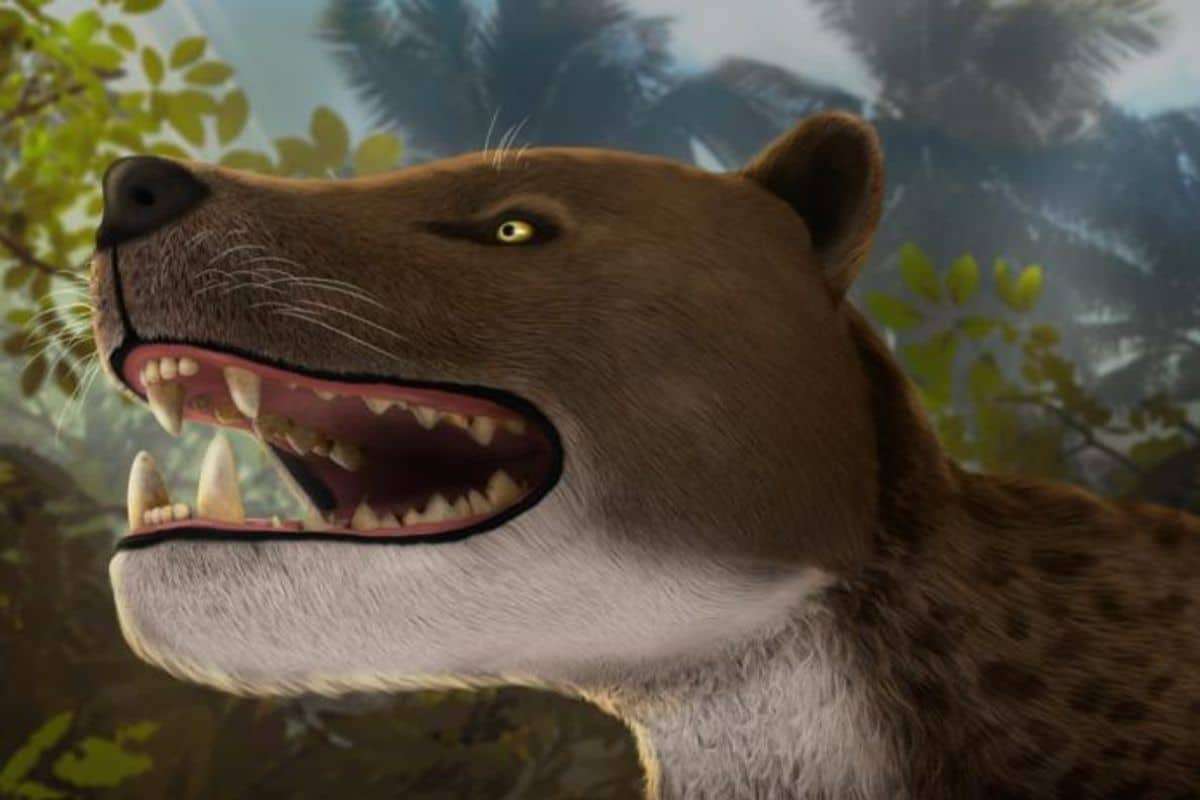
Researchers working in Egypt have uncovered an almost complete skull belonging to a member of the Hyaenodonta, an extinct lineage of dominant carnivores in prehistoric African landscapes. This groundbreaking discovery in the Fayum Depression offers fresh insights into the evolution and ecological role of these hypercarnivores, who thrived for millions of years before disappearing in the late Miocene epoch.
The predator, named Bastetodon syrtos, was about the size of a leopard and might have hunted early relatives of elephants, hippos, and primates. The fossil, which was detailed in the Journal of Invertebrate Paleontology, plays a key role in piecing together how these fearsome animals spread and flourished across continents before their extinction.
Ancient Apex Predator Unearthed
Bastetodon syrtos is part of the Hyaenodonta order, a group of carnivorous mammals that, despite their name, are not closely related to today’s hyenas. These animals subsisted on a diet comprising over 70 percent meat, categorizing them as true hypercarnivores. Equipped with strong jaws and sharp teeth, B. syrtos dominated the predator guild in Africa during the Oligocene.

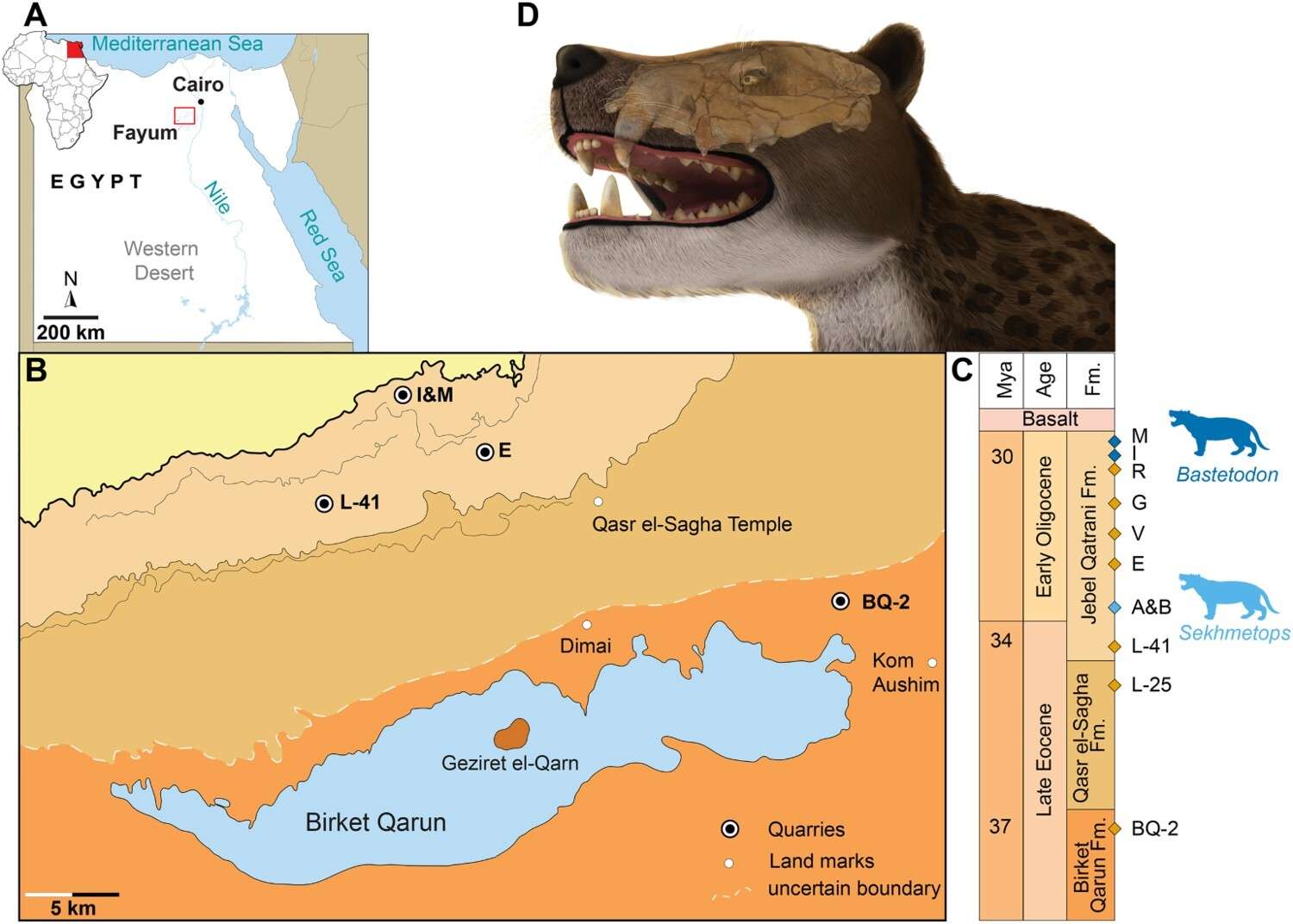
Found within the fossil-rich Fayum Depression, the skull offers a rare snapshot of an era when such predators reigned. Once a thriving environment, this now-arid region was home to a diverse array of species like early proboscideans and proto-hippopotamuses. B. syrtos likely hunted these creatures, profoundly influencing the ancient ecosystem’s food web.
A Remarkable Find Almost Overlooked
The excavation, involving experts from Mansoura University and The American University in Cairo, nearly missed this exceptional specimen. After several days spent removing layers of rock aged around 30 million years, the team was preparing to wrap up when a member noticed a distinctive set of teeth protruding from the soil.
“Just as we were about to conclude our work, a team member spotted something remarkable—a set of large teeth sticking out of the ground. His excited shout brought the team together, marking the beginning of an extraordinary discovery: a nearly complete skull of an ancient apex carnivore, a dream for any vertebrate paleontologist,” said Shorouq Al-Ashqar, lead author of the study.
This serendipitous find has prompted scientists to revisit fossils of related species, such as Sekhmetops, a fellow hyaenodont named in tribute to the Egyptian lion-headed goddess Sekhmet.
The Extinction of Hyaenodonts
Although dominant for many millions of years, hyaenodont carnivores vanished during the late Miocene, around 5 to 7 million years ago. Their disappearance is linked to a combination of climatic shifts, competition from newly emerging predatory mammals, and evolutionary setbacks.
The advent of feliforms (ancestors of today’s cats) and caniforms (relatives of modern dogs and bears) introduced more versatile predators to the environment. These new carnivores employed advanced hunting techniques, greater endurance, and better ecological adaptability, which likely contributed to outcompeting the hyaenodonts and leading to their extinction.
Why Bastetodon syrtos Matters
Finding Bastetodon syrtos marks a significant milestone in decoding the diversity and distribution of ancient predatory mammals. This fossil represents one of the most intact hyaenodont skulls discovered, offering valuable data about their evolutionary history and geographical spread.
“The discovery of Bastetodon is a significant achievement in understanding the diversity and evolution of hyaenodonts and their global distribution,” said Shorouq Al-Ashqar. “We are eager to continue our research to unravel the intricate relationships between these ancient predators and their environments over time and across continents.”
- Categories:
- Science










0 comments
Sign in to Comment