
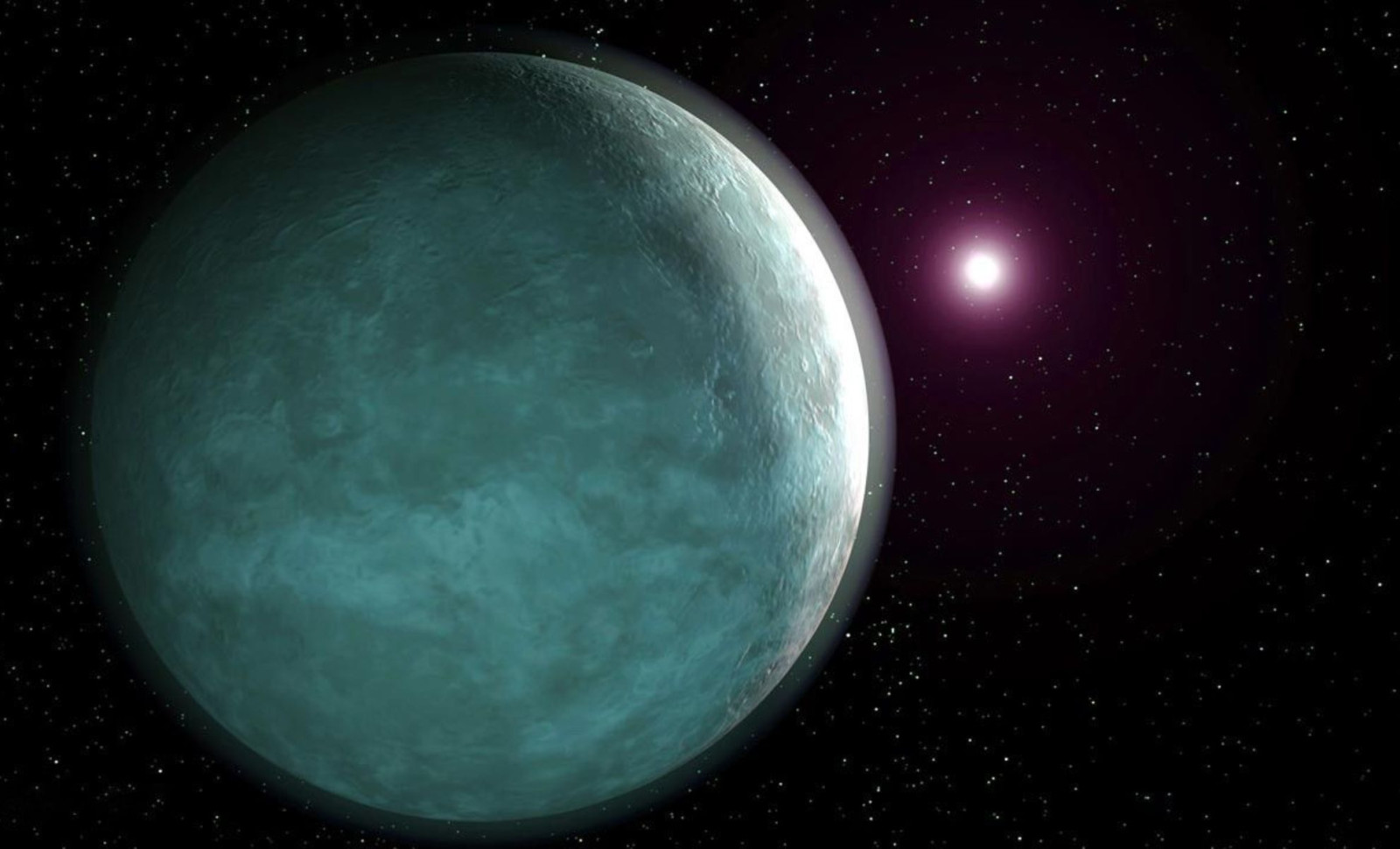
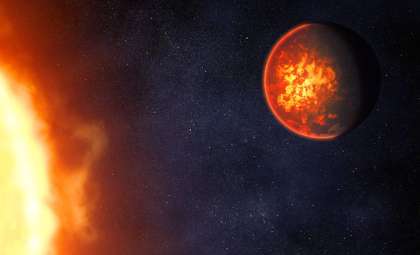
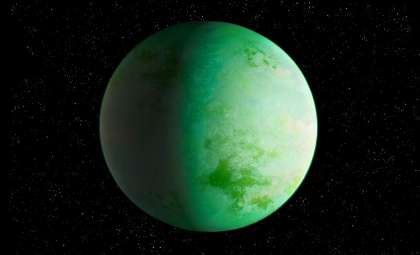
A recently identified planet orbiting the nearby star GJ 887 is attracting significant attention as a strong prospect in the quest for alien life. This super-Earth, with a mass exceeding six times that of Earth, resides within the habitable zone of its star, a region where liquid water could potentially exist.
Situated just 10.7 light-years from the Sun, GJ 887 ranks among our closest stellar neighbors. Over the past few years, research has increasingly targeted planets around stars like GJ 887, as such systems represent prime environments for exploring conditions favorable to life. Still, additional studies are necessary to determine the planet’s true habitability.
A Super-Earth with Promising Potential for Life
The newly detected planet, designated GJ 887 d, falls into the super-Earth category due to its significantly larger mass compared to Earth. According to NASA, with a mass estimated to be at least 6.1 times Earth's, GJ 887 d stands out among exoplanets as an exciting candidate for habitability.

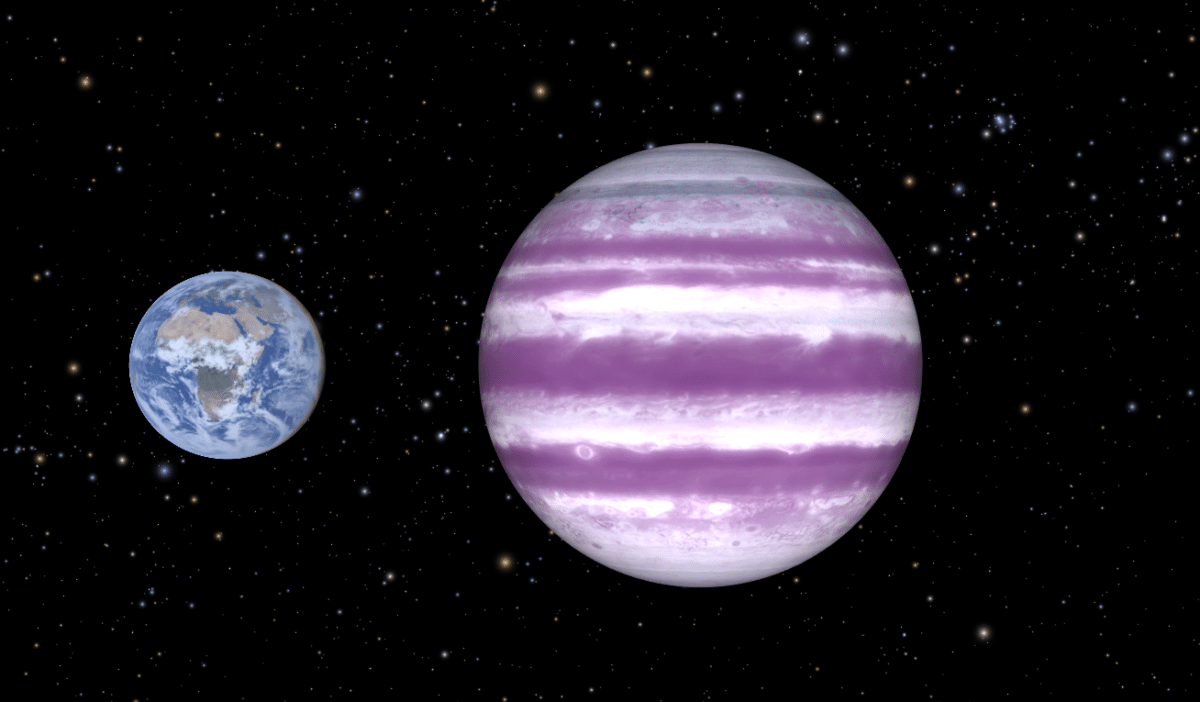
The planet completes an orbit around GJ 887 in just 50.7 days, considerably shorter than Earth's 365-day cycle. Yet, given that it orbits a cooler star, the planet is expected to have warm, temperate conditions. The larger mass of this super-Earth could allow it to hold onto a dense atmosphere, a vital component in sustaining liquid water and possibly life itself.
The Remarkable Stability of GJ 887
Distinct from many red dwarf stars known for frequent flare activity, GJ 887 exhibits a notably tranquil nature. Stellar flares typical of low-mass stars often pose threats by stripping away planetary atmospheres, thereby undermining habitability. In contrast, GJ 887's minimal flare emissions bolster the prospects for GJ 887 d retaining a protective atmosphere conducive to life.
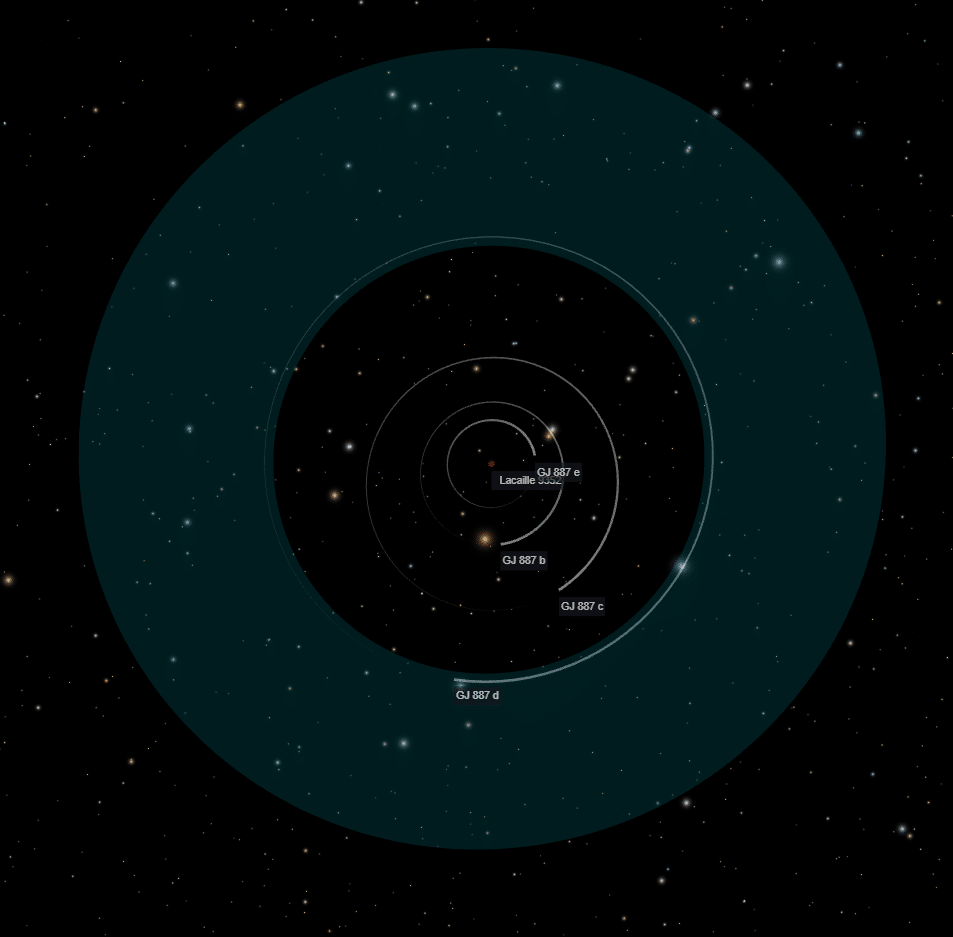
The relative serenity of this star is a major factor driving scientific enthusiasm about this system, as it may provide a long-term stable setting favorable to life’s development. Research published in Astronomy and Astrophysics highlights that this subdued flare behavior is critical in assessing GJ 887 d's ability to sustain an atmosphere supportive of life.
Obstacles in Studying GJ 887 d
Despite its nearness, GJ 887 d presents observational difficulties. The planet does not transit its star, which prevents astronomers from directly analyzing its atmosphere via the common method of studying starlight dimming during a transit.
GJ 887 d was instead detected through the radial velocity technique, which tracks the star's minute movements caused by the planet’s gravitational influence. Experts suggest that this planet may be challenging to observe even with future space observatories, including the proposed Habitable Worlds Observatory.
- Categories:
- Space








0 comments
Sign in to Comment