
On November 20, 2025, a unique astronomical event will occur as the new moon reaches its most distant point from Earth in nearly two decades. Positioned at approximately 406,681 kilometers (252,706 miles) away, this new moon marks the furthest distance the lunar surface will be from our planet until December 1, 2043. Although invisible to the naked eye, this occurrence offers valuable insight into the complex movements of the Moon.
Understanding the Moon’s Evolving Orbit and Extreme Reach
The Moon follows an elliptical path around Earth, causing the distance between the two to vary. The closest approach, or perigee, ranges from 356,355 to 370,399 kilometers (221,429 to 230,155 miles), while its furthest point, known as apogee, shifts between 404,042 and 406,725 kilometers (251,060 to 252,272 miles). These fluctuating positions influence phenomena such as supermoons and micromoons as the Moon orbits Earth.
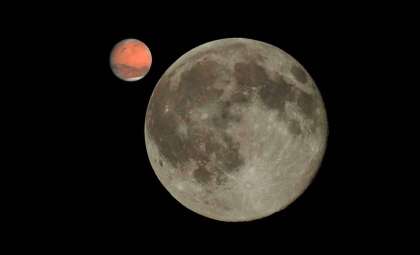
A supermoon happens when a full moon coincides with perigee, appearing larger in our sky, whereas a micromoon occurs when a full moon aligns with apogee, appearing smaller. Similar variations also affect the new moon phase, which happens when the Moon is between Earth and the Sun.

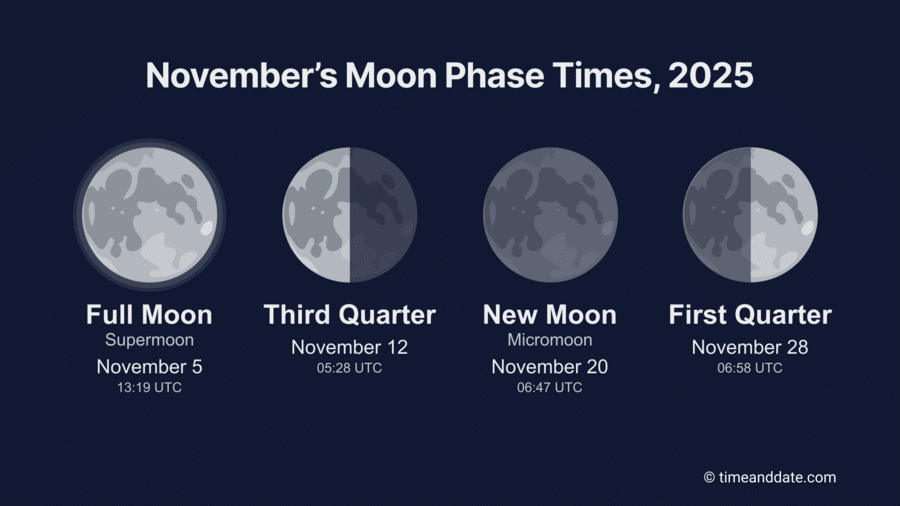
“The Moon reaches its farthest distance on November 20, 2025, around 02:46 UTC. This is about four hours before the moment of New Moon at 06:47 UTC,” explained Graham Jones, an astrophysicist and science communicator, making it the farthest new moon until 2043.
An Uncommon Lunar Distance Milestone
As detailed by TimeAndDate , on the evening of November 20, the Moon will be approximately 406,681 kilometers away, a distance no new moon will exceed until December 1, 2043, when the Moon will be slightly farther at 406,699 kilometers. This event represents the third greatest lunar distance during a new moon in this century, preceded by the new moon on March 14, 2002 at 406,700 kilometers. The farthest new moon of the 21st century will happen on February 3, 2125, at 406,709 kilometers.
These lunar distance variations highlight the dynamic nature of the Moon’s orbital behavior and how subtle shifts can influence terrestrial phenomena, including tides. Despite being invisible, such new moons are crucial for advancing our grasp of celestial mechanics.
Locations on Earth with Maximum Distance from the Moon
During this new moon, the point on Earth's surface farthest from the Moon will be situated in the North Atlantic Ocean, specifically southeast of Bermuda. This spot lies diametrically opposite Western Australia, and at this location, the distance between the Moon and Earth's surface will measure about 411,300 kilometers (255,600 miles), representing the greatest separation possible from the surface. While this new moon sets a modern distance record, an upcoming micromoon on January 27, 2032, will be the most distant full moon visible for the next 75 years.
- Categories:
- News




0 comments
Sign in to Comment