
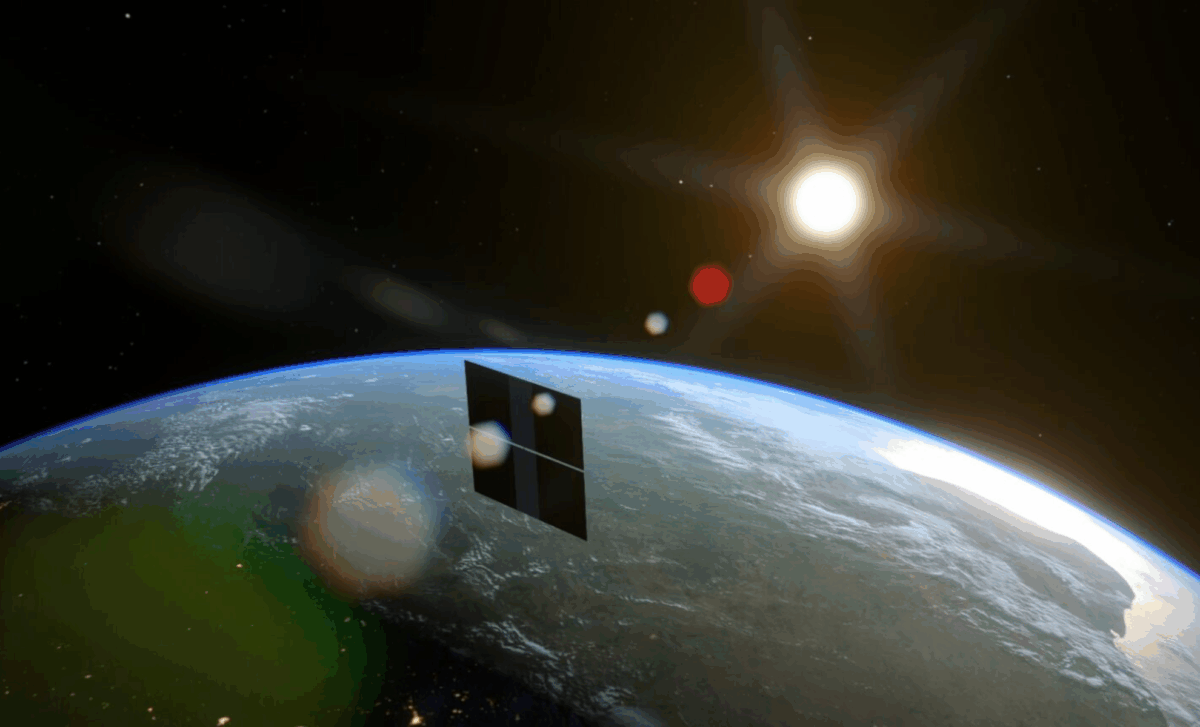
An advanced NVIDIA H100 GPU is preparing to embark on a journey aboard Starcloud-1, a satellite created to explore the potential of data processing in orbit. Scheduled for launch via a SpaceX Falcon 9 rocket, this mission represents a milestone in the evolution of cloud computing beyond Earth’s surface. Starcloud, the company behind this effort, envisions a future where entire data centers operate in space.
Launching Innovation With a Singular Chip
Central to this endeavor is the NVIDIA H100 GPU, one of the most capable AI processors currently available. More than a simple payload, this chip serves as a technology showcase with significant consequences. Engineered for machine learning, inference, and model optimization, it will begin its orbital operations by analyzing data from Earth observation satellites, including detailed radar and optical images too cumbersome to transmit directly to ground stations without delay.
Utilizing onboard AI frameworks like Google’s Gemma, the satellite will perform preliminary data processing in space, drawing out the most valuable information to send back. This approach signals a substantial advancement toward distributed computing in orbit.

“Starcloud needs to be competitive with the type of workload you can run on an Earth-based data center, and the NVIDIA H100 GPU is by far the most performant in terms of training, fine-tuning and inference,” said Philip Johnston, Starcloud’s cofounder and CEO.
Rethinking Data Centers: Why Space Makes Sense
Though orbital computing may appear niche, Starcloud considers space the next logical step for expanding large-scale computing resources. Terrestrial data centers grapple with concerns about their impact on water use, energy consumption, noise, and carbon emissions. Johnston highlights the transformative potential of relocating computing infrastructure to orbit.
“In space, you get almost unlimited, low-cost renewable energy,” Johnston explained in a recent statement. “The only cost on the environment will be on the launch; then there will be 10x carbon-dioxide savings over the life of the data center compared with powering the data center terrestrially on Earth.”
The benefits are clear: abundant solar energy, elimination of noise disruption, and efficient passive cooling conditions provided by the vacuum of space.
Envisioning the Future of Cloud Computing Above Earth
This inaugural mission is more than a demonstration—it represents the foundational move toward an expansive network of data centers in orbit. Starcloud’s vision includes establishing orbital data centers generating 5 gigawatts of power, featuring extensive solar panels and radiative cooling surfaces spanning approximately 4 kilometers.
The feasibility of this ambitious plan depends heavily on reduced launch expenses. As noted by Space.com, Starcloud is closely monitoring SpaceX’s Starship vehicle for its potential to dramatically cut the cost of sending cargo into orbit. Johnston forecasts a future where “In 10 years, nearly all new data centers will be being built in outer space,” a bold outlook shaped by ventures like Starcloud-1.
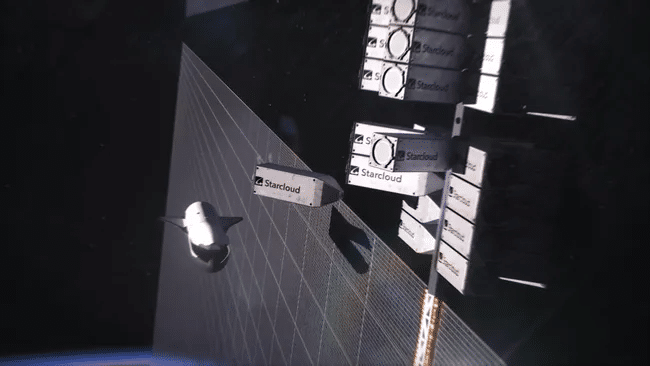
Real AI Experiments Beyond Earth
The Starcloud-1 satellite will also test AI technologies under the tough conditions of space. By processing live data streams from Earth observation instruments and running Google’s Gemma large language model on orbit, it will demonstrate how edge AI computations can be executed directly where data originates. This reduces latency and eases the need for data transfer bandwidth, a key limitation in current satellite intelligence systems.
Johnston aims to build AI platforms in space that rival or exceed performance and eco-efficiency of ground-based computing. Alongside other innovators like Reflect Orbital, the competition to establish the first scalable orbital cloud infrastructure is gaining momentum.
- Categories:
- News









0 comments
Sign in to Comment