
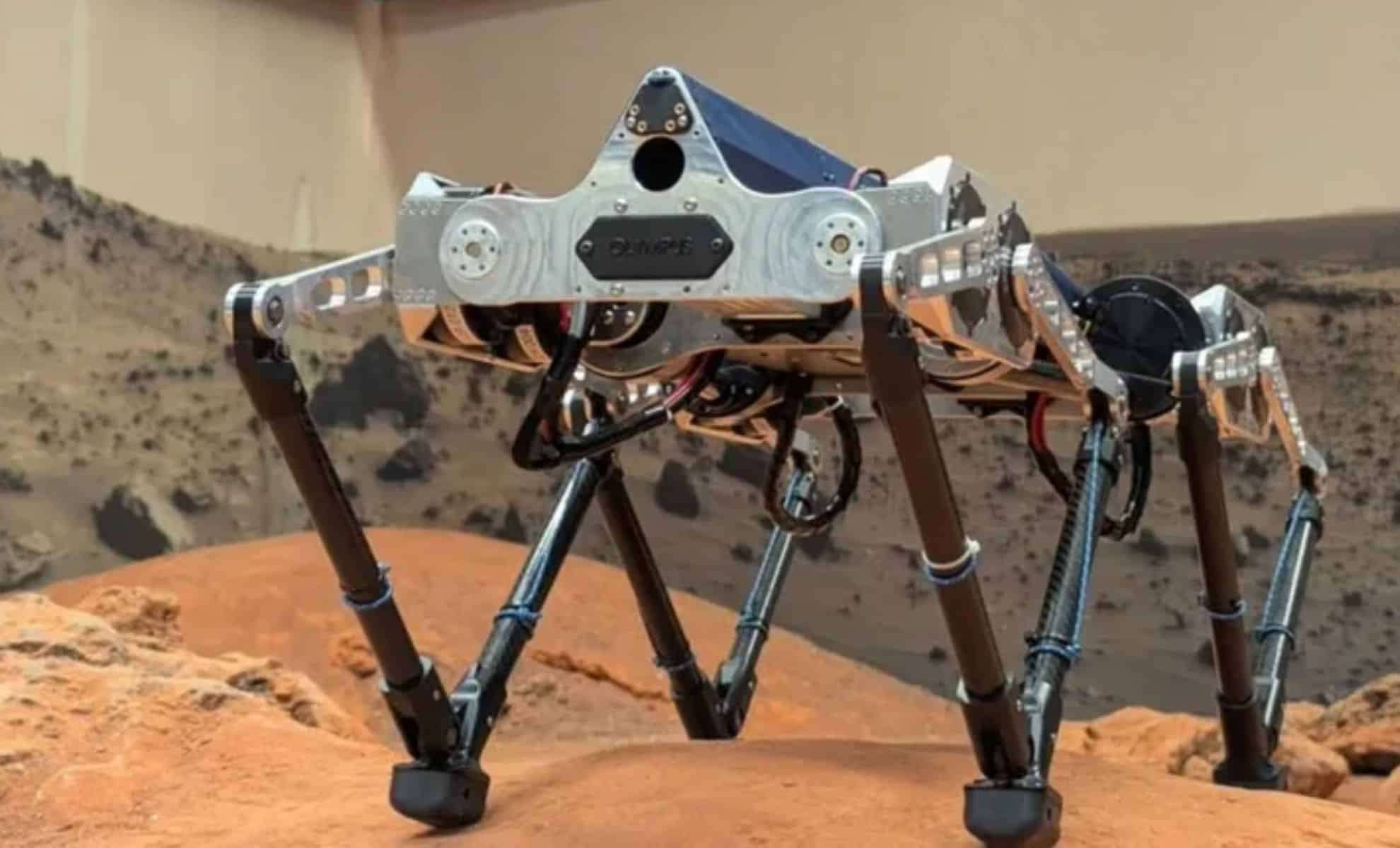
Space exploration continues to captivate humanity, evolving from early satellite launches and Apollo missions to the ambitious pursuit of reaching Mars and beyond. Cutting-edge advancements in robotics, especially agile four-legged machines like Olympus, are revolutionizing planetary exploration possibilities. The European Space Agency (ESA) spearheads these innovative efforts, developing robots capable of thriving in harsh environments such as Mars, characterized by low gravity and challenging terrain. Drawing on state-of-the-art technology and rigorous simulations, ESA’s recent microgravity tests with Olympus highlight the vital role robots may play alongside astronauts on future missions. As humanity plans for a sustainable foothold on Mars, robots like Olympus are set to open new pathways for exploration and survival.
The Advantages of Legged Robots for Martian Terrain
One of the primary obstacles in Mars exploration is maneuvering through its rugged and uneven landscape. Conventional rovers employing wheels or tracks often encounter difficulties with boulders, slopes, and unpredictable surfaces. Legged robots such as Olympus offer a promising alternative. Jørgen Anker Olsen, the mastermind behind Olympus, notes, “Robots like Olympus hold significant potential for Mars expeditions.” Their capability to leap over obstructions and explore areas inaccessible to wheeled vehicles broadens the scope of planetary discovery. For example, they could venture into Martian lava tubes—volcanic caves too risky for drones or flying probes to investigate.”
Regarding surface traversal, Olympus excels by negotiating terrain that would typically impede wheel-based robots. Given that Mars has roughly 38% of Earth’s gravity, Olympus’s design leverages this reduced gravity to its benefit. Instead of getting trapped or slowed down by obstacles, Olympus can jump and quickly regain balance. This adaptive agility presents exciting opportunities for upcoming Mars missions. By overcoming terrain challenges, Olympus could explore previously unreachable regions, including subterranean zones and rugged volcanic formations, thus expanding humanity’s understanding of the Red Planet.

Adaptive Learning: Olympus’s Edge in Challenging Landscapes
At the heart of Olympus is a sophisticated adaptive capability powered by reinforcement learning, a machine learning approach that enables the robot to improve through trial and error rather than pre-set commands. This autonomous learning allows Olympus to progressively refine its movement and adjust to unfamiliar surroundings. Olsen explains, “The motion control system of Olympus is developed using reinforcement learning, which fundamentally operates on trial and error.”
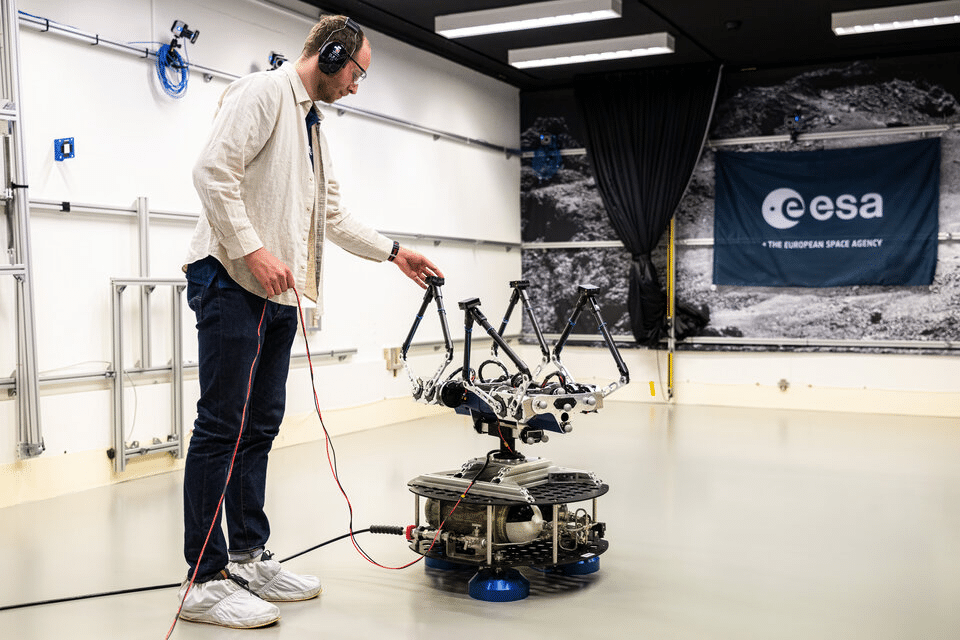
Practically, this means Olympus enhances its orientation management, an essential skill for operating in the unpredictable conditions encountered in space. During ESA’s microgravity simulation tests, Olympus is placed on platforms that replicate Martian gravity, enabling it to learn how to stabilize and reorient itself amidst shifting angles. This ability to self-correct and adapt swiftly is crucial for maintaining balance in low-gravity environments like Mars. With these intelligent algorithms, Olympus responds to environmental challenges in real-time, making it a strong candidate for incorporation in future extraterrestrial missions.
Olympus’s Emerging Role in Manned Mars Missions
As agencies like NASA and ESA progress toward crewed Mars exploration, robotic aides will be indispensable. Mars expeditions pose formidable hurdles including extensive travel distances, harsh terrain, and volatile weather. Robots like Olympus can provide essential support in reconnaissance, surface exploration, and operational assistance for astronauts. Their capacity to traverse tricky landscapes autonomously and learn new functions places them as reliable partners on Martian missions.
With the agility to leap over dangers and access hazardous or confined spaces such as lava tubes, Olympus stands out as a vital instrument in planetary research. According to Olsen, Olympus’s ability to “jump much higher than they would on Earth” gives it a strategic edge on Mars. These robots could act as scouts, surveying and mapping environments ahead of human arrival. Additionally, exploring beneath the surface with Olympus may unveil crucial geological insights and facilitate scientific discoveries in areas too perilous for human explorers or aerial drones.
- Categories:
- News







0 comments
Sign in to Comment