
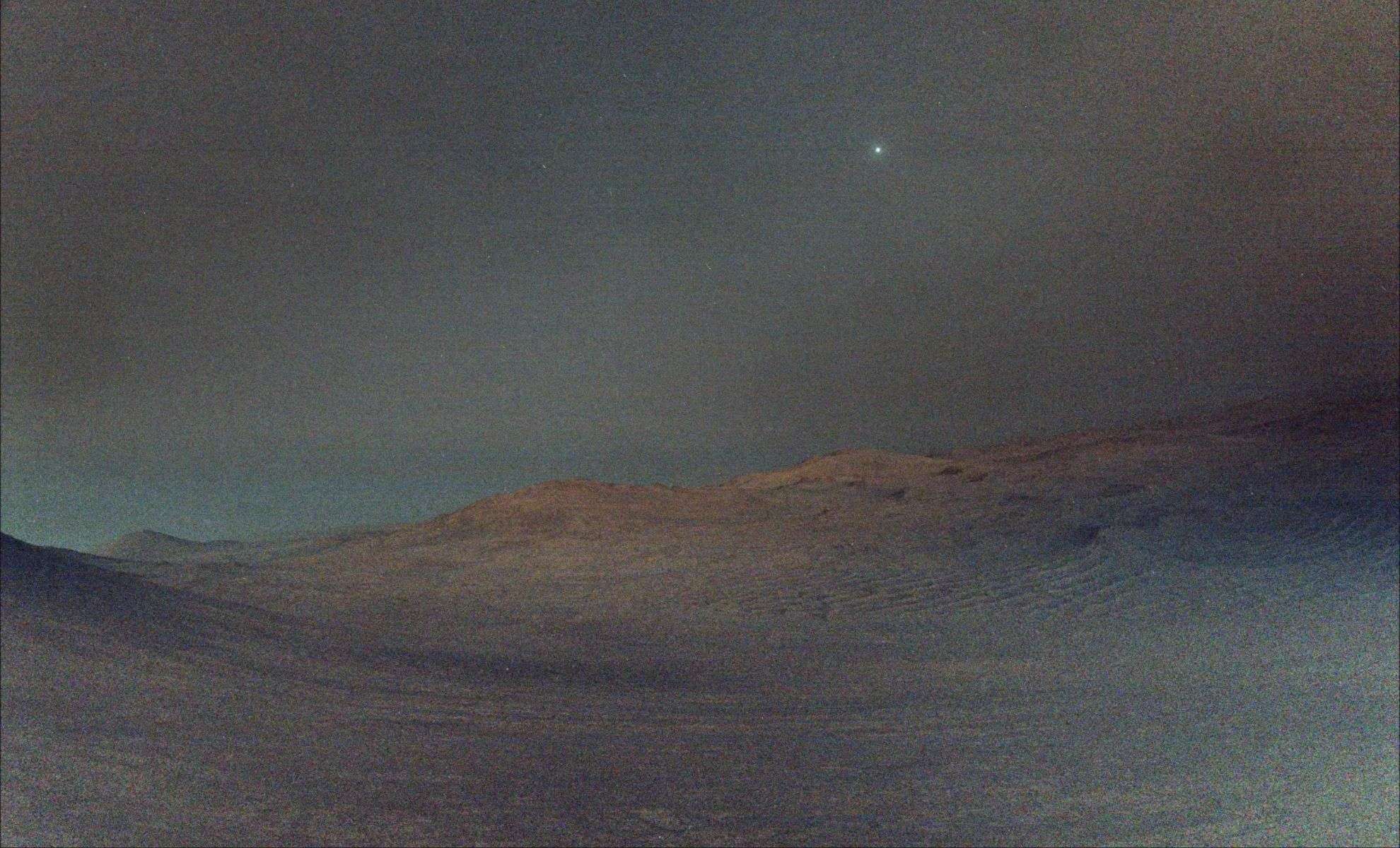
NASA’s Perseverance rover has once again expanded our understanding of Mars by photographing Deimos, the smaller Martian moon, as it zipped through the early morning sky. This remarkable event occurred on March 1, 2025, during the rover’s scheduled pre-dawn observations. The images provide an uncommon view of Mars’ moons from the planet’s surface, underlining Perseverance’s dual role as both a geological explorer and an astronomy instrument. Captured in near darkness, the sequence showcases Deimos moving in front of distant stars, offering valuable data on the Martian moons and their interactions with the surrounding environment. The significance of this observation was also highlighted in NASA’s official feature, "Deimos Before Dawn."
A Unique Glimpse of Deimos from Perseverance’s Left Navcam
The left navigation camera aboard Perseverance snapped sixteen consecutive exposures of Deimos, each lasting slightly more than three seconds. These photos were merged onboard to form a composite image, capturing about 52 seconds of the moon’s transit across the Martian sky despite the challenging low-light conditions. Although the images show some graininess and digital noise due to the extended exposure, Deimos' path is clearly visible. Additionally, two bright stars from Leo, the constellation Regulus and Algieba, appear, offering context within the broader night sky. This accomplishment underscores the rover’s sophisticated imaging abilities and the innovative techniques scientists employ to study Martian moons from the ground.
Scientific Importance of Deimos and Mars’ Moons
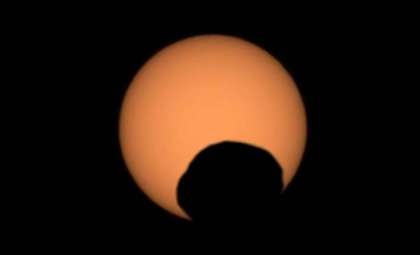
Deimos, Mars’ smaller and more distant moon, intrigues researchers because of its irregular form, tidal locking to Mars, and uncertain origin. Alongside its larger counterpart Phobos, Deimos plays a key role in unveiling Mars' history and orbital dynamics. Being tidally locked means one hemisphere of Deimos always faces Mars, so surface-based observations like those from Perseverance help reveal areas shadowed from orbital spacecraft. By documenting Deimos’ passage, the rover provides crucial information to refine orbital models and analyze surface properties. These findings complement data from orbiters and flybys to deepen our grasp of how Mars’ moons interact with their planet and the surrounding space environment.

ESA’s Hera Mission Adds New Insights into Deimos
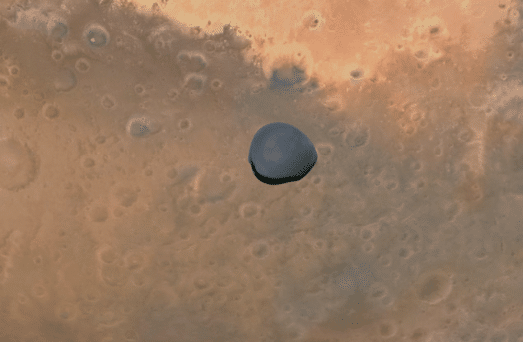
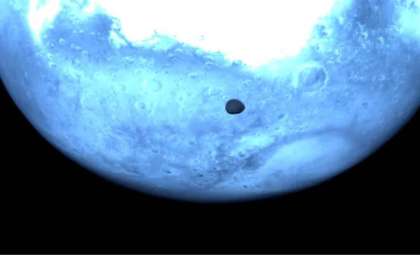
Shortly after Perseverance’s observation, the European Space Agency’s Hera spacecraft executed a high-velocity Mars flyby on March 12, 2025. Flying within 5,000 kilometers of the Red Planet at roughly nine kilometers per second, Hera used Mars’ gravitational pull to adjust course toward its next asteroid mission. During this maneuver, the spacecraft’s instruments captured images of Deimos from just 1,000 kilometers away, revealing seldom-seen views of the moon’s far side. This data serves as a valuable complement to Perseverance’s surface vantage point, collectively offering a fuller perspective of Deimos’ shape, geological features, and environment. The combined efforts highlight the value of international collaboration in Mars exploration.
The Expansive Role of Perseverance in Understanding Mars
Although Perseverance’s image of Deimos gliding over Mars is captivating, it represents only a fraction of the rover’s extensive mission. Since touching down in Jezero Crater in 2021, Perseverance has been delving into Mars’ ancient geology, seeking signs of past microbial life and amassing samples for eventual return to Earth. Discoveries include serpentine-bearing rock cores, which point to previous water activity potentially conducive to life. The rover also detected rare visible-light auroras on Mars, a phenomenon influenced by solar wind and Mars’ weak magnetic field. Perseverance’s robust data and pioneering exploration tools continue to propel planetary science forward and pave the way for human expeditions to Mars.
- Categories:
- News






0 comments
Sign in to Comment