
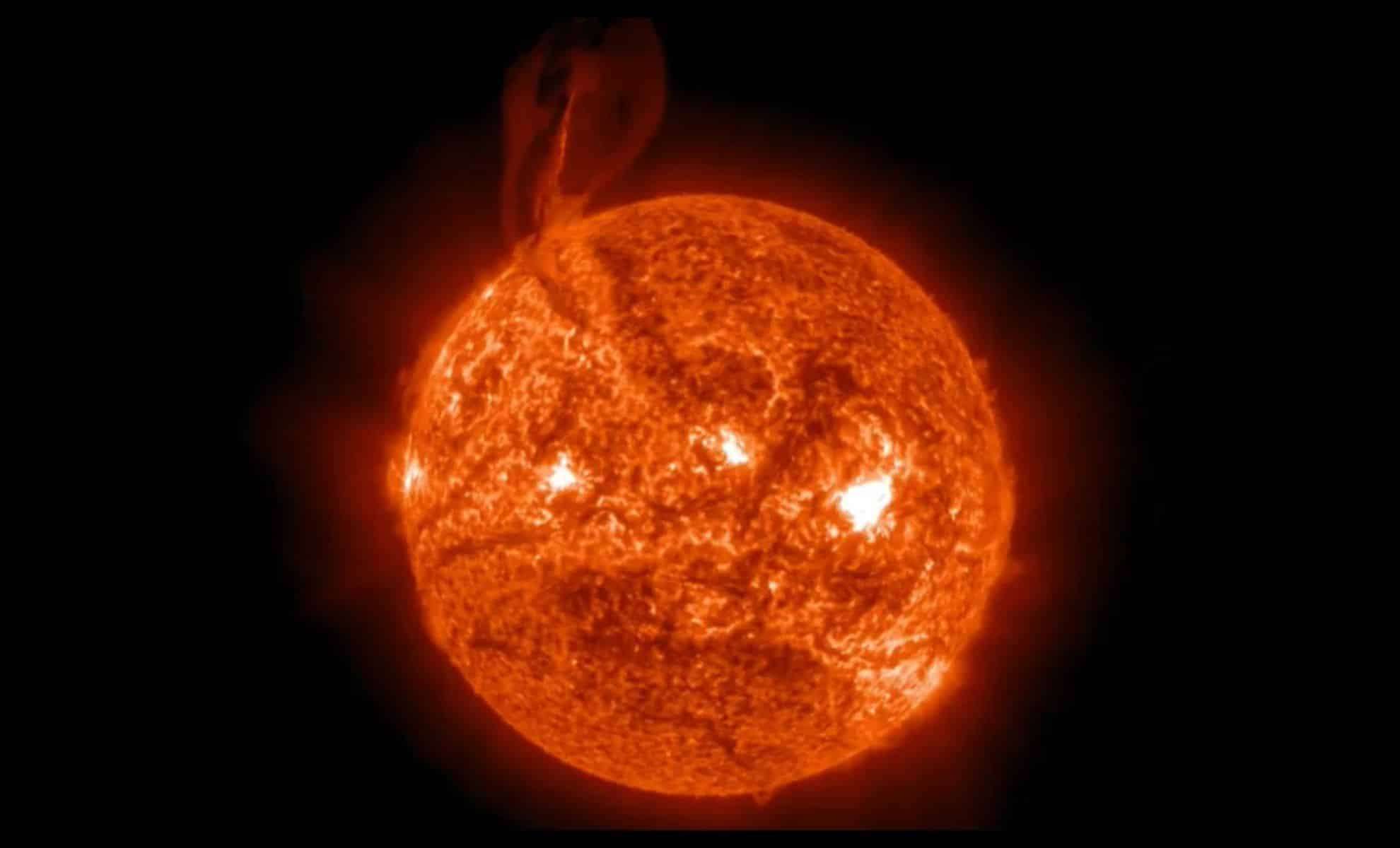
On May 7, 2025, a remarkable solar filament eruption occurred, unleashing a powerful surge of solar energy into the surrounding space. Captured in vivid detail by NOAA’s GOES-19 satellite, this event highlighted the Sun’s ever-changing and intense activity. Fortunately, the explosive burst was aimed away from Earth, sparing our planet from its direct effects. This incident underscores the immense force of the Sun and its ongoing impact on space weather conditions.
Understanding Solar Filaments and Their Mechanism
Solar filaments are elongated, cooler threads of plasma held high above the Sun's surface by powerful magnetic field lines. These structures can extend across vast portions of the solar disk. When their stability falters, they can erupt, expelling massive quantities of solar material and electromagnetic energy into the heliosphere.
While not every filament eruption triggers notable space weather events, some do lead to coronal mass ejections (CMEs)—large-scale expulsions of solar plasma and magnetic fields. CMEs have the potential to disrupt Earth's magnetosphere, affecting satellite operations, GPS signals, and power infrastructure. Luckily, the May 7 event projected outward from Earth’s vantage point, leaving our planet unaffected by the direct blast.

A Spectacular Solar Display and Its Significance
The NOAA GOES-19 instrument, outfitted with the Solar Ultraviolet Imager (SUVI), recorded this eruption in breathtaking clarity. Occurring between 6:30 a.m. and 9:50 a.m. EDT, the filament extended prominently across the Sun’s eastern edge and projected deep into the solar disk. SUVI’s extreme ultraviolet imagery delivers essential data that help solar physicists unravel the magnetic complexities and dynamic processes governing the Sun.
This event serves as a powerful reminder that even during quieter solar cycles, significant eruptions remain possible. Such occurrences continually demonstrate the potent activity that drives our nearest star.
Impact of Solar Activity on Earth’s Space Weather
This particular filament eruption did not pose an immediate threat to Earth; however, solar events such as CMEs can trigger geomagnetic storms. These disruptions in Earth’s magnetic field can produce dazzling auroras near polar regions but might also disturb satellite functionality, GPS accuracy, and electrical grids.
The UK Met Office reports that solar weather observers remain vigilant this week due to multiple influencing factors. A diminishing high-speed solar wind stream combined with potential side effects from earlier CMEs could cause mild geomagnetic disturbances (G1 level), enhancing auroral activity for regions in Canada, Alaska, and Scandinavia.
Continuous observation of solar phenomena equips space weather experts to anticipate and mitigate possible impacts. Though no immediate harm befell Earth, this eruption highlights the Sun’s enduring ability to affect the near-Earth environment, even during periods of subdued solar output.
- Categories:
- News





0 comments
Sign in to Comment