
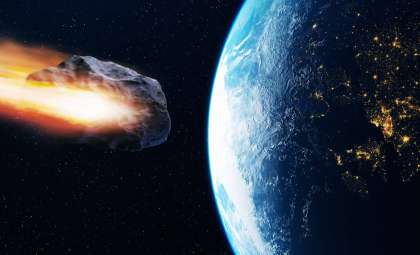
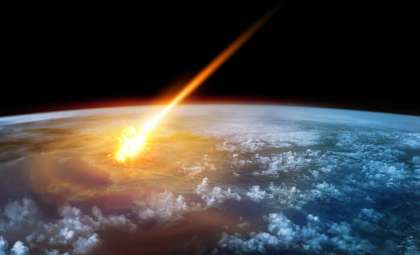
In 2032, a unique cosmic encounter may occur when asteroid 2024 YR4 potentially collides with the Moon, marking an event only seen once every 5,000 years. Discovered at the end of 2024, this space rock initially raised alarms about a possible Earth impact. Early assessments estimated a 1% chance of hitting Earth, but this risk was later downgraded to a mere 0.004%. Meanwhile, NASA estimates a significantly higher 4.3% likelihood that the asteroid will strike our lunar neighbor. Research from the University of Western Ontario has explored the possible outcomes of such a collision and its implications on planetary defense strategies. Their findings, accessible via arXiv, suggest the impact could produce an extraordinary display and also pose risks to orbiting satellites by launching lunar debris into space.
Trajectory of 2024 YR4: Moon Faces Greater Threat Than Earth
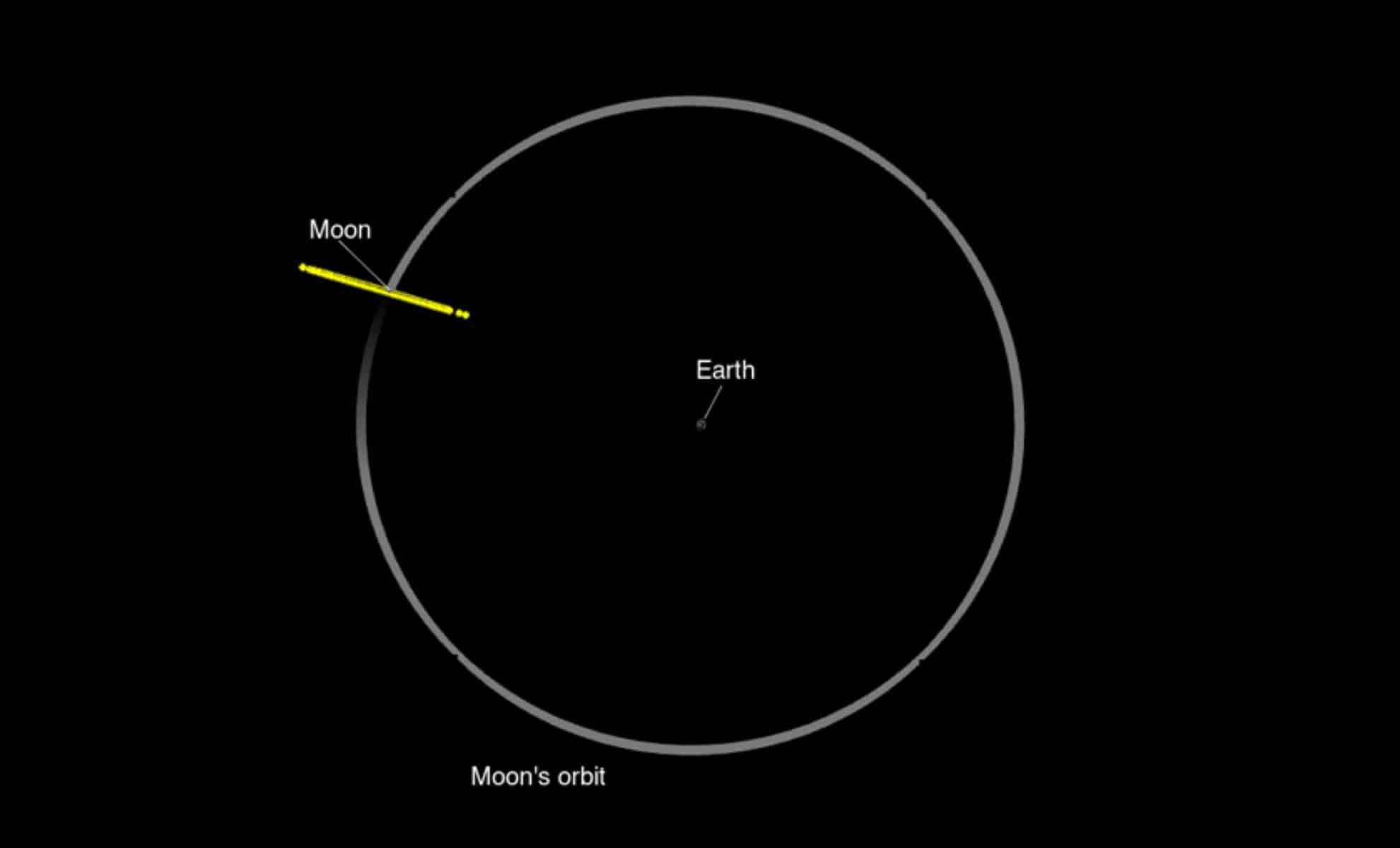
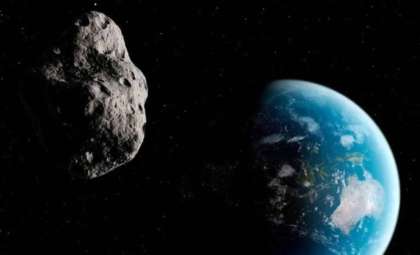
Asteroid 2024 YR4 follows an orbital path that brings it close to both our planet and the Moon. While concerns over an Earth collision have lessened, the Moon's position along this trajectory results in a 4.3% chance of an impact, as determined by NASA’s Jet Propulsion Laboratory. Dr. Andrew Rivkin, a planetary scientist at Johns Hopkins University, discussed these odds with IFLScience in April, noting that the asteroid's revised orbit decreased its probability of hitting Earth but increased its chance of striking the Moon. "Though there is a more than 96% chance it will miss the Moon, the roughly 4% possibility of impact is quite significant," Rivkin stated. "If it did make contact, the event would be exceptionally dramatic!"
Anticipated Consequences: A Monumental Lunar Collision
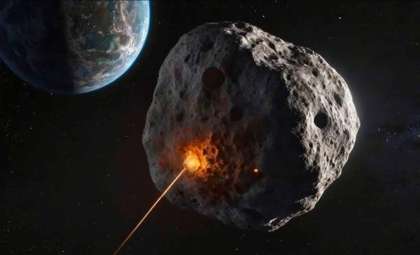
Should asteroid 2024 YR4 impact the Moon in 2032, it could mark the largest such event in five millennia. Led by physicist Paul Wiegert at the University of Western Ontario, the study estimates the asteroid's collision would unleash energy equivalent to approximately 6.5 megatons of TNT, carving out a crater roughly 1 kilometer (0.62 miles) wide. This impact would not only leave a prominent new scar on the lunar surface but also eject about 108 kg of debris, some of which could reach escape velocity. Such ejecta may spark meteor activity visible from Earth, creating an extraordinary spectacle for astronomers. However, the visibility depends on where exactly the collision occurs. "The impacts would be observable from Earth, and new lunar meteorites might land here (all harmless), but this is not assured," said Richard Moissl, head of the European Space Agency’s Planetary Defence Office, speaking with IFLScience in February.

Hazards for Earth's Satellite Infrastructure
Beyond the visual marvel, debris launched into space by a lunar impact could jeopardize Earth’s satellites and spacecraft orbiting nearby. Depending on particle size, this material might increase meteoroid strikes on orbiting objects considerably. Research by Wiegert and his team indicates that particle density from the ejected lunar matter could elevate meteoroid impact rates by anywhere from 10 to 1,000 times above normal background levels. This heightened flux could subject satellites to increased danger for several years following the event. "Ejecta in the 0.1 to 10 mm range could effectively simulate years of meteoroid impacts on satellites in cis-lunar space by late 2032," the researchers noted. These findings highlight a new challenge in safeguarding both Earth and the vicinity around the Moon.
Tracking the Asteroid: Awaiting Clearer Observations
Currently, asteroid 2024 YR4 remains too distant for precise tracking, but it will approach Earth’s neighborhood again in 2028. At that time, NASA plans to enhance efforts to chart its course more accurately. While the risk of impact remains low, experts in planetary defense are actively preparing for scenarios involving a collision with the Moon. According to Wiegert, the collision's visibility depends heavily on where it lands on the lunar surface: "If it strikes the Moon’s Earth-facing side, the event will be observable, though fleeting," he explained. "It would produce a sudden bright flash followed by a dispersing dust cloud lasting a few minutes." Satellites and spacecraft orbiting the Moon may capture the event with greater clarity, offering valuable data for scientists and space agencies worldwide.
- Categories:
- News




0 comments
Sign in to Comment