
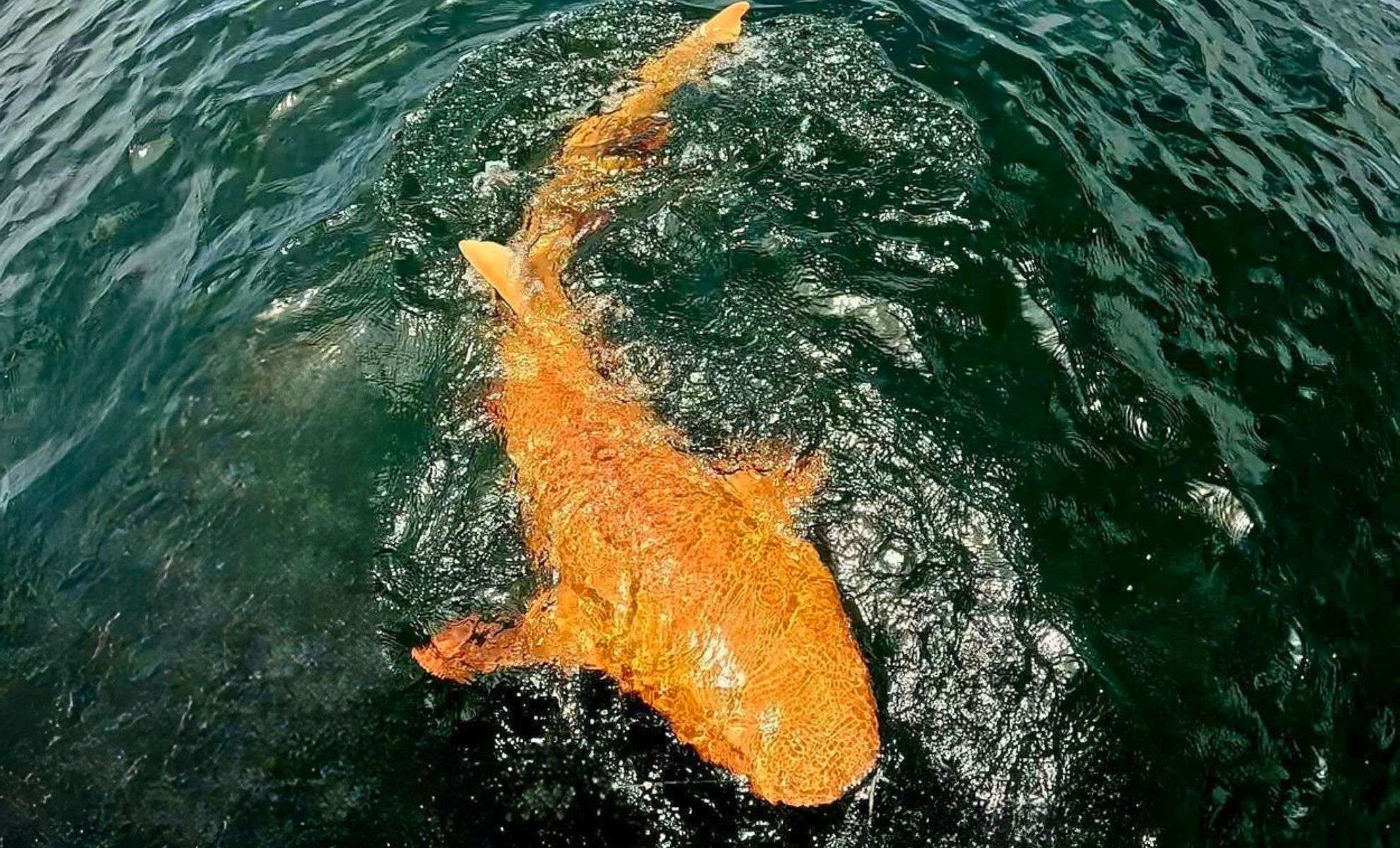
In an extraordinary find near Tortuguero National Park along Costa Rica’s Caribbean coastline, a nurse shark displaying a striking orange hue and ghost-white eyes was captured and then released during a recreational fishing expedition in August 2024. This specimen, measuring more than two meters (6.6 feet), represents the first documented occurrence of such unique pigmentation in this area.
A recently published study in Marine Biodiversity explains that the shark’s unusual coloring results from the combination of two rare genetic phenomena: xanthism, which enhances yellow and orange tones, and albinism, which diminishes melanin production, creating the pale skin and eyes.
The researchers highlighted the shark’s eyes as particularly remarkable, noting a complete lack of visible irises, pointing to the simultaneous effects of both conditions—an occurrence never previously documented in cartilaginous fishes in either the Caribbean or Pacific waters.

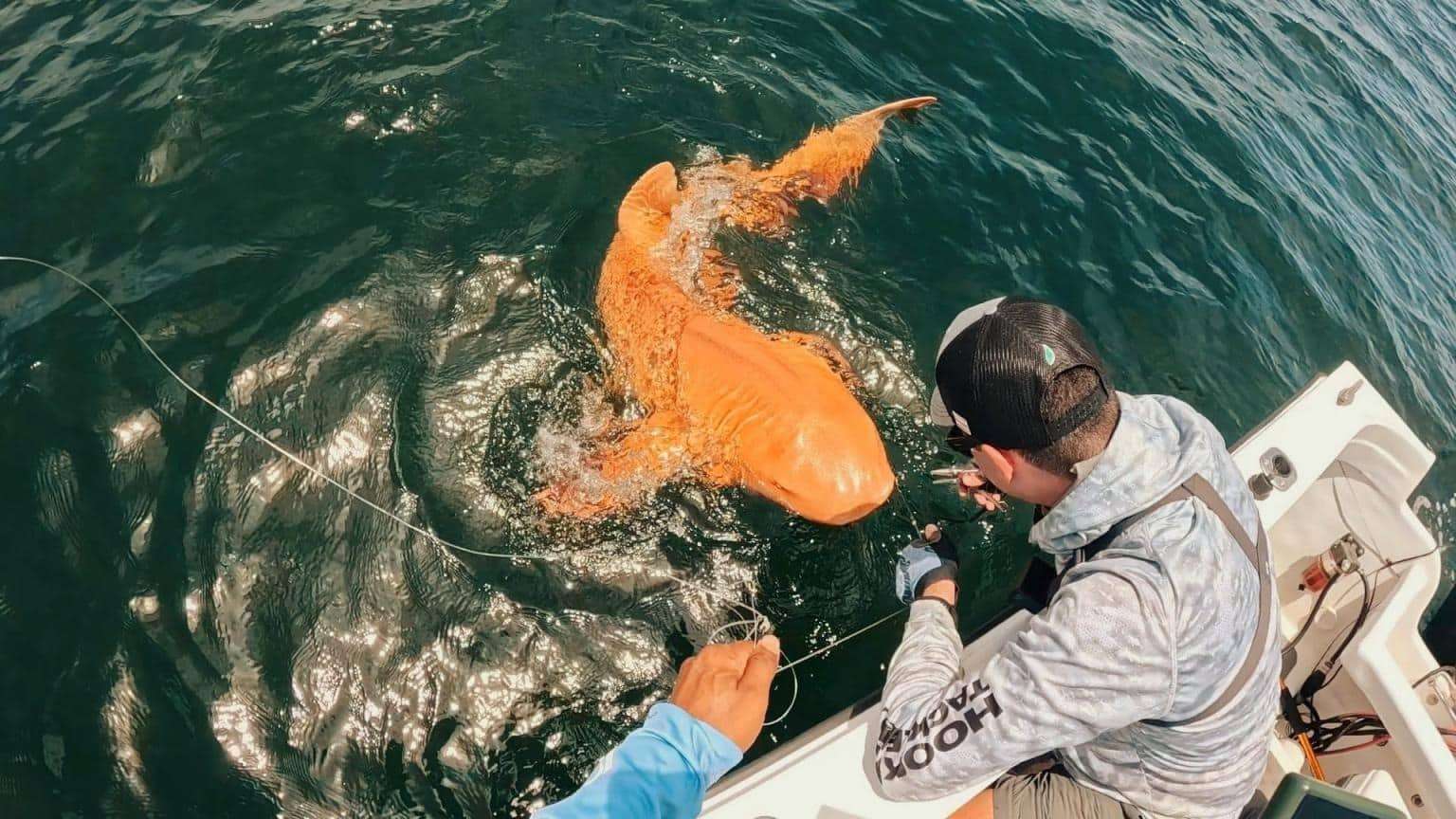
Under normal circumstances, nurse sharks (Ginglymostoma cirratum) possess light brown skin that helps them blend into the ocean floor. This extraordinary individual resembled a massive koi fish rather than a typical shark. Despite its bold coloration, the shark reached full maturity, suggesting that this rare pigmentation did not negatively affect its survival.
Could Environmental Factors Affect Pigmentation?
Though xanthism and albinism are primarily understood as genetic conditions, the authors consider that external environmental stresses might influence the expression of these traits. Conditions like inbreeding, hormonal disruptions, stress, fluctuating sea temperatures, or dietary changes could all contribute—especially in tropical marine ecosystems facing intensified pressure from climate change and habitat damage.
This unprecedented observation emphasizes the need for more comprehensive monitoring of shark skin color variations in rich but understudied marine habitats like Costa Rica’s Caribbean. Scientists warn that other cases of pigmentation irregularities may exist but remain undocumented due to limited photographic or genetic records.
Xanthism has previously been observed in species such as parrots, canaries, certain freshwater fish, reptiles, and snakes, but it remains almost unknown among sharks. This discovery in a Costa Rican nurse shark broadens understanding of pigment-related genetic anomalies and may provide valuable clues about marine species’ genetic and physiological responses to environmental change.
Rethinking Survival and Visibility in Ocean Predators
This finding challenges long-held ideas about how camouflage and predator-prey interactions work underwater. The nurse shark’s vivid orange and pale eyes would seemingly make it more visible to predators and prey alike, especially given its slow speed and bottom-dwelling habits. Yet, this mature shark’s survival indicates that such bright pigmentation might not always hinder its chances of thriving.
The team also pointed out how essential contributions from the public are in uncovering such rare phenomena. High-quality photos and videos from the fishing excursion were crucial in verifying the combined genetic mutations and forming the scientific report.
Implications for Marine Genetic Research
The study stresses that marine genetic diversity could be more intricate than previously believed and highlights the value of merging wildlife observation with genetic testing to detect and analyze rare traits in nature. While cases of xanthism and albinism remain uncommon, they might be more widespread than currently documented, especially as marine ecosystems undergo rapid transformations.
The researchers behind this Marine Biodiversity article recommend increased effort in documenting and genetically sampling such cases to determine if this event is a one-off or indicative of larger trends in ocean biodiversity. Regardless, this nurse shark’s discovery marks a significant milestone in marine biology, symbolizing broader shifts in the natural world.
- Categories:
- News









0 comments
Sign in to Comment