
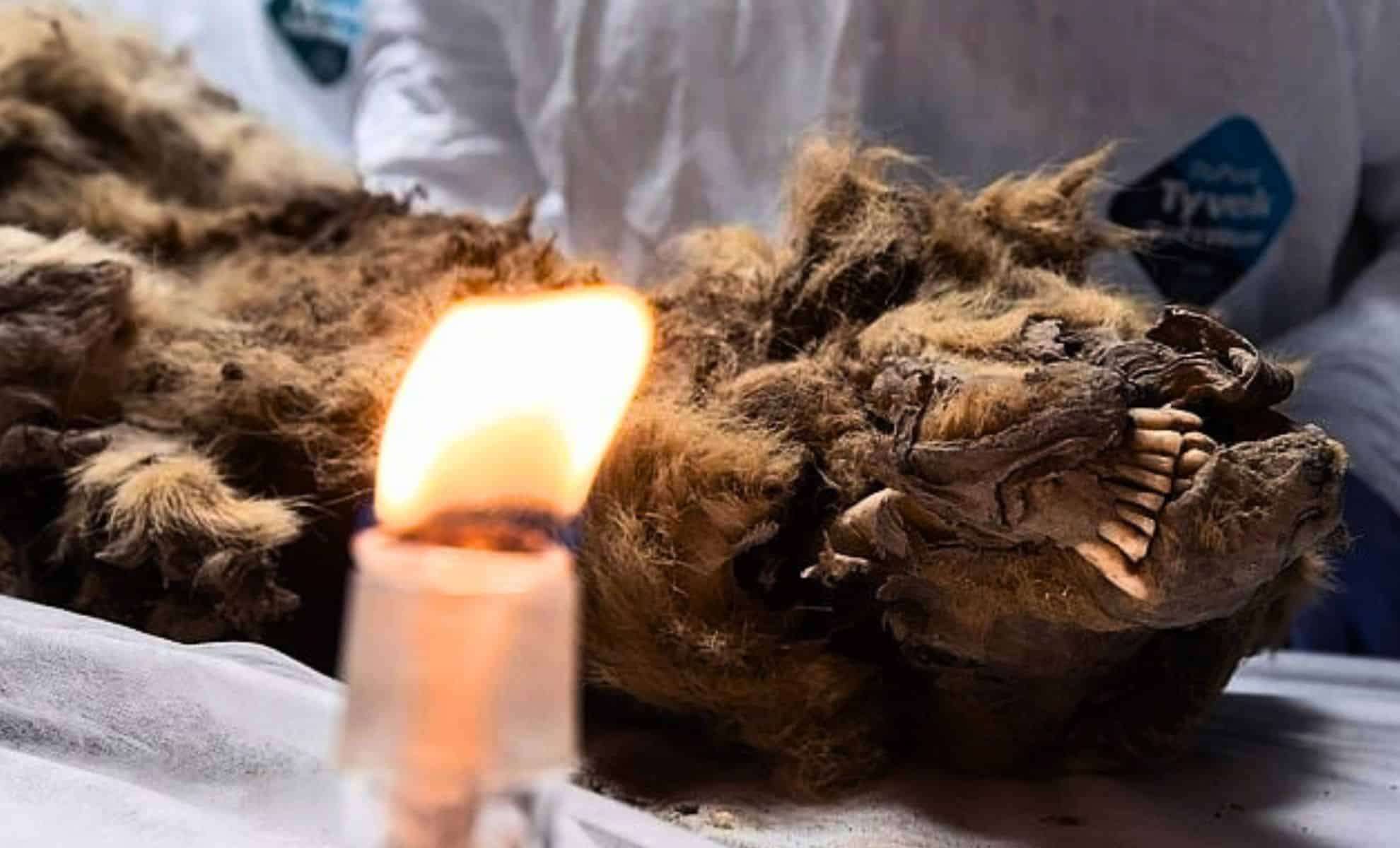
Scientists have recently made an extraordinary finding in eastern Russia’s Yakutia region: the exceptionally well-preserved remains of a wolf dating back 44,000 years to the Pleistocene Epoch. Unearthed from the deep permafrost, the specimen offers a fascinating glimpse into the ancient icy habitats these predators once inhabited, with its formidable teeth astonishingly intact.
Revealing the Past: The Significance of the Find
In June 2024, a team from the MKAmmosov North-Eastern Federal University revealed their discovery of a Pleistocene wolf in the Tirekhtyakh River zone of the Republic of Sakha, an area known for its significant fossil heritage. This locale has previously yielded numerous prehistoric remains, noted by Dailymail.
The specimen stands out as the first fully preserved adult predator of its kind discovered in this condition. Remarkably, its fur, skeletal structure, and internal organs have been conserved immaculately despite its 44,000-year age.

The preservation of the wolf’s canines is particularly impressive, enabling researchers to glean critical information about its diet and behavior during the Pleistocene.
Exceptional Preservation: A Glimpse Inside a Frozen Stomach
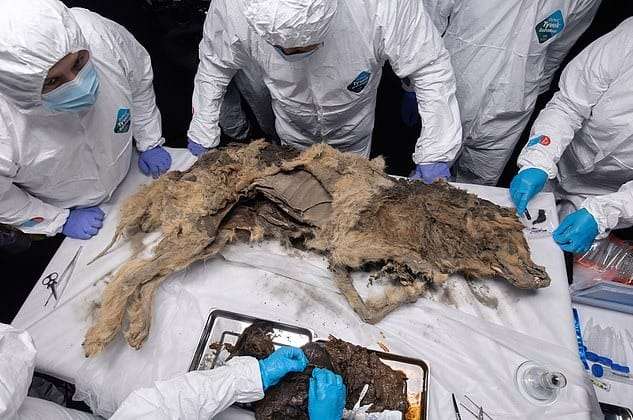
One of the most intriguing aspects is the presence of an untouched stomach, opening avenues to study the Pleistocene wolf’s feeding habits amid an era dominated by extreme environmental conditions.
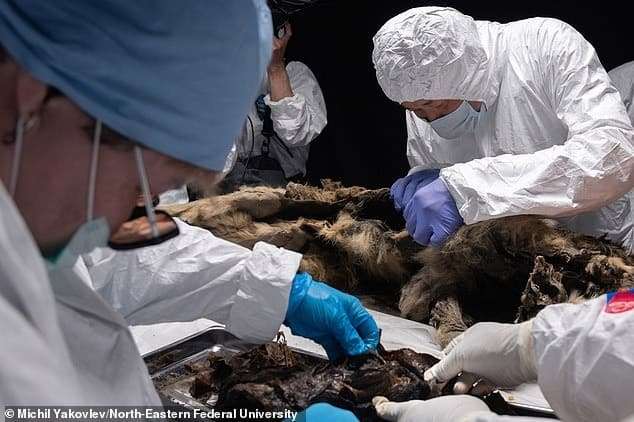
The research team collected tissue samples from internal organs to analyze for ancient viruses, microbiome components, and genetic material, aiming to compare the wolf’s genome with that of modern-day canines to explore evolutionary changes.
A premolar tooth was also extracted to determine biological age, confirming the specimen was an adult male. This discovery adds to a series of remarkable finds in the region, including frozen cave lions discovered in 2015 and a wolf head from 2019, consolidating Tirekhtyakh River’s status as a key paleontological site.
Permafrost Preservation: Nature’s Time Capsule in Siberia
The permafrost of this region acts as an extraordinary natural archive, safeguarding organisms for millennia. Defined as soil or sediment remaining below 0°C for at least two years, the frozen ground preserves ancient life remarkably well.
With rising global temperatures triggering gradual thawing, Siberian permafrost continues to reveal some of the finest-preserved specimens from the Pleistocene, a period characterized by repetitive ice ages and the Younger Dryas cold interval.
This latest wolf find presents a valuable chance to investigate the lifestyle of an apex predator and the ecosystems during the Pleistocene. Its conserved remains enable unprecedented studies into ancient carnivores’ behaviors and their habitats.
Implications of Ancient Microbes for Modern Medicine
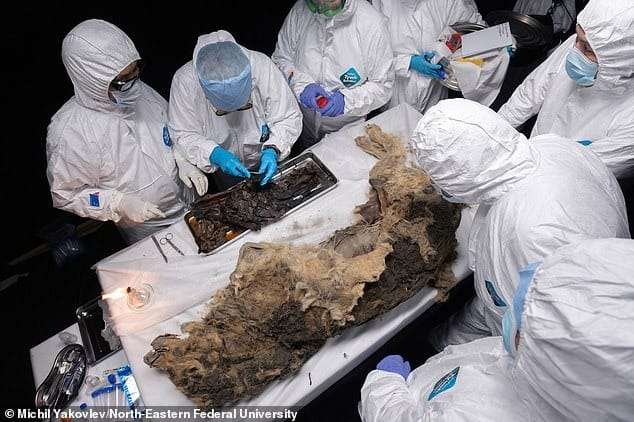
Beyond the physical remains, the discovery promises to contribute to future scientific breakthroughs. Professor Artemy Goncharov, leader of the Functional Genomics and Proteomics Laboratory, highlighted that bacterial life might remain viable within fossils after thousands of years.
These ancient microorganisms could serve as novel sources of bioactive compounds useful in medicine and biotechnology. Additionally, identifying prehistoric viruses and microbiota could enrich understanding of ancient diseases and environmental conditions during the Pleistocene.
Siberian permafrost continues to unveil enduring relics from an epoch when Earth’s climate and ecosystems were vastly different. Besides wolves, remnants like the cave lion and mammoths have been uncovered here, providing essential insights into Pleistocene biodiversity and the environmental challenges that influenced species evolution.
- Categories:
- Science




0 comments
Sign in to Comment