
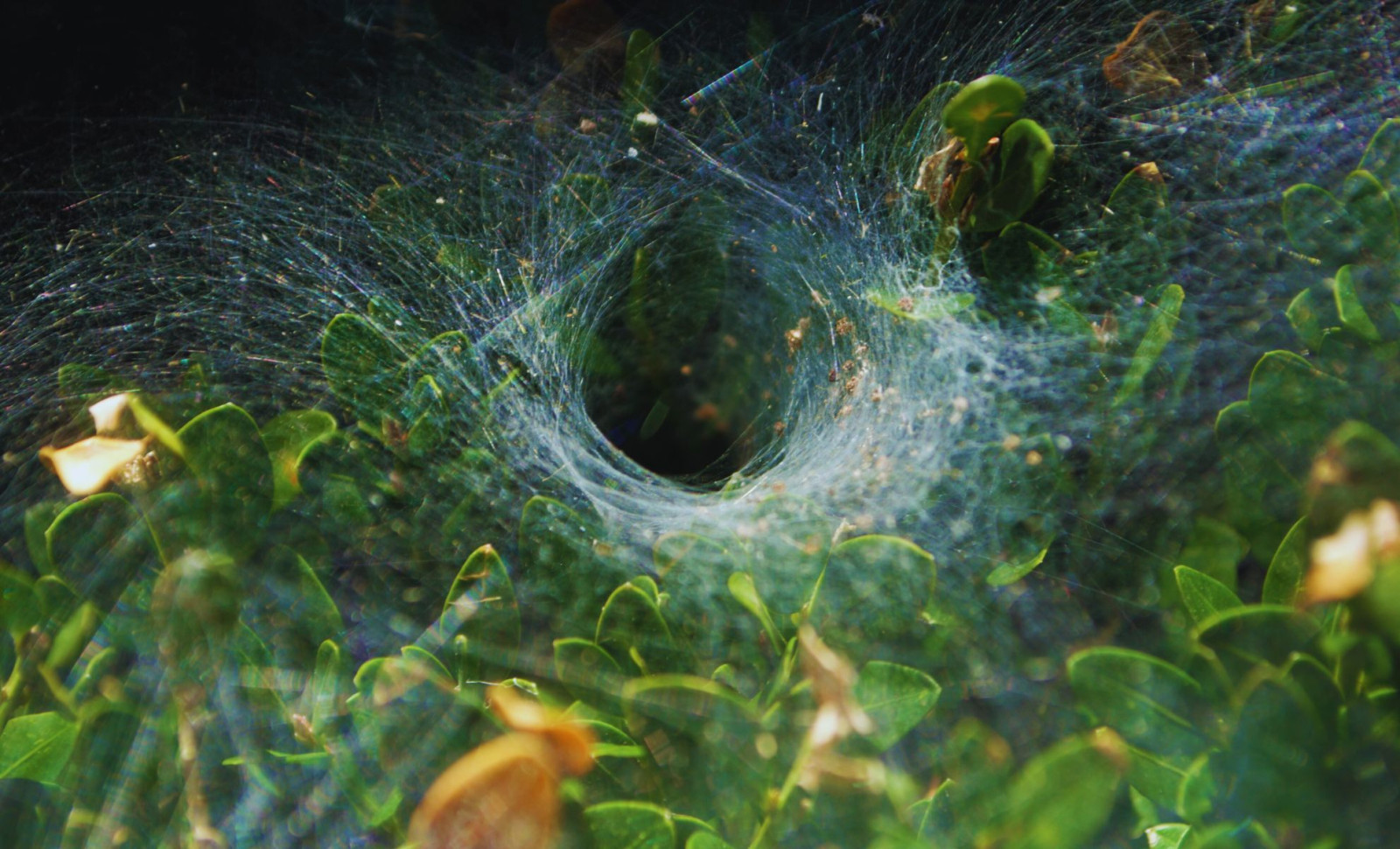
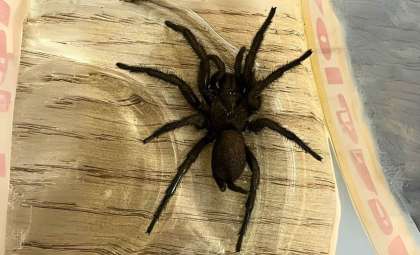
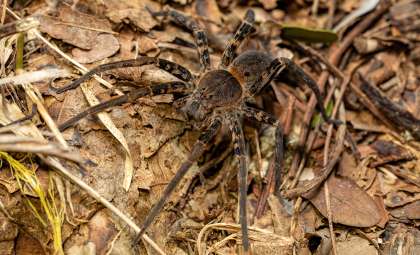
An arachnid scarcely bigger than a coin has challenged longstanding beliefs about the strength of natural materials. Native to Madagascar, Darwin’s bark spider produces silk tougher than Kevlar, a synthetic fabric esteemed for its durability, setting a new standard in biological material strength.
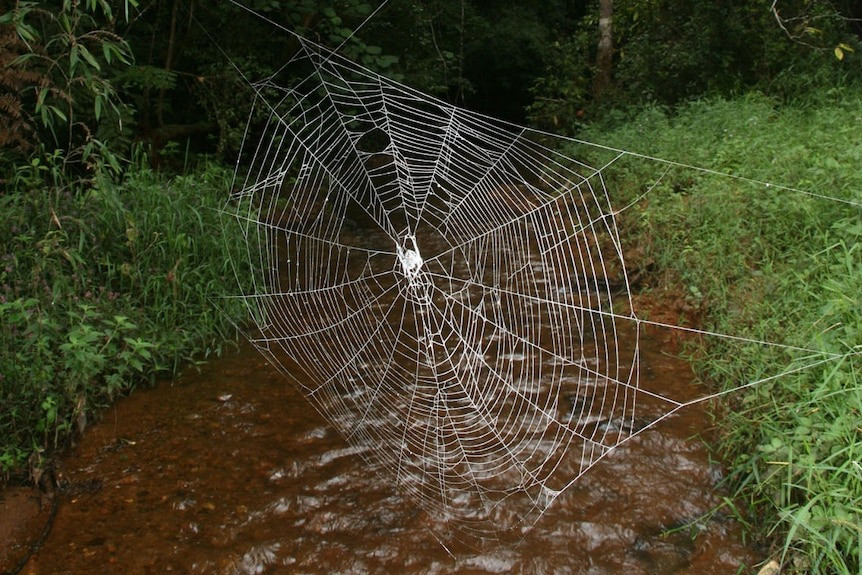
A detailed study featured in The Journal of Arachnology reveals that this spider creates vast orb webs spanning over rivers and streams, with supporting threads extending beyond 80 feet. Its silk excels not only in strength but also in absorbing energy better than any other known natural or manufactured fiber.
Discovered by zoologist Igni Agnarsson and biologist Matjaž Kuntner in 2008, the spider (Caerostris darwini) stands as a remarkable example of evolutionary adaptation. Although Madagascar is home to many unique organisms, this spider distinguishes itself not by its appearance but by the extraordinary webs it crafts and its innovative construction methods.

The Largest Webs Documented in the Animal Kingdom
Darwin’s bark spider spins webs that cover over 30 square feet, suspended high above water. As noted by The Journal of Arachnology, no other spider routinely constructs webs in such open, river-spanning locations, anchoring them to trees on both riverbanks.
Positioned across waterways, these webs must withstand forces from wind, tension, and struggling prey. The researchers, Igni Agnarsson and Matjaž Kuntner, theorize that the spiders shoot silk threads over the water to catch on distant branches, enabling the foundation of the web and facilitating the weaving of the entire structure.
While other orb weavers sometimes build near aquatic environments, none are known to create such enormous, suspended webs far above open water. This challenging habitat likely contributed to the spider’s development of silk with extraordinary durability designed to resist both mechanical stress and aging.
Exceptional Energy Absorption of the Silk
The greatest surprise emerged when the silk was subjected to testing. Experts found that it could absorb enormous amounts of kinetic energy before snapping, outperforming even bulletproof materials like Kevlar. The silk has been characterized as "10 times stronger than Kevlar," surpassing it in toughness, not just tensile strength.
“This spider is famous because it’s been shown that one of the silk types that it makes, called dragline silk, is the toughest spider silk that’s ever been measured,” said evolutionary biologist Jessica Garb of the University of Massachusetts Lowell and lead author of the study avaliable on Communications Biology.
One key factor is the silk’s stretchability; it can extend to twice the length of threads from other orb spiders before breaking. This elasticity enables the web to endure the movements and force of captured prey by storing and dissipating energy rather than sustaining damage.
The exact molecular makeup responsible for the silk’s extraordinary properties still eludes scientists. However, the original discoverers suggest further research may uncover the biological mechanisms behind this remarkable material.
Small Arachnid, Monumental Engineering
Despite measuring less than an inch across, this spider’s ecological impact is significant. Agnarsson and Kuntner documented that its webs often capture numerous insects. While constructing such large webs demands great effort, the nutritional payoff is substantial.
Although no sightings of bigger prey like birds or bats caught in these webs have been recorded, researchers have not dismissed the possibility. The webs are sufficiently robust and expansive to hold small vertebrates. Considering there are over 40,000 spider species and approximately 200,000 silk variants in nature, Darwin’s bark spider could be one among many exhibiting unique material excellence.
- Categories:
- News




0 comments
Sign in to Comment