
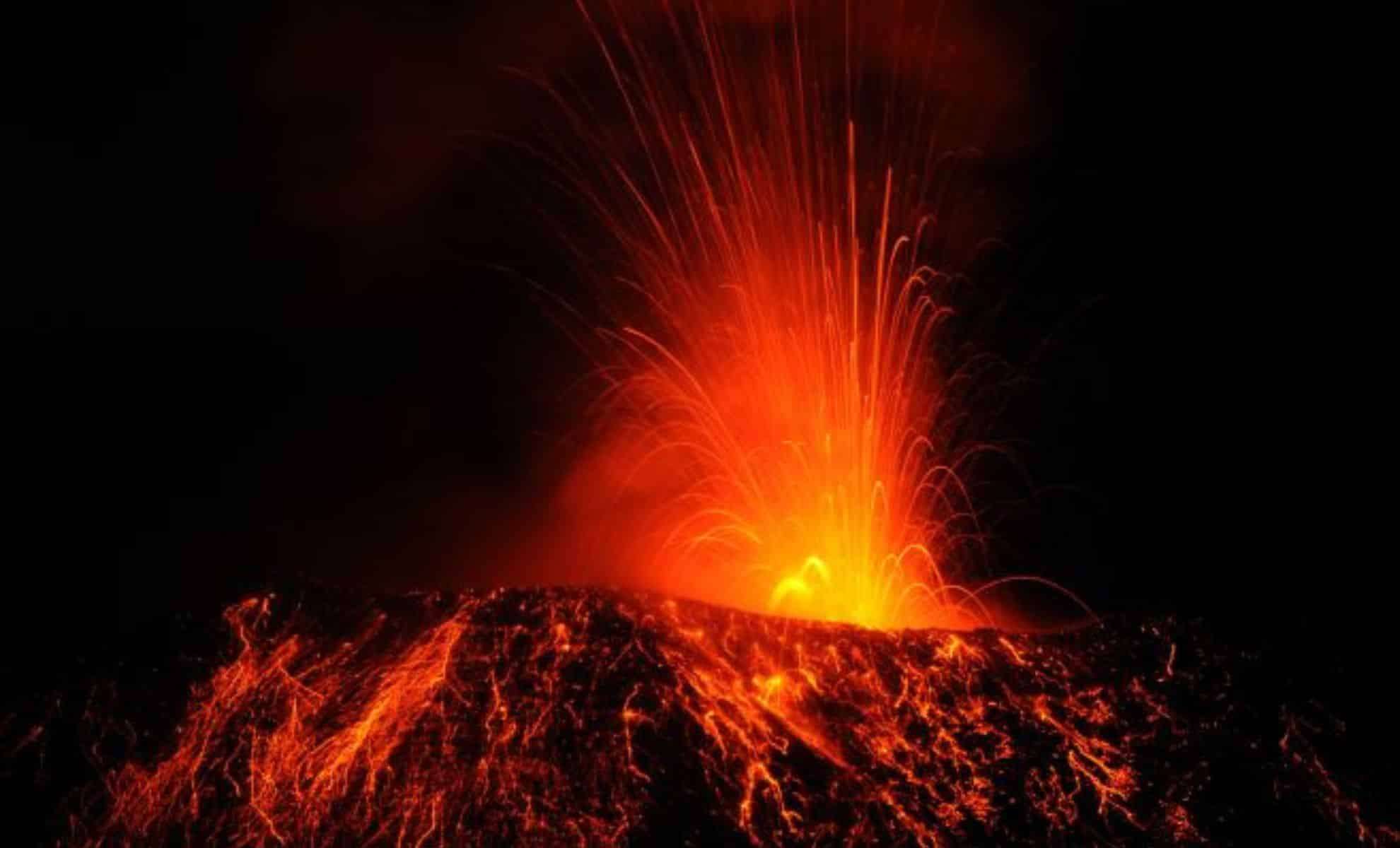
A landmark investigation spearheaded by experts at the University of Maryland and the University of Hawaiʻi has resolved a decades-old geological enigma: the link between two of Earth’s most colossal volcanic structures. Featured in Nature, this study reveals the concealed source of the Ontong-Java Plateau, one of the planet’s largest volcanic plateaus, tracing its origin back to the Louisville hotspot in the southern Pacific Ocean. This breakthrough connects the Louisville seamount chain with the expansive plateau, illuminating the evolutionary history of volcanic systems in the Pacific region over millions of years.
For years, scientists hypothesized a relationship between these two features, yet lacked conclusive evidence. Prior models describing the Pacific plate’s motion were insufficient due to missing geological data. The new research establishes a definitive association between these volcanic systems and prompts a revision of Pacific seafloor motion models.
Linking the Louisville Hotspot and Ontong-Java Plateau
The pivotal discovery emerged when the team identified a cluster of submerged mountains near Samoa that appeared older than anticipated for the area. Detailed analysis of rock specimens confirmed these formations as part of an ancient segment of the Louisville hotspot volcanic trail. This evidence allowed researchers to trace the Ontong-Java Plateau back to the same hotspot, establishing a common volcanic source.

Val Finlayson, the lead corresponding author, highlighted the significance of this achievement:
“Up until now, we’ve had this extremely disconnected picture of the Pacific and its volcanoes. But for the first time, we’re able to make a clear connection between the younger southern and older western Pacific volcanic systems. It’s a discovery that gives us a more complete history of how the Pacific Ocean basin has evolved over millions of years to become what it is today.”
This revelation redefines the evolutionary narrative of the Pacific Ocean and challenges earlier beliefs about volcanic dynamics within the region.
Updating the Pacific Plate Movement Models
Much of the geological proof linking the Louisville hotspot with the Ontong-Java Plateau was lost due to the subduction of parts of the hotspot track beneath Pacific tectonic plates. To retrieve this lost evidence, Finlayson’s team examined deeply sunken volcanoes located along a different stretch of the Louisville hotspot chain. Their findings were remarkable.
Finlayson further elaborated:
“Much of the physical evidence for a connection between Louisville and Ontong-Java has disappeared because part of the Louisville hotspot track was subducted, or pushed, under tectonic plates in the Pacific region. We had to sample deeply submerged volcanoes from a different long-lived hotspot track to find evidence from tens of millions of years ago that suggested our models for the Pacific plate needed revision.”
These new insights have necessitated updates to established models of Pacific plate tectonics, providing a more precise understanding of historical seafloor shifts.
Following Volcanic Traces Through Geological Time
A central technique in this research involved mapping volcanic “footprints” – remnants of prehistoric volcanic activity left behind as tectonic plates traverse hotspots. The scientists likened this to how footprints fade as a person walks on sand, with older marks found farther from the hotspot.
Finlayson explained this analogy:
“We can track these ‘footprints’ across time and space. The footprints get progressively older as you move away from an active hotspot, similar to how your own footprints will fade away in the sand as you walk. But you can still tell that these prints belong to the same source. Thanks to this new evidence, we were able to revise current models of Pacific plate motion and gain a better understanding of how the seafloor has moved over millions of years.”
This footprint tracking approach enabled the team to reconstruct previously missing chapters of Pacific geological history and attain a more comprehensive picture of volcanic activity in the area.
Looking Ahead: New Questions on the Horizon
While this discovery clarifies a significant geological mystery, Finlayson notes that many questions about Pacific volcanism remain unanswered. The research opens new avenues for exploration into volcanic phenomena worldwide.
Finlayson concluded:
“We’ve solved one mystery, but there are countless more waiting to be unraveled. This finding offers us a more accurate history of the Pacific and its volcanic activity and helps us understand more about the dynamics and style of volcanism that occurs there.”
The team intends to apply these findings to investigate other volcanic formations globally, aiming to deepen our understanding of Earth’s dynamic past and its impact on the present landscape.
- Categories:
- News










0 comments
Sign in to Comment