

Our universe contains a critical missing component—not lost, but fundamentally hidden. Approximately 85 percent of all matter escapes direct observation, defying detection by any current instruments. This elusive substance influences light and shapes galaxies, yet its true nature is unknown. Now, theoretical physicists suggest that an undiscovered particle might reveal this mystery, residing in a dimension beyond the familiar four of space and time.
In a recent paper published in The European Physical Journal C, scientists propose a particle that could serve as a link between normal matter and the unseen dark matter, which outweighs known matter by a factor of five. Led by Adrián Carmona from the University of Granada, along with Javier Castellano Ruiz and Matthias Neubert of the PRISMA+ Cluster of Excellence at Johannes Gutenberg University Mainz, the team describes this particle as "a potential new messenger to the dark sector." Their theory places it within a warped fifth dimension, outside the four dimensions humans interact with.
Unraveling a Mass Mystery
The inquiry began not with extra dimensions, but with a fundamental puzzle: why do the particles that compose matter have such different masses?

Fermions—including electrons, quarks, and neutrinos—form the building blocks of matter. Their mass range extends across twelve orders of magnitude and is divided into three families, a complexity that the Standard Model of particle physics cannot adequately explain. The researchers noted, "We recognized that the peculiar mass distribution of these particles demanded a deeper understanding."
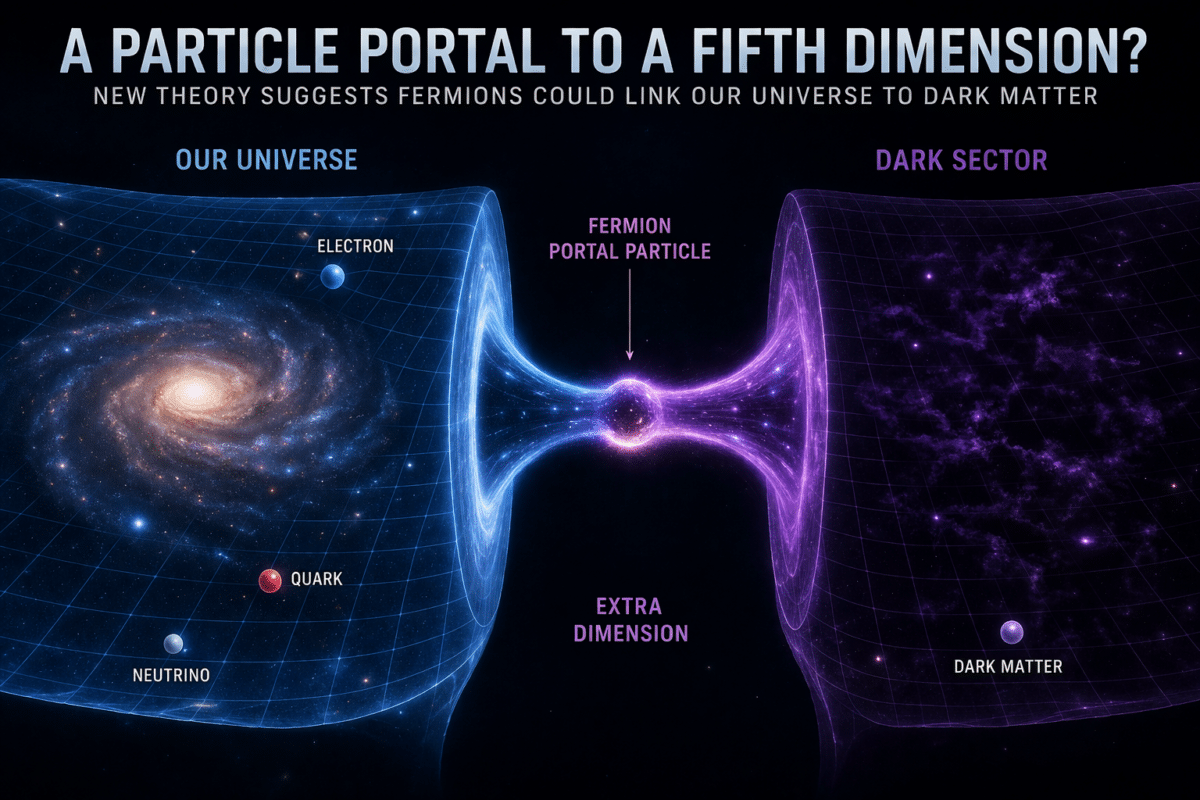
By exploring equations that incorporate a concealed fifth dimension, the team consistently uncovered indications of a new field and an associated particle previously undetected in the scientific landscape.
A Connection Spanning Visible and Dark Matter
This theoretical particle shares several quantum characteristics with the Higgs boson. The interaction between the two could establish a conduit linking the tangible matter we observe to entities dwelling within the fifth dimension. This bridging mechanism brings dark matter into sharp focus.
According to the scientists in a conversation with VICE, "If such a massive particle is real, it would forge a connection between the visible matter we understand and fundamental fermions hypothesized to compose dark matter in the extra dimension." Their theoretical frameworks align with current observations concerning the cosmic distribution of dark matter, a crucial benchmark for any credible hypothesis.
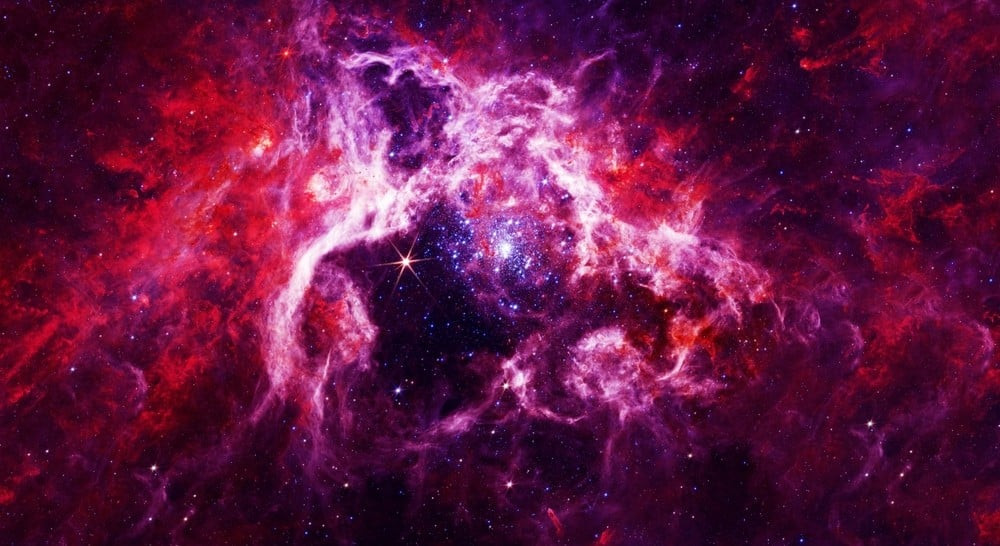
Confirmation of this particle could unveil the mass spectrum of dark matter and clarify its interactions with regular matter—two of the most sought-after pieces of information in contemporary physics.
Challenges in Detection with Current Technology
The Higgs boson was theorized in 1964 but only observed in 2012 after the Large Hadron Collider (LHC) was specifically constructed to access its energy scale. The particle now proposed by the Mainz and Granada researchers would be even heavier, beyond the production capabilities of any present-day collider.
Future accelerators, like the International Linear Collider and Future Circular Collider, might reach energies near what is needed. Yet, even at around 100 teraelectronvolts—about seven times the LHC’s peak energy—detecting this particle directly would remain an immense challenge. The researchers emphasize this as a matter of timing, not impossibility.
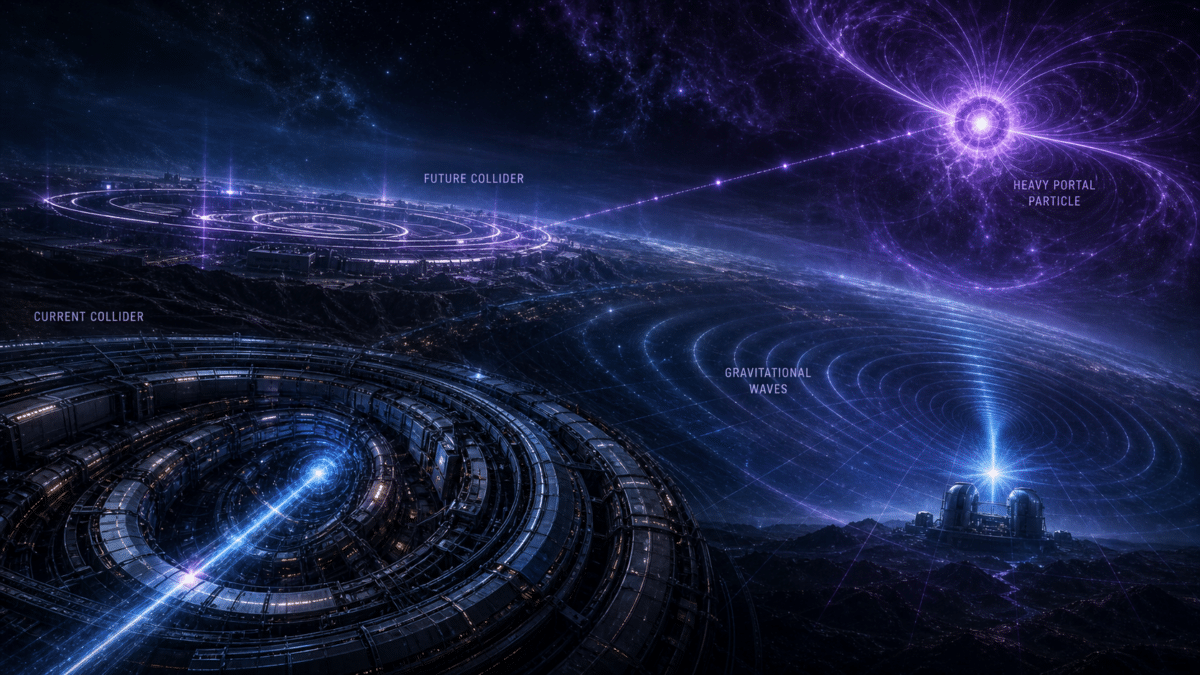
In the nearer term, the study of gravitational waves offers a promising alternative. These spacetime ripples, generated by cataclysmic events in the early universe, endure for billions of years and may still be detected today. The scientists posit that this new particle influenced the early cosmos, leaving imprints that future gravitational wave observatories could detect, without requiring a collider capable of producing the particle itself.
Implications Across Multiple Mysteries
The proposed particle not only relates to dark matter. Its theoretical framework could also shed light on the flavor problem, questioning why fermions group in their specific families, and the hierarchy problem, which concerns the remarkable weakness of gravity compared to other fundamental forces.
Additionally, the team has hinted at another intriguing question: did this particle support the stability of the fifth dimension during the universe's early moments? If so, this process might have generated distinct gravitational wave signatures observable by future detectors, offering insights independent of collider experiments.
The entire study can be accessed in The European Physical Journal C. The researchers plan further investigations into the particle's possible cosmic signatures and its detectability through upcoming hadron collider experiments.
- Categories:
- Science












0 comments
Sign in to Comment