
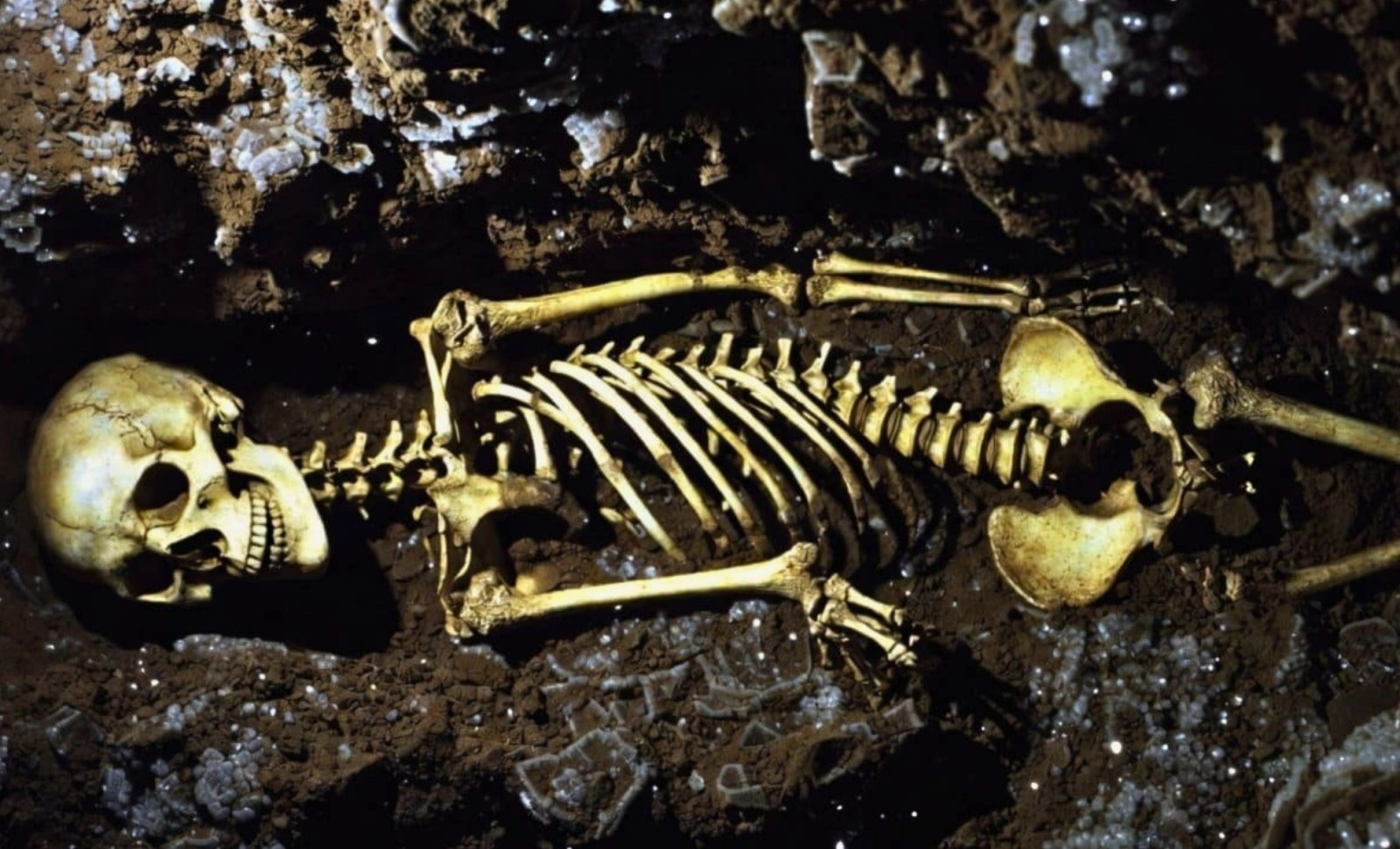
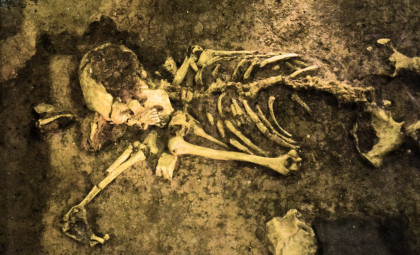
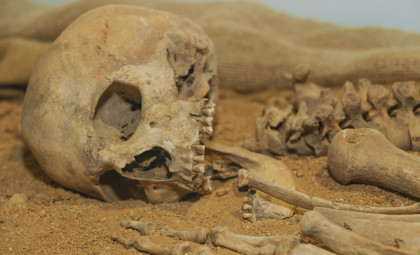
A man laid to rest over 4,500 years ago inside a ceramic jar buried in a limestone tomb near the Nile has provided the first complete genome from Egypt’s Old Kingdom era. Obtained from his dental remains and featured in Nature, the DNA reveals his ancestry merges two distant groups: one anchored in North Africa and another originating in the eastern Fertile Crescent, near old Mesopotamia.
This discovery offers the earliest genetic proof that individuals, beyond just cultural artifacts or bureaucratic systems, migrated between Egypt and Mesopotamia during the rise of the Pharaonic states. Radiocarbon dating places his death between 2855 and 2570 BC, coinciding with Egypt’s first pyramid constructions and the rise of the early dynastic kingdom.
Genetic Roots Spanning Two Continents
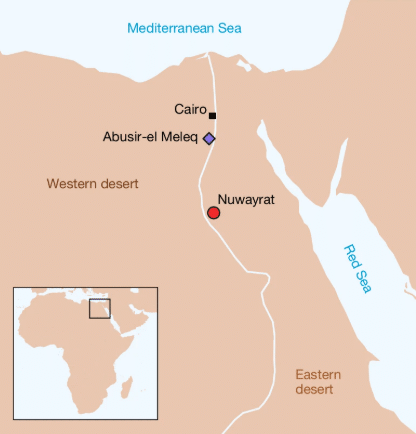
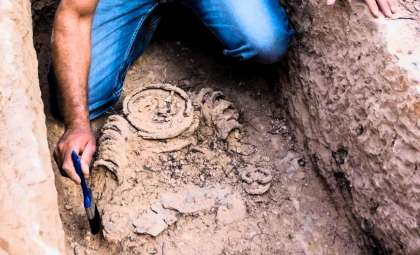
Scientists from Liverpool John Moores University and the Francis Crick Institute, led by Adeline Morez Jacobs and Pontus Skoglund, extracted DNA from tooth cementum, a tissue rich in genetic material. The man’s interment inside a ceramic vessel within a rock-cut tomb near Nuwayrat, approximately 275 kilometers south of Cairo, created a cool, protected environment that preserved his DNA remarkably well. The team achieved around twofold coverage of his genome, unprecedented for ancient Egyptian remains.

Analyzing the genome revealed a complex ancestry. Approximately 80 percent of his DNA closely matched Middle Neolithic groups from Morocco dating between 4780 and 4230 BC. The remaining 20 percent aligned with populations from Neolithic Mesopotamia—a significant and distinct genetic component.
Isotopic studies of his tooth enamel and bone collagen confirmed his upbringing in the Nile Valley, with a diet centered on local terrestrial meats and cultivated crops such as wheat and barley. Hence, he was not an immigrant himself; instead, the Mesopotamian ancestry indicates earlier ancestral mixing with North African groups before his lifetime.
Skeletal Evidence Indicates Skilled Craftsmanship and Social Rank
Bioarchaeologist Joel Irish, contributing to the study, examined the skeleton for indicators of lifestyle. The man suffered from osteoarthritis in joints including knees, hips, and upper arms, likely caused by repetitive labor—potentially pottery work performed while seated. Yet, his burial inside a pot within a rock-cut chamber hints at a higher social status beyond common laborers.
Standing about 5 feet 3 inches tall and living into his sixties, an advanced age for that era, genomic data showed no trace of ancestry linked to ancient sub-Saharan African populations like the 4,500-year-old individual from Mota, Ethiopia; such ancestry appears in Egyptians only centuries later.
Comparing Genetic Profiles Across a Millennium
This 2025 research extends prior studies. A 2017 Nature Communications paper analyzed partial genomes from 90 Egyptian mummies dated from the New Kingdom to Roman times (about 1388 BC to 426 CE). These later individuals exhibited more Near Eastern ancestry and less sub-Saharan African DNA than present-day Egyptians.
Since the Old Kingdom genome predates those previously studied by over a thousand years, the team tested if the Nuwayrat individual could be a direct ancestor to Third Intermediate Period populations. The results indicated these later groups required additional genetic input from Bronze Age Levant populations, implying that Levantine gene flow into Egypt occurred after the Old Kingdom but before that period.
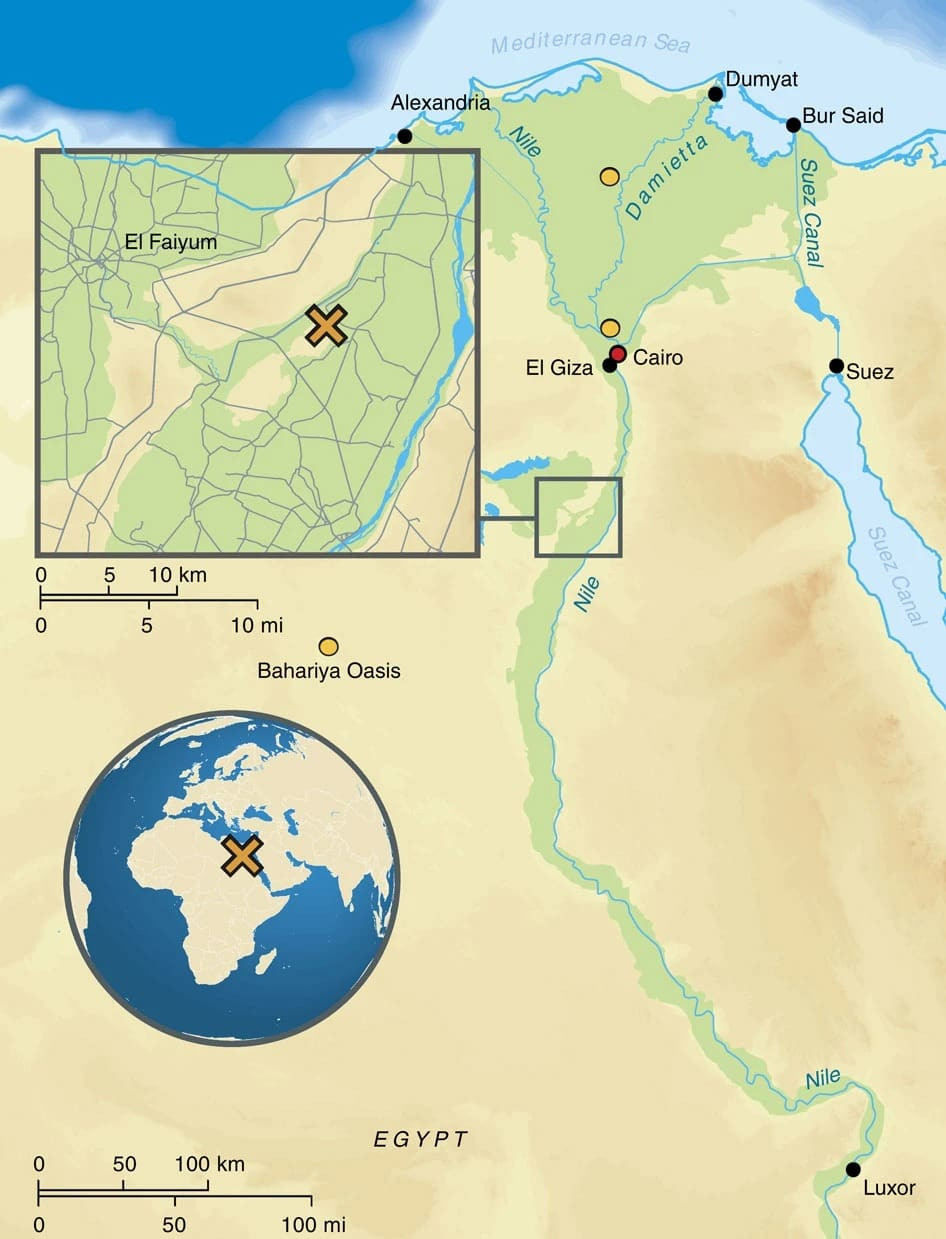
Modern Egyptians display even greater genetic diversity, carrying ancestry similar to the Nuwayrat man and Middle Neolithic Moroccan populations, along with Levantine Bronze Age and more recent sub-Saharan African genetic influences, corroborating earlier research.
Methodological Advances Promise More Ancient Genomes From Egypt
The preservation of the Nuwayrat genome highlights that ancient DNA can endure Egypt’s harsh heat if burial conditions are optimal. Elements such as containment within a ceramic vessel, precise sampling of tooth cementum, and stringent laboratory procedures made full genome sequencing feasible.
The researchers stress the importance of sequencing additional individuals across various locations and time periods to develop a comprehensive view of population history in ancient Egypt.
- Categories:
- Science







0 comments
Sign in to Comment