

Underneath the forest floor in temperate regions lies an intricate and highly intelligent network often overlooked. Beyond common perceptions of mushrooms, scientists are discovering that mycelium—the delicate, root-like fungal structures—exhibit functions similar to memory, learning, and decision-making processes.
Groundbreaking investigations at institutions such as Cornell University, Tohoku University, and the UK's Life in the Ravines conservation initiative highlight fungal networks as vital ecosystem components involved in environmental awareness, efficient resource distribution, and novel applications within robotics. What may sound like science fiction is increasingly grounded in real-world findings influencing forest management and autonomous technology development.
Enthusiasm for fungal networks is rising within scientific and technological circles, fueled by trending topics such as forest intelligence, living networks, and biohybrid technology. As exploration deepens, fungi continue to challenge traditional ideas about life and cognition.

Fungi Exhibiting Brain-Like Activity: The Forest’s Neural Web
Central to this research is mycelium, a web of fine, threadlike structures that connects trees and vegetation below the surface, commonly known as the "wood wide web." Scientists are discovering that these fungal networks transport nutrients, communicate warnings, and allocate resources with a sophistication previously unrecognized.
A recent publication in Fungal Ecology (2024) from Tohoku University involved positioning wood blocks embedded with fungi spores in circular and cross formations to observe fungal growth. Contrary to random spread, the mycelium prioritized specific wood blocks, indicating an ability to perceive spatial patterns and optimize its network connections.
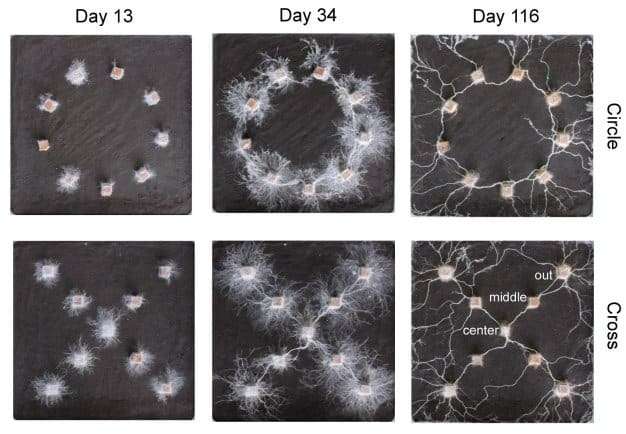
The study’s lead scientist, Dr. Yu Fukasawa, remarked: “These organisms possess memory, learning capabilities, and decision-making processes. It’s not human intelligence, but it is intelligence.” The findings bolster the concept of basal cognition—adaptive behavior without a centralized brain—as a widespread phenomenon in nature.
Interconnected Forests: Fungi and Trees Collaborating Underground
Conservation groups in the UK like Life in the Ravines have mapped extensive subterranean mycelial frameworks linking diverse tree species within oak forests. Individual trees may harbor more than 100 fungal species, each managing distinct root zones or nutrient types, fostering robust and self-organizing woodland communities.
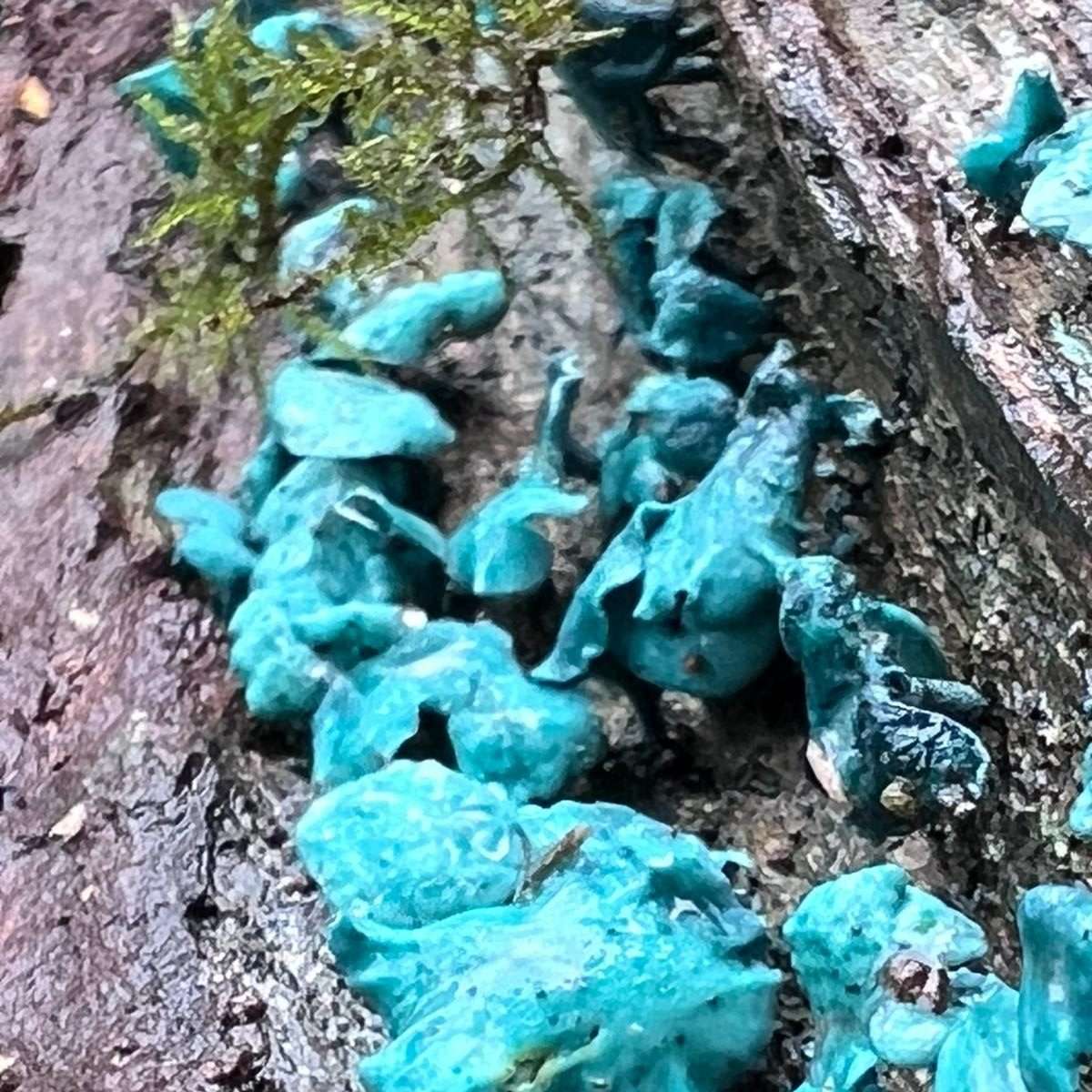
Within these symbiotic networks, fungi go beyond nutrient exchange; they detoxify heavy metals, protect against pathogens, and produce growth-regulating hormones that modulate tree development. In compensation, fungi receive up to one-third of a tree’s sugars, a substantial trade that strengthens ecosystem health.
These partnerships frequently transcend species lines. Trees connected via mycelium can share vital water and nutrients, nurture juvenile plants, and direct surplus resources toward related saplings, implying an element of biological kin recognition. This cooperation transforms forests into cohesive, interconnected systems rather than isolated organisms.
Fungi-Inspired Robotics: Blending Biology and Machines
Perhaps the most innovative advancement comes from robotics laboratories. At Cornell University’s Organic Robotics Lab, researchers have created biohybrid robots driven by electrical impulses generated naturally by mycelial networks. This work, detailed in Science Robotics, represents the first instance of translating mushroom-derived signals into digital commands.
The team engineered two robot models—one resembling a spider and the other wheeled—integrated with mycelium sensors. These machines adjusted their behavior in response to ultraviolet light, demonstrating that fungal networks can perceive environmental stimuli and coordinate suitable responses.
Lead investigator Anand Mishra emphasized that fungi surpass standard sensors by reacting to a broad spectrum of inputs including heat, light, and chemical variations, even adapting to new, unprogrammed conditions. “Designing robots for unpredictable settings becomes feasible with this technology,” he stated, “representing a transformative development.”
- Categories:
- Science









0 comments
Sign in to Comment