
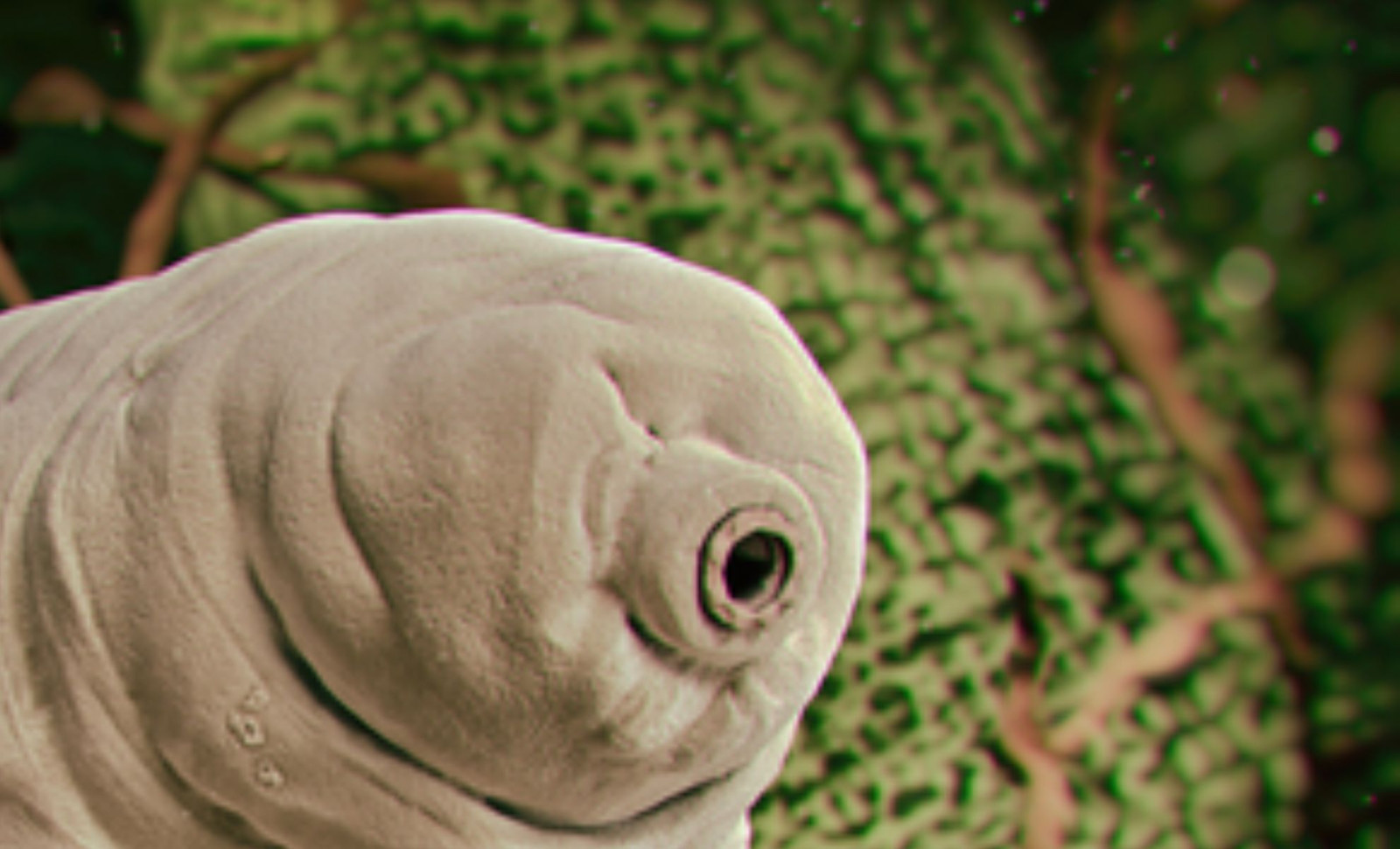
After years of study and many dead ends, scientists have finally identified the face of Hallucigenia, one of the most extraordinary organisms ever found in ancient fossils. Recent specimens from the Burgess Shale in Canada demonstrate that this peculiar animal indeed had a head, previously concealed and only now visible with advanced imaging techniques and meticulous analysis.
This prehistoric marine animal, measuring just a couple of centimeters, has baffled paleontologists since it was first documented over a hundred years ago. The latest research, featured in Nature, offers the first detailed look at Hallucigenia’s head, revising conventional views on early animal evolution and correcting decades-old misconceptions about its anatomy.
The Fossil Initially Misinterpreted as Inverted
This breakthrough stems from detailed fossil preparation paired with high-powered microscopy by Dr. Martin Smith at the University of Cambridge and Dr. Jean-Bernard Caron at the University of Toronto.

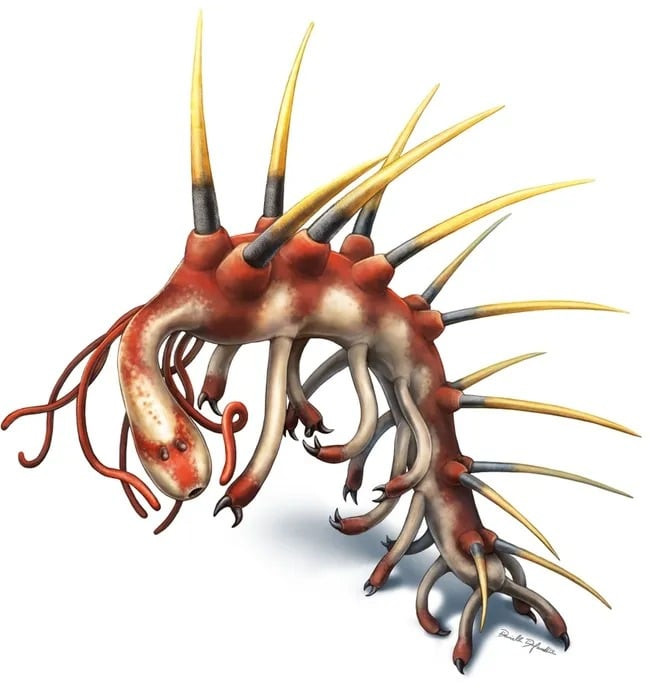
For much of its research history, Hallucigenia was famously perplexing. Early scientists reversed its orientation, confusing its spine-like legs for dorsal appendages and placing the fossil upside down.
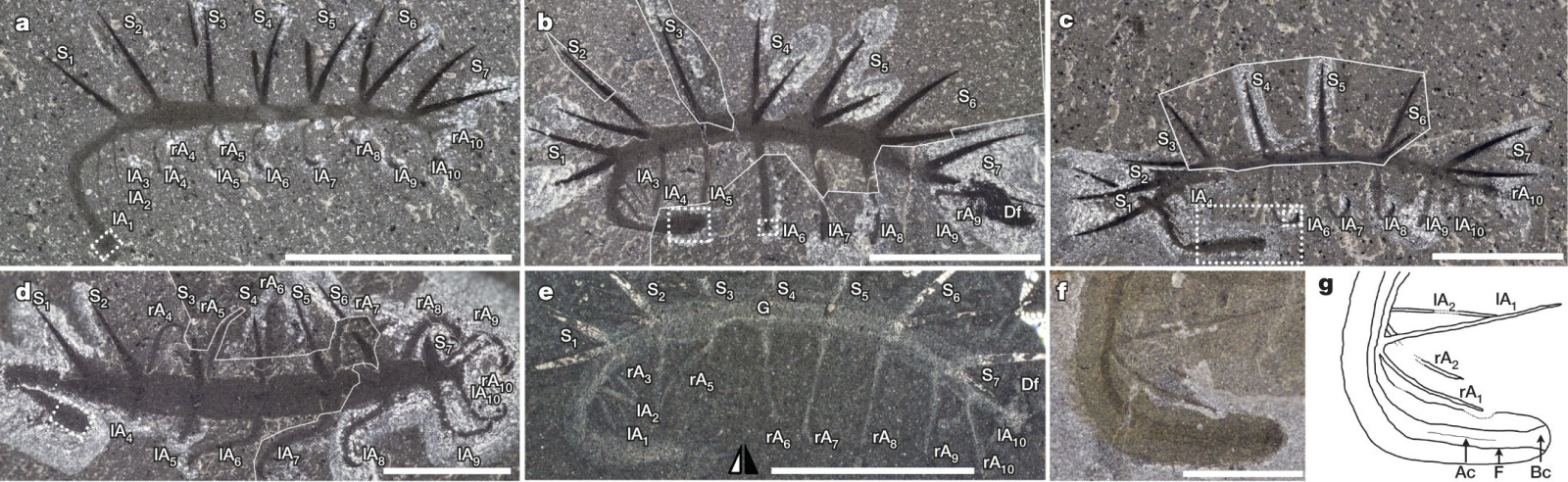
Although researchers eventually identified the correct positioning, the exact location of the head remained a mystery. What was once thought to be the head turned out to be a misinterpretation, as new fossil evidence disproved this assumption.
A Peculiar Grin With Microscopic Teeth
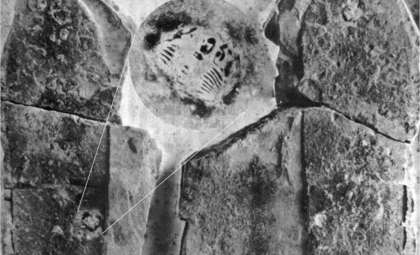
Scientists uncovered a uniquely shaped, spoon-like head boasting distinct facial characteristics. Utilizing electron microscopy, they detected two small eyes and a curved structure beneath them.
“It was as if the fossil was grinning at us at the secrets it had been hiding,” said Dr. Smith, describing the semi-circular shape that gave the animal an almost comical expression, according to BBC News.
The creature’s mouth also surprised researchers. It contains a circular array of teeth around the opening and an additional row further down the throat. This configuration likely allowed it to grasp and ingest food from the ocean floor. The arrangement suggests a feeding method involving suction, different from many other animals of the Cambrian period.
Longstanding Misidentification Corrected
The study resolves a major misconception that persisted for years. A dark, rounded structure previously believed to be the creature’s head has been proven otherwise. Chemical analyses indicated this blob differed in composition from the rest of the fossil, meaning it was not part of the animal.
The team determined this feature was actually decay fluid, substances expelled from the gut during the fossilization process. This reinterpretation significantly alters how previous fossil findings are viewed and highlights the challenge of analyzing soft-bodied creatures in ancient records.
“What our study shows is that it has a different composition from the animal. And rather than representing part of its body, it actually represents decay fluid – the contents of its guts – squeezed out as the animal was buried and fossilized,” he added.
Connecting Ancient and Modern Creatures
Providing a clearer image of this enigmatic organism has also informed its evolutionary ties. Research now suggests Hallucigenia may be among the earliest relatives of today’s velvet worms (Onychophora), delicate soft-bodied invertebrates thriving in tropical climates. Both share features like paired claws and unjointed limbs.
Dr. Xiaoya Ma from the Natural History Museum in London affirmed this link, emphasizing that although velvet worms lack the pronounced dorsal spines seen in Hallucigenia, their similar patterns of limb development support their evolutionary relationship.
“I think revisiting those worms and looking back in detail about how their mouths are organized could tell us exciting new things about how the molting animals as a whole have evolved,” explained Dr Smith.
- Categories:
- Science




0 comments
Sign in to Comment