
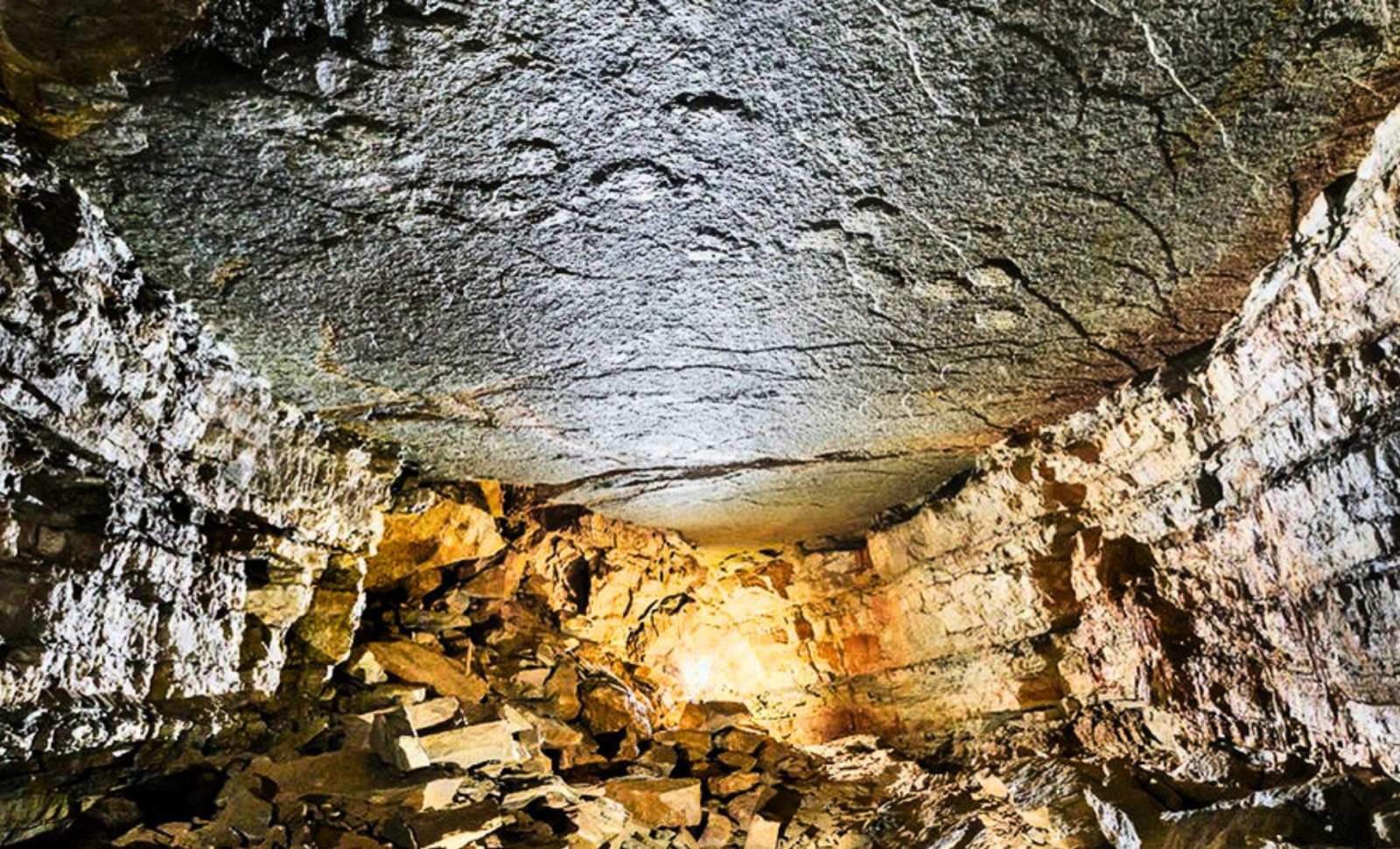
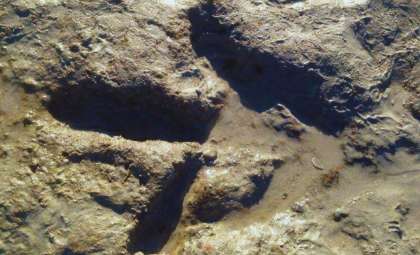
In southern France, paleontologists have uncovered massive sauropod footprints embedded in the ceiling of a remote limestone cave, a surprising find highlighted by CNRS News that defies traditional beliefs about fossil preservation sites. These impressive tracks, some measuring up to 1.25 meters (4 feet) in length, were created by gigantic long-necked dinosaurs around 168 million years ago and remain visible only to those who descend half a kilometer underground and gaze upward.
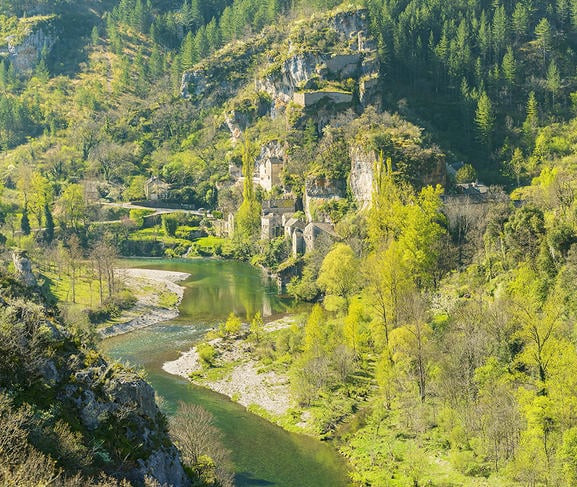
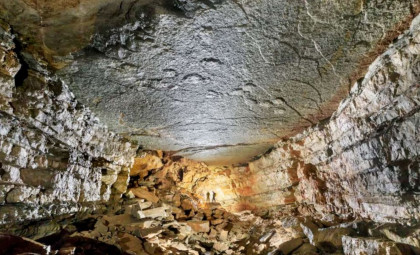
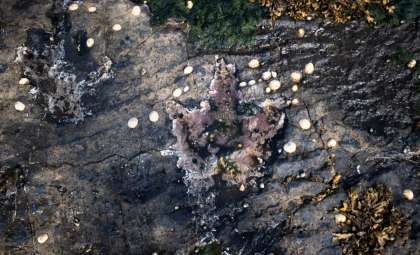
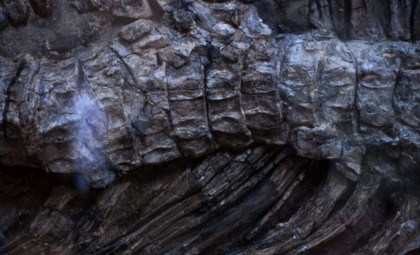
The expedition, led by Jean-David Moreau of Université Bourgogne Franche-Comté in Dijon, first explored Castelbouc Cave beneath the Causse Méjean plateau in late 2015. Inside, they discovered three separate trackways impressed on the ceiling of a chamber that stretches roughly 80 meters long, 20 meters wide, and 10 meters tall. The footprints are remarkably well-preserved, revealing intricate details like digits, foot pads, and claw imprints within the stone.
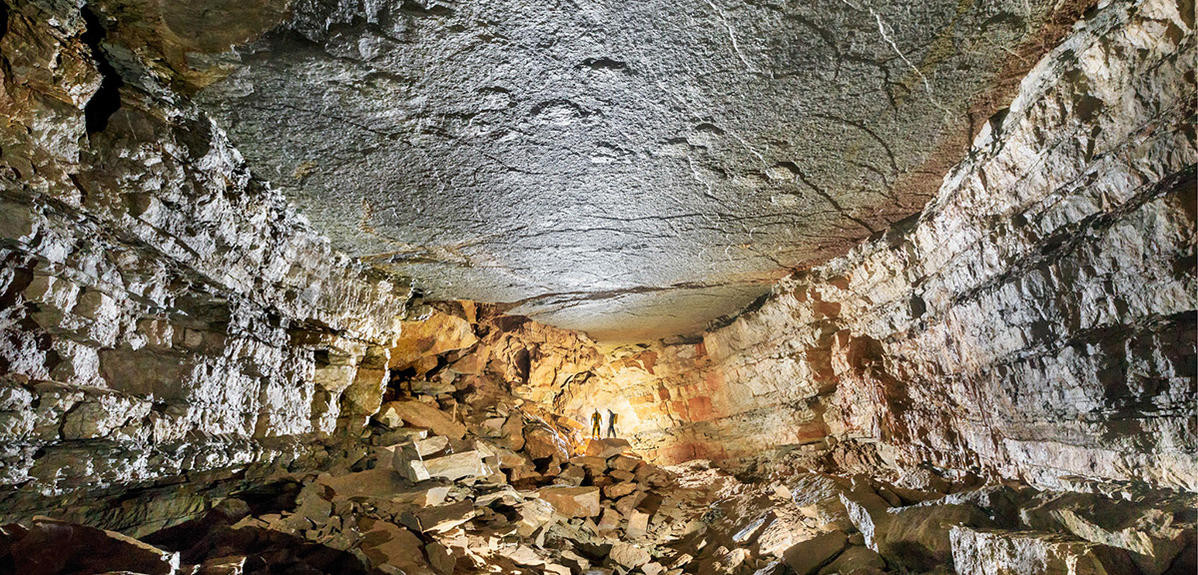
“It’s astonishing that thousands of explorers passed through this cave without noticing these prints,” Moreau remarked. “Once someone paid close attention to the ceiling, the footprints became unmistakable.”

Dinosaur Tracks Preserved on the Cave Roof
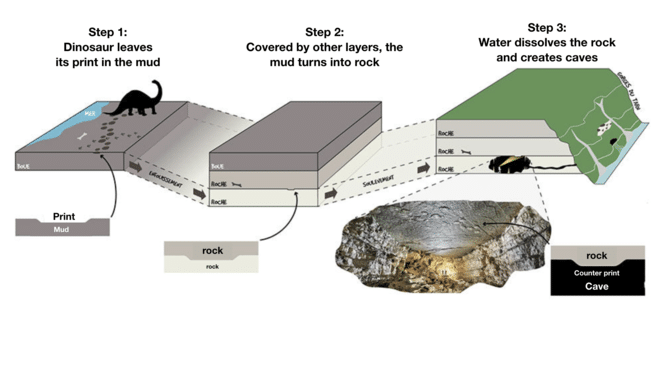
The fossilized tracks on the cave ceiling are not the original imprints. Instead, they are geological countermarks, or natural casts, formed when sauropods trekked across a muddy bank by an ancient lagoon.
The dinosaurs’ immense steps left deep impressions in the soft clay. These impressions were soon covered by sediment layers that acted like a mold-filling plaster. Over millions of years, both layers lithified into rock. Eventually, water erosion dissolving the softer layer beneath exposed the hardened sediment cast suspended above the hollow cavern below.
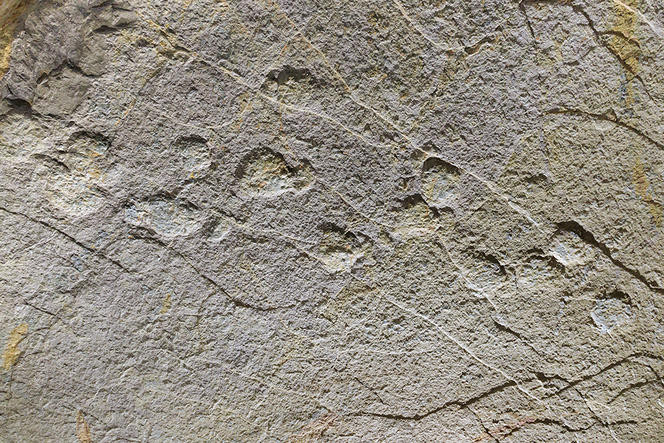
This process created the striking impression of three-dimensional dinosaur footprints pressing down into the rock but visible from underneath. Moreau described it as “viewing dinosaur tracks from below.”
Such preservation required rare geological conditions. The sediment filling the tracks had to harden more than the surrounding rock. The cave’s erosion had to selectively remove layers without damaging the delicate casts. And for nearly 168 million years, stable conditions were essential to keep the tracks sharp and distinguishable.
The Challenging Descent to Castelbouc Cave
Accessing the Castelbouc cave footprint ceiling is an intense physical endeavor. The path leads through cramped, twisting tunnels, some submerged following heavy rain, with researchers typically spending up to 12 hours underground per excursion. They transport cameras, illumination gear, and laser scanners along narrow passages, careful not to harm fragile mineral deposits.
Moreau, an expert in ichnology—the study of trace fossils—has spent over ten years cataloging dinosaur footprints across southern France's Causses Basin, a top European site for surface trackways. However, discoveries of footprints inside natural caves like this remain exceedingly rare. Science News reports that only two international teams have documented such subterranean dinosaur tracks.
Deep caves offer distinct preservation advantages. Unlike exposed rock surfaces that endure weathering, these underground environments maintain fossils with extraordinary detail. In two trackways at Castelbouc, the scientists identified alternating footprints and handprints, with the latter recognized by a characteristic crescent shape.
Insights into Jurassic Sauropods
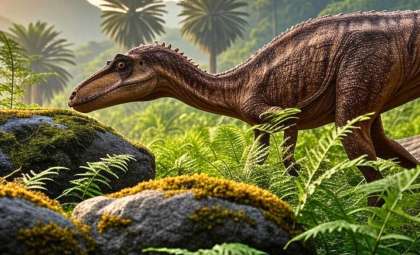
The specific sauropod species responsible for these tracks remain unidentified. During the Middle Jurassic, sauropods diversified globally, yet skeletal fossils from this time are rare. The immense size of the Castelbouc footprints implies they could belong to a titanosaur, a giant herbivorous group that includes the largest land animals ever recorded.
Scientists estimate the dinosaurs who made these 1.25-meter-long footprints measured approximately 30 meters in length. They walked quadrupedally along coastal settings, leaving impressions alongside fossils of conifer leaves and small saltwater fish. This suggests a lagoonal shoreline bordered by conifers, a habitat bridging terrestrial and marine ecosystems.
The research team also uncovered plant and fish fossils within the cave, enabling a reconstruction of the ancient environment these gigantic creatures inhabited. The footprints confirm that huge herbivores roamed coastal wetlands in present-day southern France during the Jurassic.
Similar underground dinosaur footprints have been found also outside of Europe. In early 2020, a study documented comparable tracks on a cave ceiling near Mount Morgan, Queensland, Australia. The French team points out that numerous unexplored karst cave systems worldwide may conceal more fossilized footprints like those in Castelbouc.
Currently, Moreau and his team are examining another deep cave nearby that has already revealed hundreds of dinosaur footprints. While their findings remain unpublished, they anticipate these new discoveries might surpass the significance of the Castelbouc site. Their work illustrates how paleontology often rewards thorough searches in unconventional locations—including overhead.
- Categories:
- Science


0 comments
Sign in to Comment