
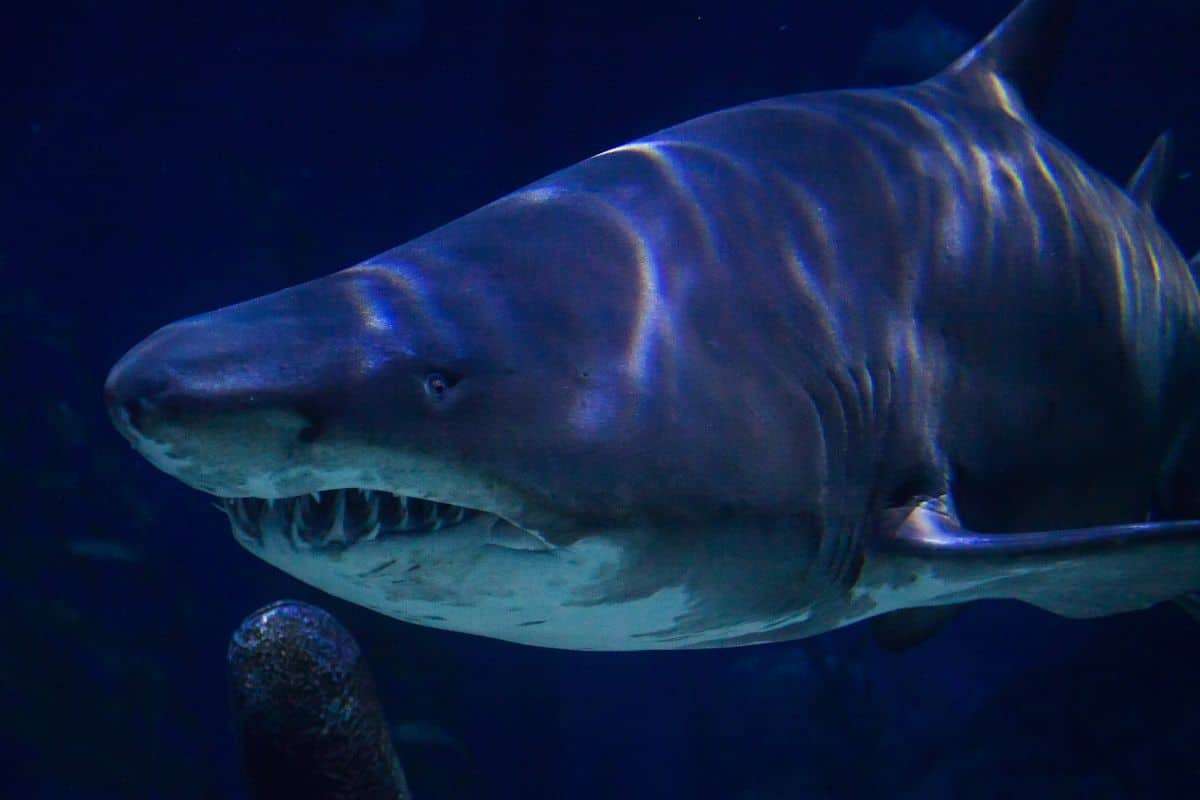
New research challenges previous conceptions of megalodon (Otodus megalodon), the massive prehistoric shark that dominated the seas millions of years ago. Contrary to the popular image of a giant, clunky great white shark look-alike, scientists now propose it resembled a more streamlined, agile lemon shark.
A Streamlined Apex Hunter
Traditionally, megalodon reconstructions have mirrored the build of the great white shark(Carcharodon carcharias), presuming similar physical forms. However, led by paleontologist Kenshu Shimada from DePaul University, a team expanded the analysis to include 145 extant shark species along with 20 extinct relatives.
The findings published in Palaeontologia Electronica highlight that the megalodon possessed a longer, more hydrodynamic physique, optimized for open ocean cruising instead of short ambush attacks. Its slender body design likely allowed for reduced water resistance, enabling sustained energy-efficient travel across vast marine expanses to hunt prey.

Reevaluating Megalodon’s Dimensions
Calculating the size of a species extinct for roughly 3.6 million years is complex, with fossil vertebrae from Belgium previously indicating a size range of 13 to 18 meters (43 to 59 feet). Yet this novel study offers even larger estimates.
Detailed anatomical modeling revealed that the combined length of the head and tail made up nearly half of the total body length. Therefore, a mature megalodon might have stretched up to 24.3 meters (80 feet)—comparable to two school buses lined end-to-end.
Further vertebrae discovered in Denmark hint at some individuals exceeding these measurements, suggesting even grander giants roamed prehistoric seas.
The Significance of Megalodon’s Form
In contrast to the burly muscular great white shark, which relies on explosive speed, megalodon’s evolution favored a streamlined design enabling sustained, low-energy movement. This trait aligns with sharks like lemon sharks, as well as whale sharks and certain whales, all adapted for efficient swimming with minimized drag.
Its cruising pace likely ranged from 2.1 to 3.5 kilometers per hour (1.3 to 2.2 miles per hour), supplemented by brief bursts of acceleration to capture prey. Such adaptations may have played a key role in maintaining megalodon’s status as the ocean’s top predator by balancing endurance and hunting power.
Insights Into Giants of the Sea
This research underscores how body shape correlates with gigantism in marine species. Rather than size alone, an organism’s structure must support its movement and energy demands. The bulky build of the great white shark caps its size at around 6 meters (20 feet) because of high swimming-energy costs.
Marine biologist Phillip Sternes, formerly at the University of California Riverside, commented that this study offers new perspectives on size evolution in oceanic predators. “This work not only updates our vision of megalodon’s appearance but also establishes a new framework for examining how size impacts locomotion in marine wildlife.”
- Categories:
- Science






0 comments
Sign in to Comment