
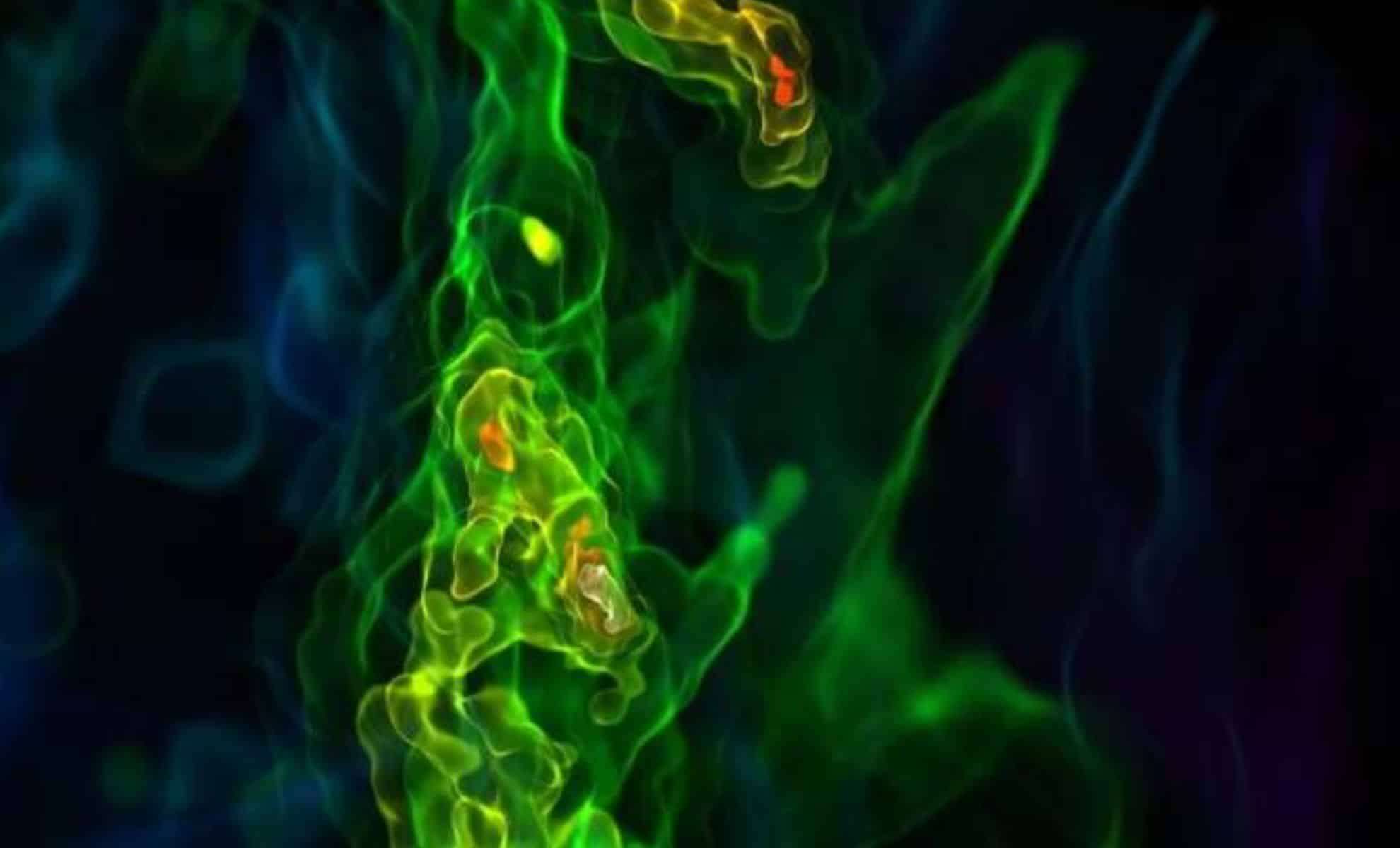
Innovative supercomputer models are shedding new light on the emergence of the universe’s first stars, known as Population III stars, by simulating the chaotic conditions of the primordial cosmos.
Led by Ke-Jung Chen from the Institute of Astronomy and Astrophysics at Taiwan’s Academia Sinica, the research, published in The Astrophysical Journal Letters, uncovers the unexpectedly crucial impact of intense turbulence in early gas clouds on star formation.
Illuminating the Universe’s Dark Ages
Approximately 370,000 years after the Big Bang, the universe entered a phase called the Dark Ages. During this time, the universe became transparent enough for light to travel freely, yet stars had not yet sparked the cosmic landscape. Several hundred million years later, the first stars emerged, ending this dark epoch. Although current telescopes cannot observe these ancient stars directly, cutting-edge simulations enable scientists to probe their formation.

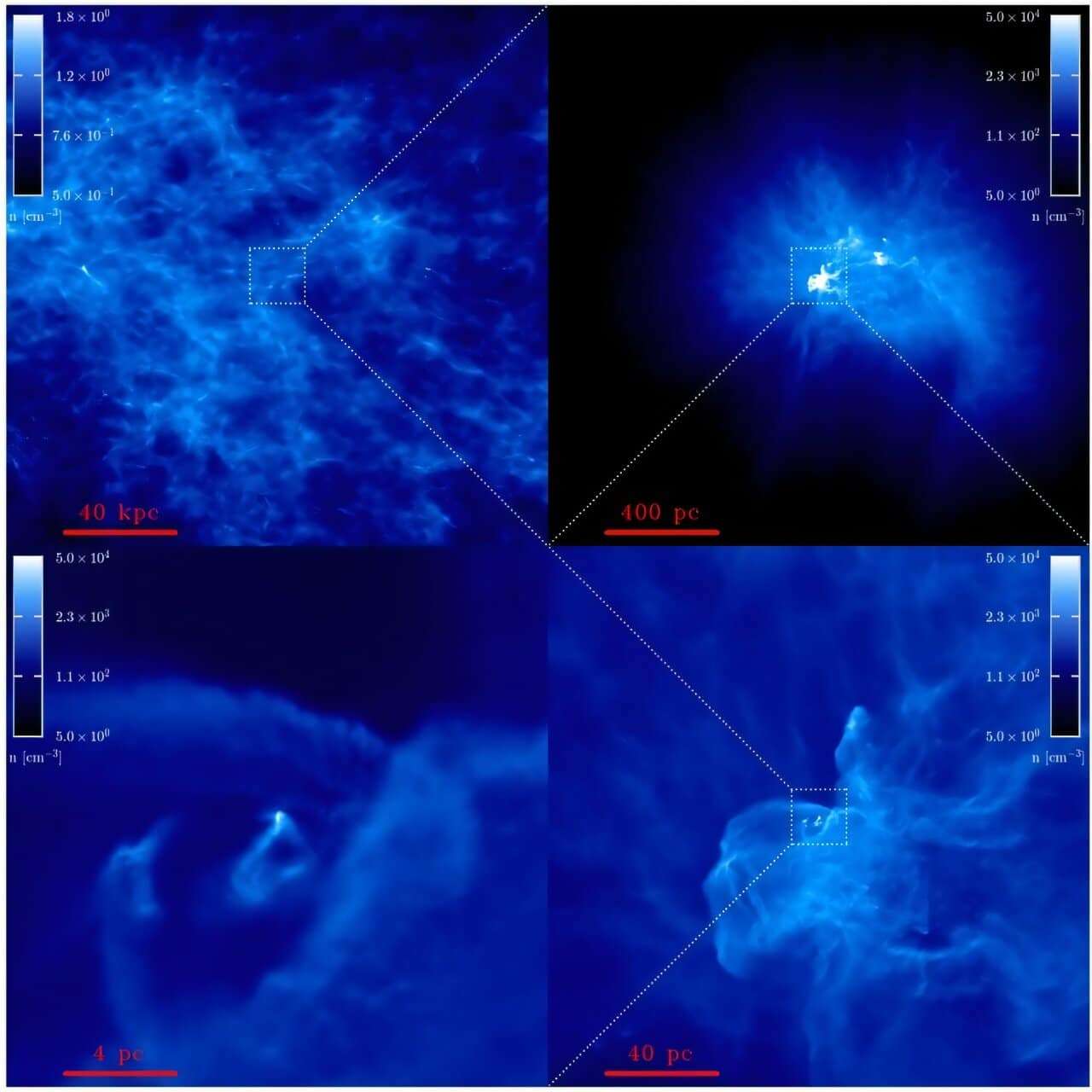
Utilizing the GIZMO simulation code alongside extensive data from the IllustrisTNG Project, the team recreated early star-forming environments. By enhancing IllustrisTNG’s resolution roughly 100,000 times through a method called particle splitting, the simulations captured gas dynamics down to tiny fractions of a parsec.
The Role of Turbulence in Early Gas Clouds
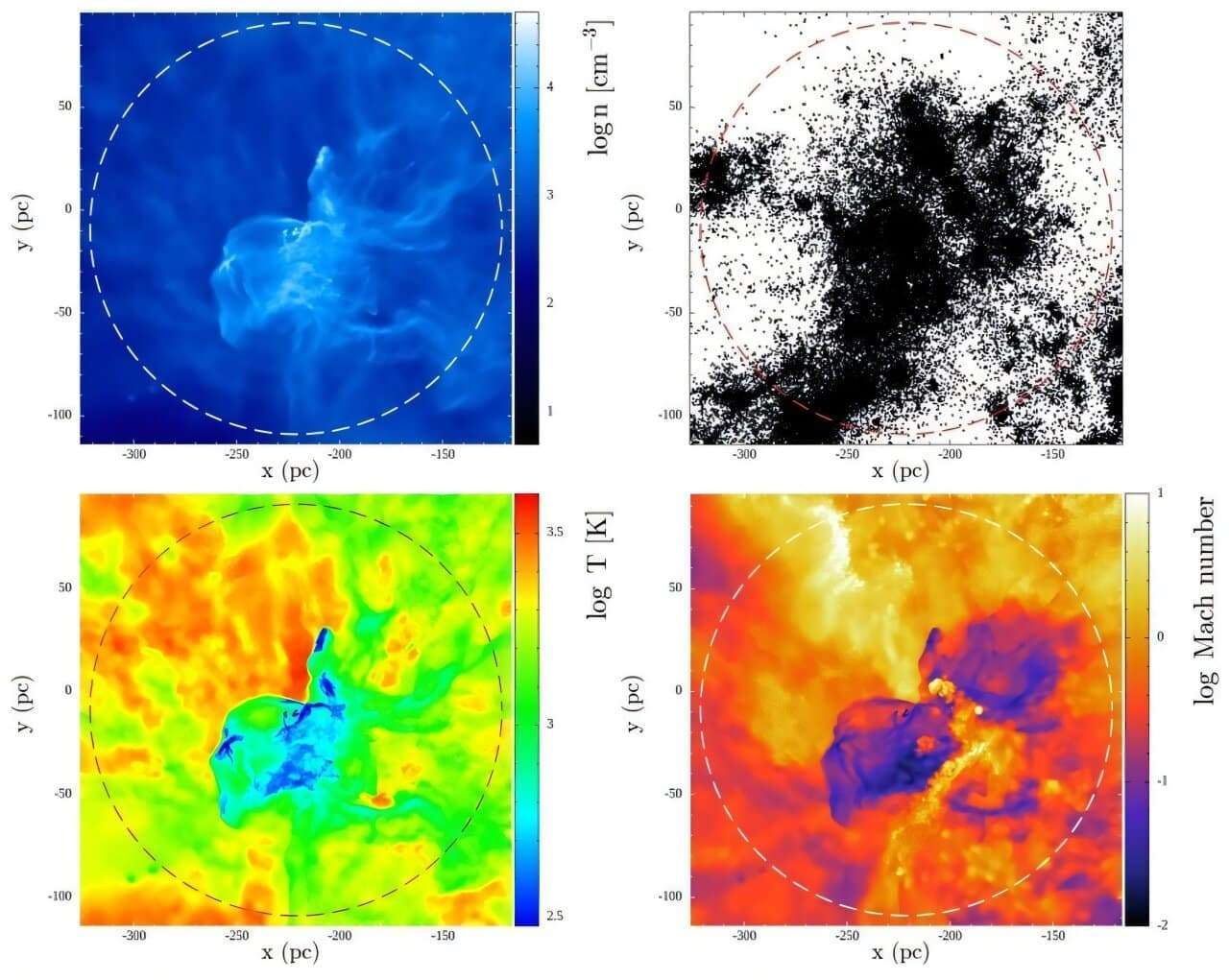
Starting with a dark matter mini-halo about 10 million times the Sun’s mass, the simulations showed gas rushing in at supersonic speeds, generating chaotic turbulence. Far from inhibiting star birth, this turbulence caused the gas to fragment into multiple dense pockets capable of collapsing into stars.
One of these gas concentrations reached the critical Jeans instability, collapsing into a star with an estimated mass around 8 times that of the Sun. Researchers noted the accretion of gas was "highly anisotropic and inhomogeneous," heavily influenced by tidal interactions within the evolving dark matter halo. The resulting tumultuous motions shaped the size and spread of the very first stars.
Resolving the Population III Star Debate
There has been longstanding uncertainty about whether Population III stars formed as massive solitary bodies or as smaller, more numerous stars. Previous hypotheses posited stars weighing between 80 to 260 solar masses, many ending in pair-instability supernovae—events that would leave distinctive chemical marks in subsequent stellar generations. However, despite extensive searches, these chemical signatures have not been definitively observed.
The new findings propose an alternative view: if the earliest stars were less massive and explosive supernovae were uncommon, this would clarify why such chemical imprints are rare in ancient stars today.
"This is the first time we’ve been able to resolve the full development of turbulence during the earliest phases of the first star formation," Chen stated. "It demonstrates that violent, chaotic motions were not merely present—they played a vital role in shaping the first stars."
Connecting Large-Scale and Small-Scale Cosmic Phenomena
By linking the vast cosmic web’s large-scale formations with the minute processes driving star emergence, this research marks a breakthrough in decoding the cosmic dawn. The data imply that turbulence spawned during early structure formation may have naturally controlled the mass distribution of Population III stars, prompting revisions to established theories about the universe's first light.
"These simulations represent a transformative advance," Chen reflected. "Uncovering turbulence’s role brings us closer to fully understanding how the cosmic dawn unfolded."
- Categories:
- News




0 comments
Sign in to Comment