
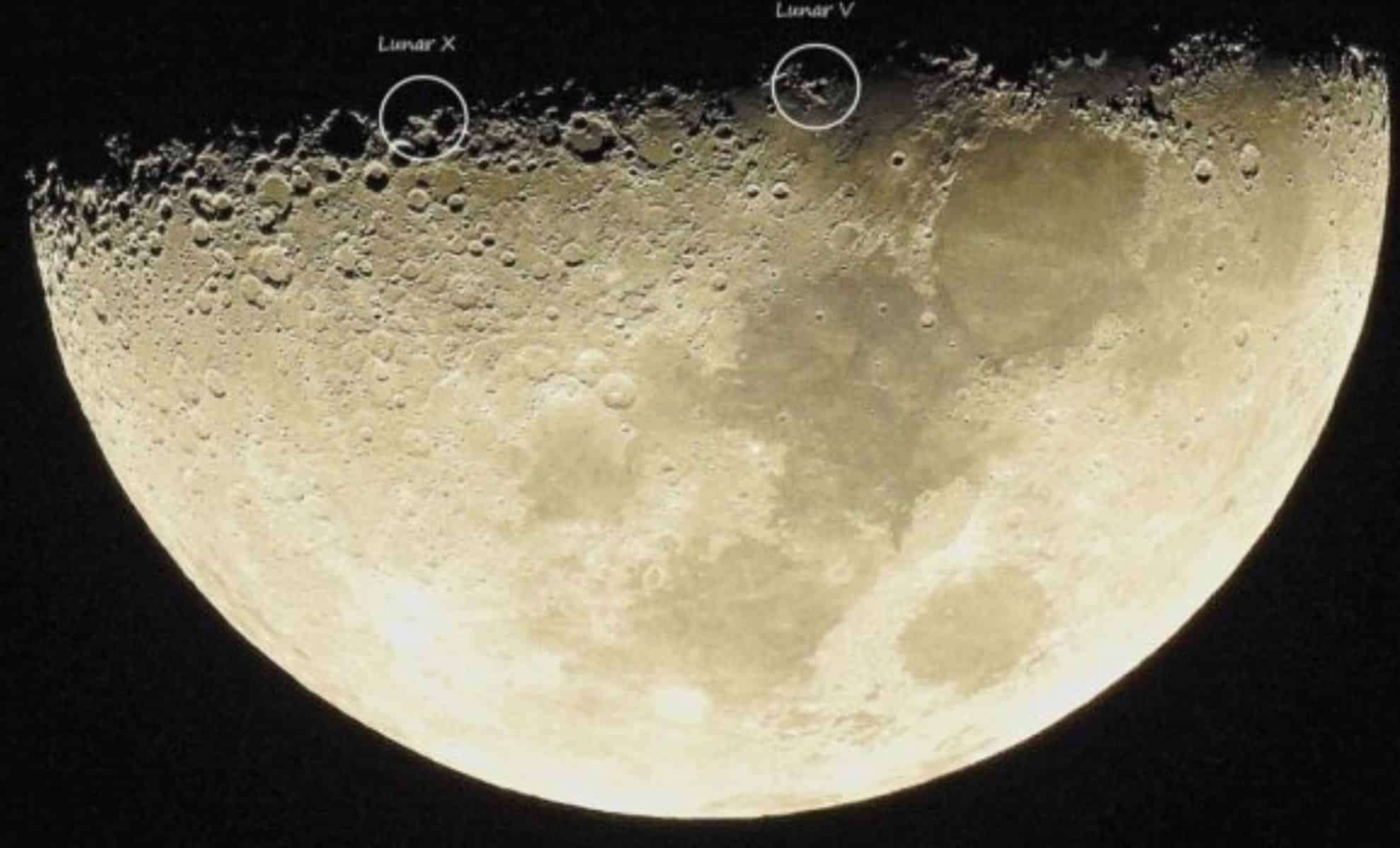
On the evening of July 2, sky enthusiasts will be treated to a remarkable lunar display during the first quarter moon. Two distinct shapes resembling an ‘X’ and a ‘V’ will become visible on the moon’s surface, a captivating sight for both casual observers and astronomy buffs. According to EarthSky, this event is part of the moon’s natural rhythm, occurring as sunlight illuminates certain craters to create these distinctive patterns. The interplay of the moon’s rugged landscape and the sun’s angle generates these intriguing visual effects that are only visible for a short window.
The iconic ‘X’ and ‘V’ shapes emerge best just before the first quarter phase, when the terminator — the dividing line between lunar night and day — offers sharp contrasts. This phenomenon, though recurring during moon cycles, is a thrilling opportunity on July 2 for astronomy lovers and stargazers to spot and appreciate these fleeting features.
Spotting the Moon’s ‘X’ and ‘V’ Shapes
The familiar ‘X’ arises from the way sunlight and shadows fall on the rims of three specific craters: Bianchini, Purbach, and La Caille. When illuminated just right, the bright crater edges and surrounding shadows align to form the striking ‘X’ pattern, located roughly 25 degrees south of the lunar equator, close to the terminator line. This effect becomes most vivid as the moon approaches its first quarter phase.

Meanwhile, the ‘V’ shape takes form slightly north of the equator near the Ukert Crater. Here, subtle shading along the crater’s borders creates the distinctive ‘V’ configuration, which also appears during the hours leading up to the first quarter moon, beginning around sunset on July 2.
These captivating light illusions are temporary, lasting roughly four hours before the moon’s rotation alters the shadows. However, even after the shapes vanish from the terminator’s night side, they can linger momentarily as the moon’s surface brightens, extending the viewing time slightly.
Recommended Viewing Tools
To get the best look at the lunar ‘X’ and ‘V’, a telescope is highly advised. Although these formations might be spotted with the naked eye under ideal conditions, a telescope with a minimum aperture of 6 inches significantly enhances the detail and contrast, especially around the crater rims. Telescopes designed for beginners, such as the Celestron NexStar 4SE, are perfect for appreciating these lunar features with ease and clarity.
For photographers wanting to capture this event, using specialized cameras and lenses is essential to highlight the moon’s sharp contrasts. Detailed guides, like those on Space.com, offer advice on the best tools and settings for lunar photography and telescopic viewing.
The Science Behind the ‘X’ and ‘V’ on the Moon
The fascinating shapes known as the ‘X’ and ‘V’ are examples of the clair-obscur effect—an optical phenomenon created by the moon’s uneven surface interacting with sunlight. At certain angles during the moon’s phases, illumination highlights the crater rims while casting deep shadows, producing intense visual contrasts that bring out these distinctive patterns.
This spectacle is deeply connected to the moon’s topographical features. The Bianchini, Purbach, and La Caille Craters are primarily responsible for the ‘X’, while the Ukert Crater shapes the ‘V’. Insight into how sunlight interacts with these lunar landmarks enriches our understanding of these impressive natural light shows and their place in the moon’s ongoing cycle.
- Categories:
- News










0 comments
Sign in to Comment