
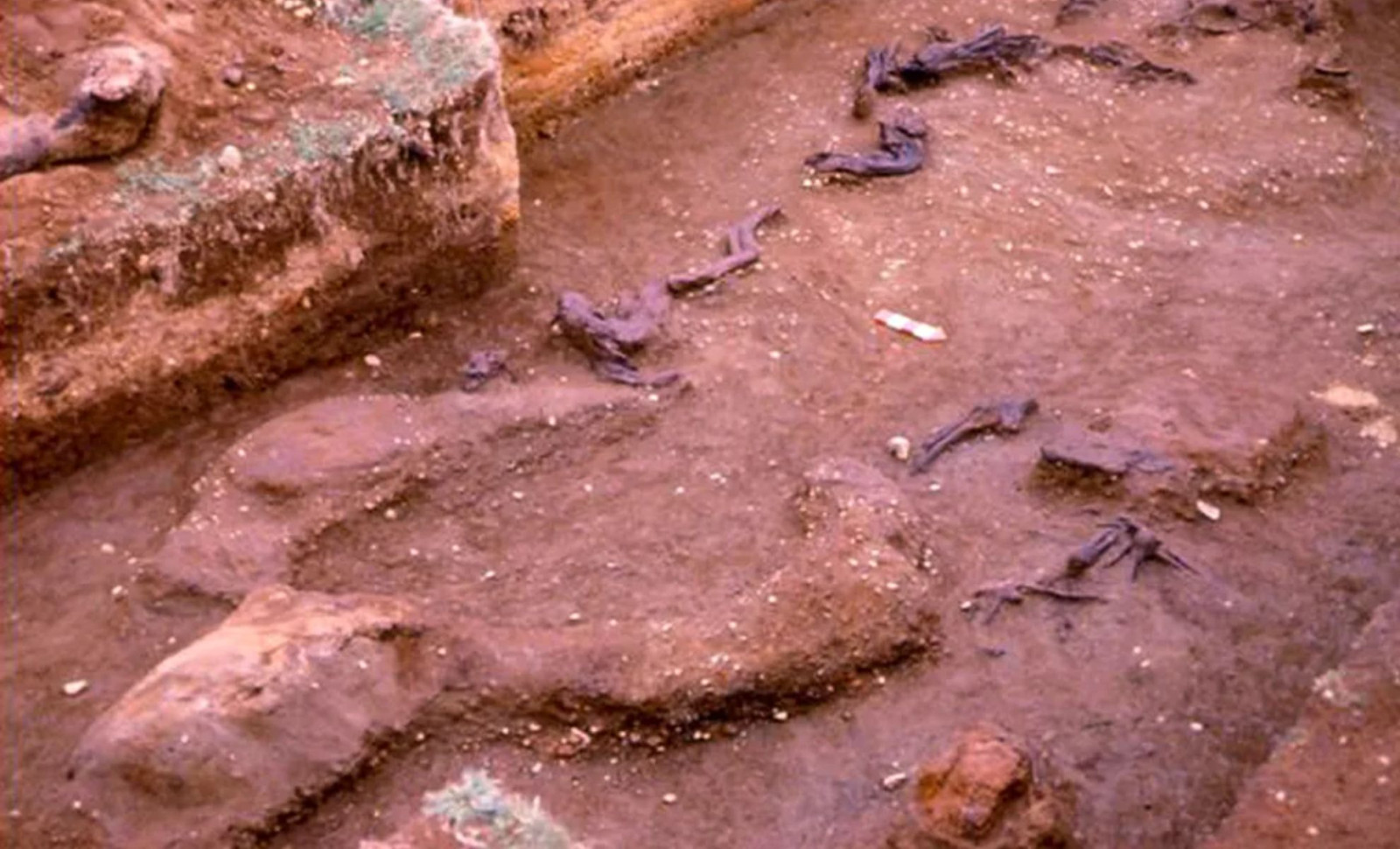
Recent findings indicate that the Monte Verde archaeological site in Chile is significantly younger than traditionally believed. Previously considered to be around 14,500 years old, new research now estimates its age to be between 4,200 and 8,200 years ago. This update reshapes scientific perspectives on the timeline of initial human settlement in the Americas.
Monte Verde has served as a cornerstone in understanding early human presence in South America. Its initial dating placed it earlier than the Clovis culture of North America, which dates to roughly 13,000 to 13,500 years ago. This led to the hypothesis that humans arrived in South America well before previously believed.
The site has been central to discussions about migratory routes, supporting theories that early populations may have traveled along the Pacific coastline rather than solely via the Bering Land Bridge.

Earlier Interpretations of Monte Verde
Excavations from 1977 to 1985 uncovered a variety of artifacts, including stone implements, wooden fragments, rope fibers, and seaweed, preserved in a damp, peat-rich environment.
These materials were originally dated to approximately 14,500 years ago. Confirmed in 1997, these dates suggested Monte Verde predated many Clovis sites and even some locations in eastern Beringia. This early dating became widely accepted and frequently cited in research exploring early human colonization of the Americas.
Reevaluating the Evidence
New work led by Todd Surovell from the University of Wyoming challenges these earlier conclusions. Published in Science, the study argues that the data do not support such an ancient timeframe.
The researchers now place the site's occupation between 4,200 and 8,200 years ago. They noted that:
“[Our] results fail to support the [previous] hypothesis that the lower portion of [Monte Verde II] date to the Late Pleistocene,” he added that: “Instead, evidence from multiple sections show that the uppermost terrace at Monte Verde accumulated during the Late Pleistocene and Early Holocene.”
The Pleistocene epoch was characterized by colder glacial climates, whereas the Holocene began approximately 11,700 years ago, heralding a warmer, more stable period—thus situating Monte Verde in a far more recent era than initially inferred.
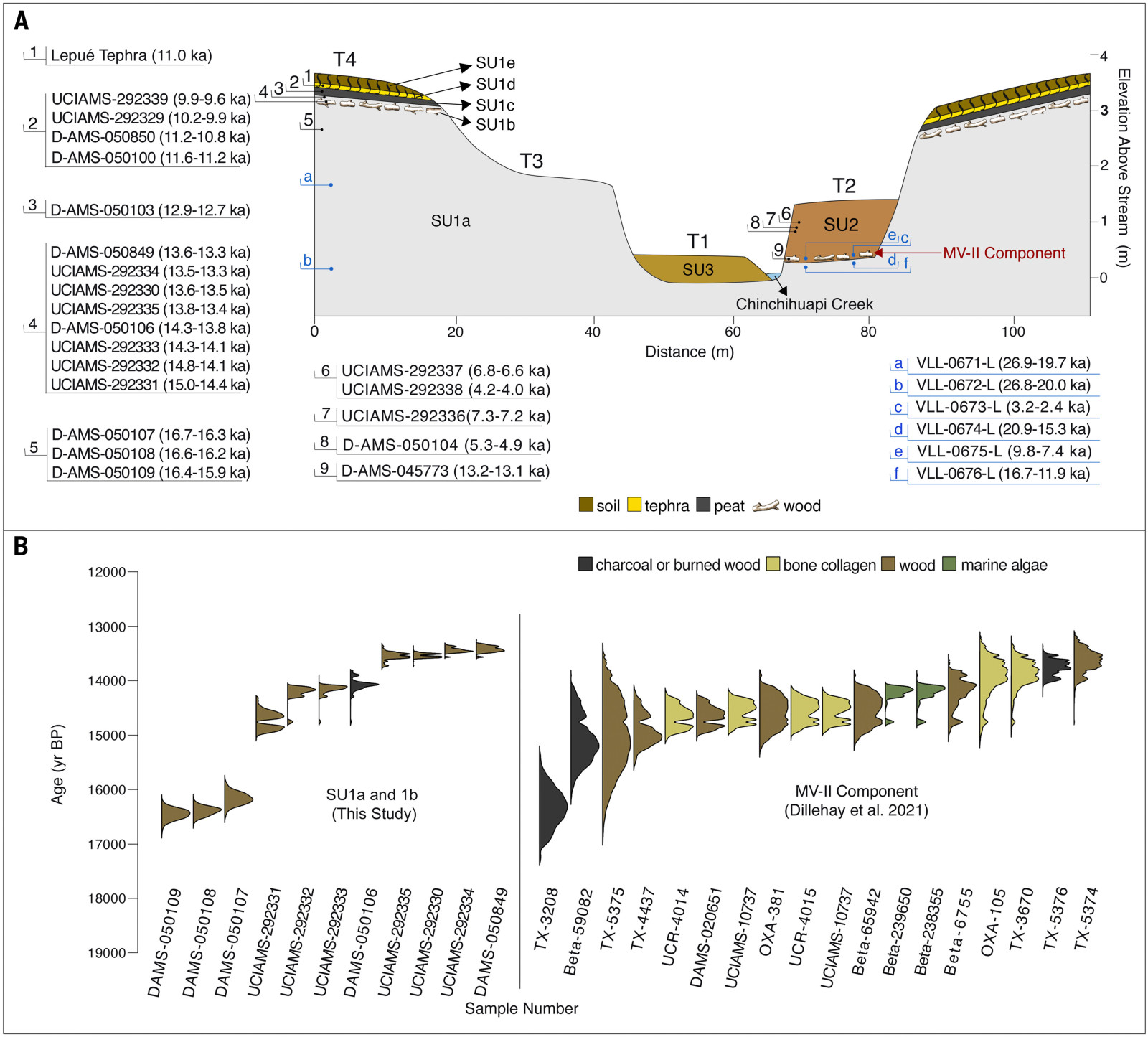
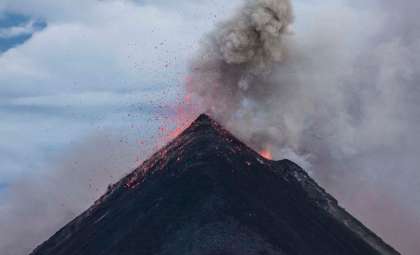
An important factor is that Monte Verde II lies above the Lepué Tephra volcanic layer, which dates to about 11,000 years ago. This conflicts with earlier dating estimates. Additionally, the study highlights that prior research underestimated the impact of erosion and sediment displacement over time.
Older Remains in Newer Sediments
The original age estimates heavily relied on organic materials found near the site. Pleistocene-era wood and plant remains had been interpreted as evidence of early human activity.
The new analysis suggests an alternative scenario where geological activity in the Early Holocene brought older materials to the surface and caused them to be reburied within younger sediment layers.
This mixing of deposits created the illusion of an older occupation. Dating the sediments directly now points to a Middle Holocene age.
Surovell cautions against using Monte Verde as a definitive benchmark for migration studies.
“As demonstrated here, the age of the [Monte Verde II] component should not be used as a constraint or check on colonization models derived from other sources, including the genetics of modern or ancient populations,” he stated. “Our findings also underscore the critical need for independent study and verification of early sites.”
This updated timeline does not invalidate the possibility of human presence in the Americas at earlier dates, but it does eliminate Monte Verde as one of the strongest evidentiary pillars supporting that scenario.
- Categories:
- Science







0 comments
Sign in to Comment