

NASA's latest breakthrough in laser communication marks a significant evolution in how we connect with spacecraft. Traditionally dependent on radio waves, space communication has now embraced laser technology that can transmit data at rates up to 100 times faster.
This leap forward isn't just about speed—it opens up new horizons for space exploration. Enhanced data bandwidth will allow upcoming missions to:
- Rapidly send high-definition images and videos to Earth
- Support real-time exchanges with orbiters and surface explorers
- Conduct more intricate scientific investigations across deep space
- Assist prospective human expeditions to Mars and further destinations
The impact of this innovation reaches far beyond improved communication. Much like how the Hubble Space Telescope has unveiled stunning views of the distant universe, future observatories equipped with laser links promise to deliver even more detailed cosmic insights.

Advancing Deep Space Communication with the Psyche Mission
Central to this innovation is NASA’s Psyche spacecraft, featuring advanced laser transceivers tailored for deep-space signal exchange. While initially tasked with analyzing a metal-rich asteroid, Psyche now serves as a pioneering platform showcasing laser communication capabilities.
This milestone was achieved using two dedicated Earth-based observatories:
- Palomar Observatory, tasked with receiving data transmissions
- Table Mountain, responsible for sending precision laser signals
Both locations utilize high-powered 7-kilowatt lasers, ensuring the pinpoint accuracy and strength needed to manage communication across millions of kilometers.
Psyche’s milestones highlight the rapid advances possible with this technology:
DateDistance from EarthData Rate202331 million kmVideo streaming enabledEarly 202453 million km267 Mbps achievedJune 2024390 million km6.25 Mbps data rateJuly 2024460 million kmRecord-setting laser link
Future Impact on Interplanetary Exploration
The record-setting laser communication established at roughly 310 million miles (499 million kilometers) from Earth heralds a new chapter in space exploration. This groundbreaking success allows for more sophisticated and data-heavy scientific endeavors throughout the solar system and beyond.
Mars exploration, in particular, stands to gain from this technology by:
- Enhancing live communication with planetary rovers and human crews
- Accelerating transfer of extensive datasets, including detailed images and analyses
- Streamlining operational coordination between spacecraft and mission control
Beyond Mars, this capability promises profound exploration potential for outer planetary bodies. From obtaining intricate views of Europa’s subsurface oceans to real-time monitoring of Saturn’s rings, the scope for discoveries expands dramatically.
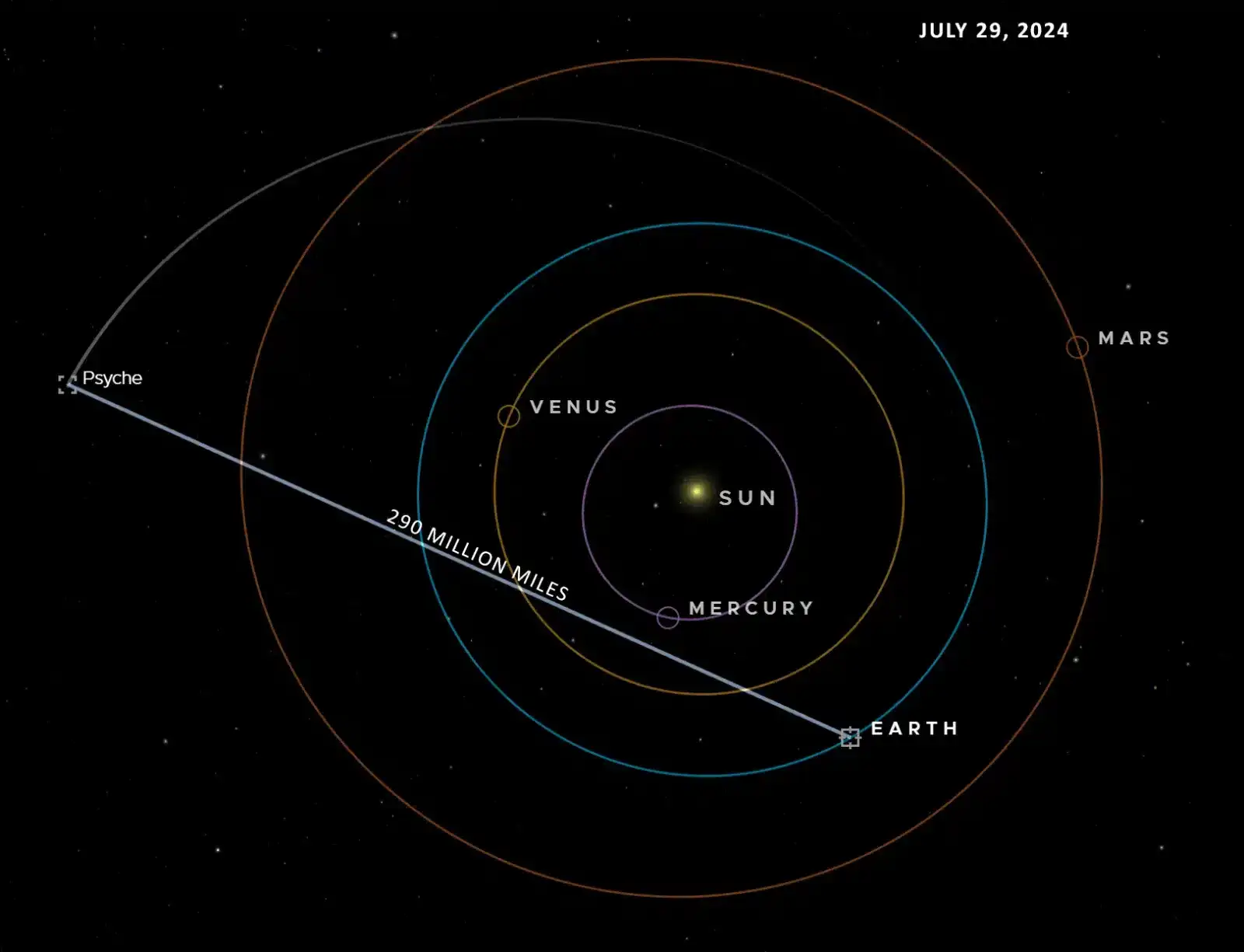
ushering in a transformative epoch in space communication
With this landmark success, NASA’s laser communication test signifies more than just technological achievement—it sparks new ambitions for scientists and explorers globally.
This advance represents a crucial step toward unlocking deeper cosmic knowledge and tackling some of humanity’s most fundamental questions through enhanced exploration capabilities.
Every successful transmission pushes us further, enhancing both our reach and understanding. As laser communication technology continues to evolve, it promises to illuminate our journey across the solar system with unprecedented clarity and precision.
- Categories:
- Nasa








0 comments
Sign in to Comment