
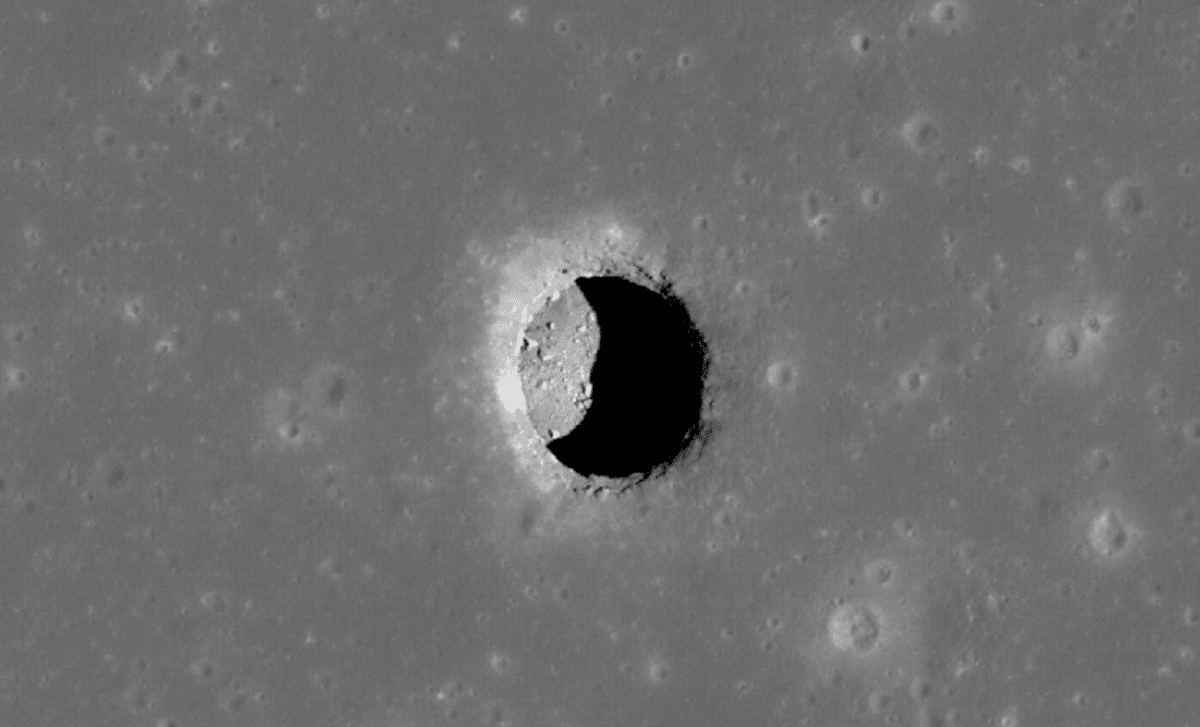
A European research group is pioneering a novel space robotics initiative, outlined in Science Robotics, aimed at autonomously investigating lava tubes on the Moon and Mars. These natural underground tunnels, formed thousands of years ago by flowing lava, offer promising shelters for astronauts, shielding them from cosmic rays and asteroid impacts. Their significance as potential habitats is undeniable, but exploring and mapping them has posed serious technical challenges—challenges that are now being addressed.
Why Lava Tubes Could Be Ideal for Lunar and Martian Bases
Lava tubes—spacious cavities created by past volcanic eruptions—have emerged as prime candidates for establishing long-term human outposts on the Moon and Mars. Unlike surface structures, which require heavy shielding to fend off cosmic radiation and meteorite damage, these subterranean spaces naturally provide protection. Their consistent temperatures and shelter from extreme surface conditions make them attractive not only for emergency refuges but also as foundations for permanent bases.
Nonetheless, reaching and safely exploring these underground environments is complex. Narrow entrances, steep drops, and limited visibility create hazards for human explorers. Many experts believe autonomous robots are the key to safely accessing, negotiating, and mapping these hazardous locations with minimal human intervention.

An Incremental Robotic Strategy for Cave Exploration
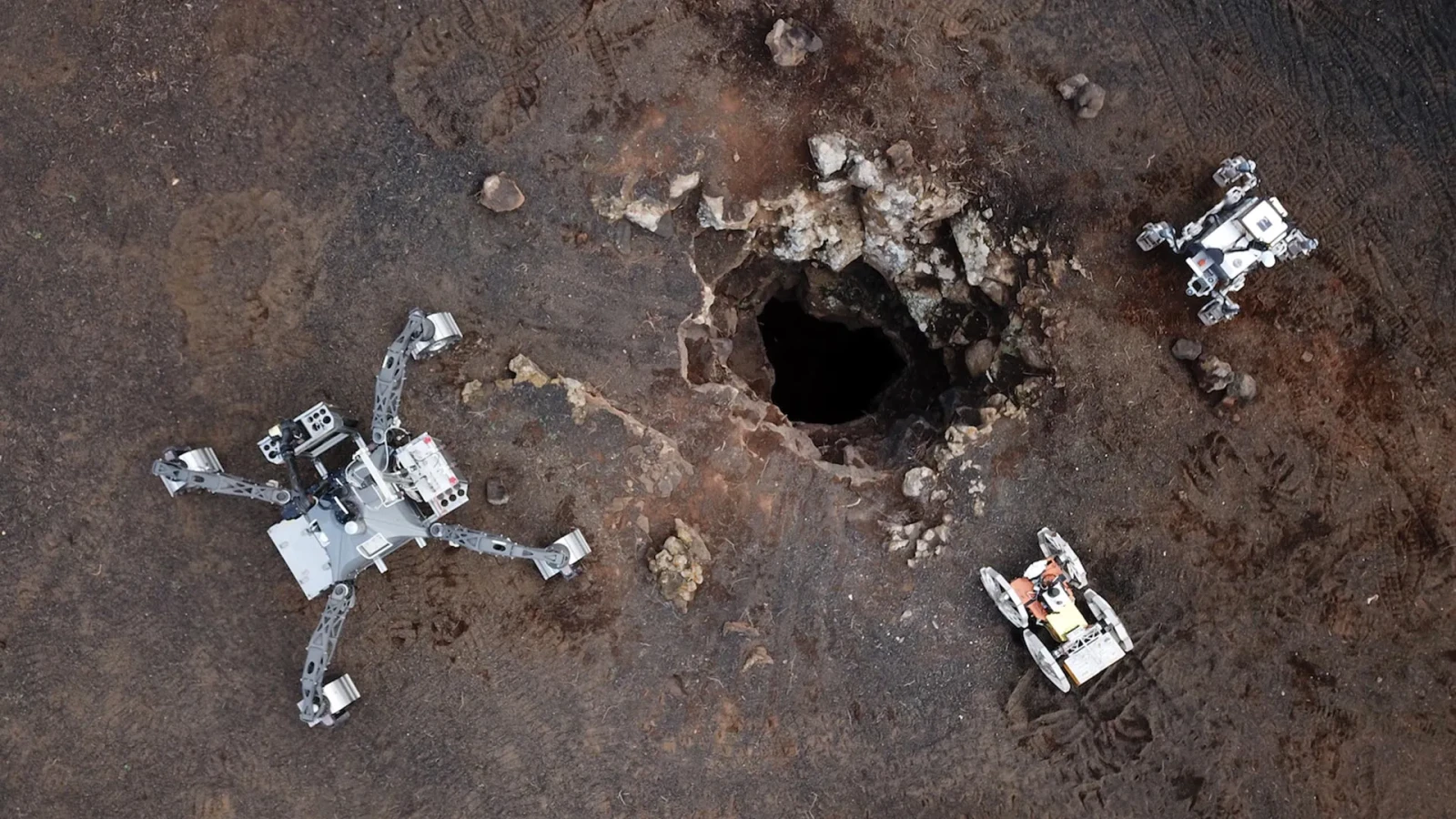
The mission blueprint comprises four sequential phases employing varied robotic platforms. Developed collaboratively by a European team led by the German Research Center for Artificial Intelligence (DFKI), along with significant contributions from the University of Malaga (UMA) and GMV, this robotic consortium recently validated their approach in Lanzarote’s volcanic cave networks, replicating lunar terrain conditions.
Initially, cooperative robots perform reconnaissance and map the cave entrance. Next, a sensor-laden payload cube is deployed inside to capture baseline environmental readings. The third phase involves a scout rover with climbing capabilities, facilitating a controlled descent into the cave. Finally, the robotic units traverse the tunnel system, generating detailed 3D maps of its interior spaces.
Results from the Lanzarote exercises confirmed that such autonomous missions can operate in rugged environments with limited human guidance, yielding valuable scientific data.
Collaborative Robotics: A New Frontier in Space Exploration
Published in the journal Science Robotics, the mission highlights the breakthrough of autonomous robotic teamwork. Unlike conventional rovers working solo, this system features interdependent robots assisting each other across diverse functions. Their capabilities extend beyond navigation and sensing to include real-time collaboration and autonomous decision-making.
This paradigm shift is crucial for distant planetary exploration, where direct remote control faces delays and communication barriers. On Mars, for instance, lag times of up to 20 minutes demand robots that can autonomously coordinate and adapt, making such collaborative architectures indispensable.
Educating Future Innovators at UMA’s Space Robotics Laboratory
At UMA’s Space Robotics Lab, engineers are cultivating both the robotic hardware and the expertise needed to advance planetary autonomy. Working closely with the European Space Agency (ESA), the lab focuses on enhancing autonomous systems for missions ranging from orbit to planetary surfaces. Students from the School of Industrial Engineering engage hands-on through internships and research projects.
Beyond physical robots, the team is advancing AI-driven algorithms enabling on-the-fly route planning, terrain analysis, sensor integration, and multi-robot coordination—all vital for unpredictable extraterrestrial environments.
Lanzarote’s Volcanic Terrain: A Stand-In for Lunar Landscape
Lanzarote’s unique volcanic formations serve as an excellent terrestrial analog for lunar and Martian lava tubes. Its dry, loose surface materials and intricate cave features offer realistic conditions for testing and refining robotic exploration strategies.
The February 2023 field trials showcased the robotic group’s ability to operate independently, efficiently gathering critical data and producing comprehensive maps of previously unreachable zones. These results will assist in pinpointing safe locations, resource deposits, and promising areas for establishing future lunar settlements.
- Categories:
- Science





0 comments
Sign in to Comment