
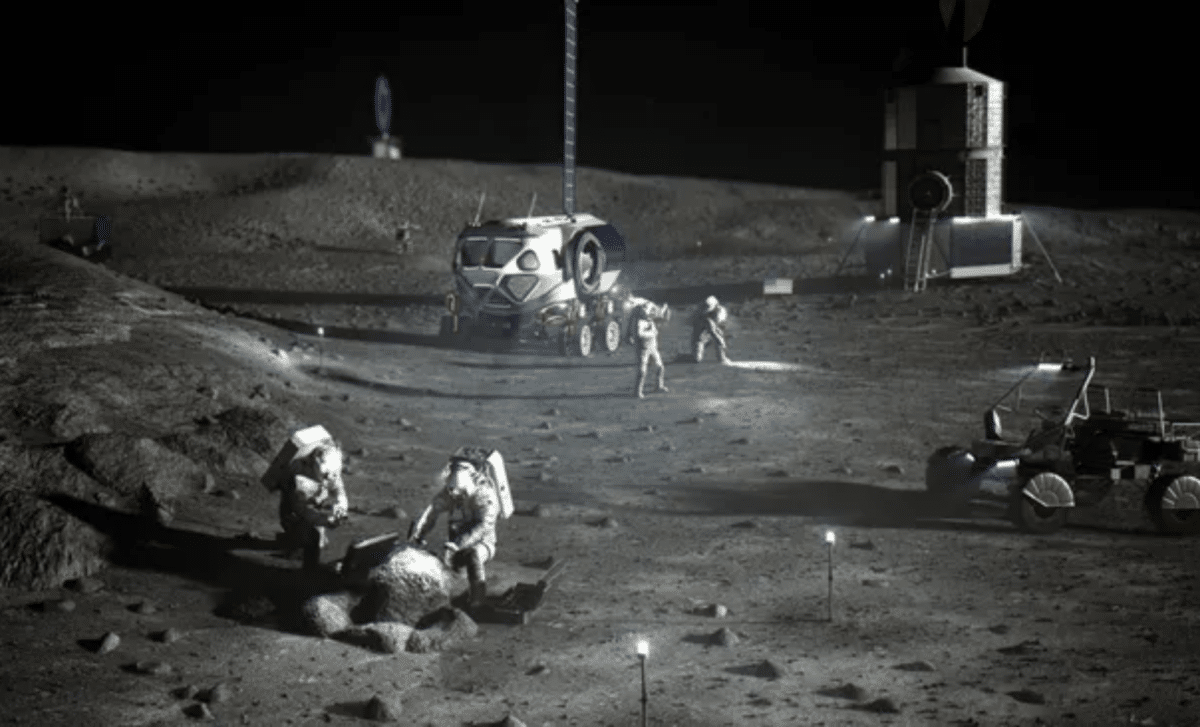
Researchers are advancing robotic technologies to support the initial human missions on Mars and enhance operations on the Moon, revealed at the American Geophysical Union (AGU) conference held in Louisiana.
Equipping Mars Explorers With Live Space Weather Monitoring
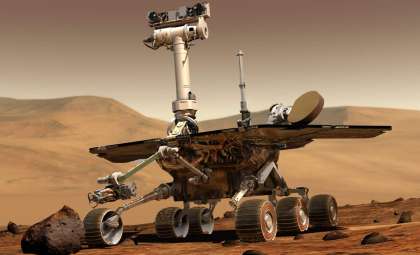
A major hazard for astronauts traveling to Mars is harmful solar radiation. Scientists are adapting Earth-oriented space weather forecasting tools to assist Mars crews. At NASA’s Goddard Space Flight Center, heliophysicist Gina DiBraccio and her team have upgraded a decision-support dashboard to incorporate data from various Mars missions. This platform pulls information from the MAVEN orbiter, Curiosity, Perseverance rovers, and upcoming sources, offering astronauts real-time updates on solar conditions.
“It’s among the initial tools that Mars explorers will rely on to monitor and evaluate space weather right from the Martian surface,” DiBraccio explained at the AGU event. The dashboard works on tablets, alerting crews to solar flare threats and guiding protection protocols. The vision is to develop an integrated risk-assessment system essential for the success of extended Martian missions, especially as NASA’s Artemis program expands humanity’s reach into deep space.

Charting Martian Radiation Across a Solar Cycle
Long-term monitoring of cosmic radiation variations on Mars is vital for mission safety. At AGU, Shannon Curry, lead scientist of the MAVEN mission at the University of Colorado Boulder, presented a comprehensive dataset covering the complete solar cycle from 2014 through 2025. This database identifies patterns in the timing, strength, and duration of space weather events, offering key intelligence for planning safe surface activities.
“This dataset reveals what kinds of radiation events we can expect during the entire solar cycle and when they might occur,” Curry said. MAVEN observations confirm that despite Mars' thin atmosphere, certain radiation types can still reach the surface, particularly during peak solar activity. These insights, as covered by Space.com, underpin predictive frameworks designed to safeguard astronauts and equipment on Mars. Monitoring radiation levels is rapidly becoming a critical survival tool.
Piecing Together Lunar Water Data
With NASA’s Artemis program aiming for crewed missions near the Moon’s south pole, locating accessible water ice remains a crucial mission objective. While hints of frozen water exist in shaded craters, pinpointing exact deposits has proven difficult. Bethany Ehlmann, head of the Laboratory for Atmospheric and Space Physics (LASP), emphasized the discrepancies among current datasets.
“The problem is that the existing data sources don’t precisely agree on where lunar water deposits are,” Ehlmann stated. “We know it’s generally present in the south pole region and associated with specific craters, but it’s as imprecise as saying, ‘There’s water somewhere in New Orleans,’” she added. To resolve this, NASA recently approved a state-of-the-art imaging spectrometer to orbit the Moon, capable of detailed mapping of minerals and ice. This instrument will enable astronauts to identify promising sample sites, supporting future sustainable lunar missions.
Tackling the Ever-Persistent Challenge of Lunar Dust
From Apollo 17 missions through upcoming Artemis IV landings, lunar dust continues to pose technical hurdles. Characterized by abrasive, electrostatically charged particles, this dust can degrade instruments and threaten astronaut health. Apollo astronauts termed it a major obstacle. Commander Gene Cernan famously commented: “Dust is probably one of our biggest obstacles to smooth moon operations. Other challenges are manageable, but dust is uniquely troublesome.”
This concern remains central today. At the AGU meeting, Xu Wang from University of Colorado Boulder unveiled the DUSTER project, a $24.8 million effort set for deployment during Artemis IV. This rover-mounted sensor array will investigate dust and plasma dynamics on the lunar surface. Wang’s team is also creating the Compact Electrostatic Dust Analyzer (CEDA), engineered for durability even during rough landings and usable in orbit or on the Moon. “Dust permeates the lunar environment,” Wang noted. “It’s unavoidable, so we must learn to manage and live with it.” Developing dust mitigation technologies is now a fundamental part of ensuring long-term lunar missions succeed.
Integrating Robotic and Human Space Exploration
The AGU briefing highlighted an evolving mindset: robots and humans in space exploration complement each other rather than compete. Missions like MAVEN, Perseverance, and forthcoming Artemis landings are coordinated parts of a unified exploration plan, where robotic explorers serve as pioneers, environmental monitors, and scientific proxies.
“It’s no longer about choosing robotic or human exploration,” Ehlmann emphasized. “We need both working together to achieve the best outcomes.” This cooperative model is rapidly becoming standard practice. Robotic missions provide vital environmental intelligence, while human crews conduct adaptive science and pursue long-term goals. This hybrid strategy helps NASA and partners minimize risks, optimize exploration tactics, and broaden space presence from Artemis through the Red Planet.
- Categories:
- Nasa





0 comments
Sign in to Comment