
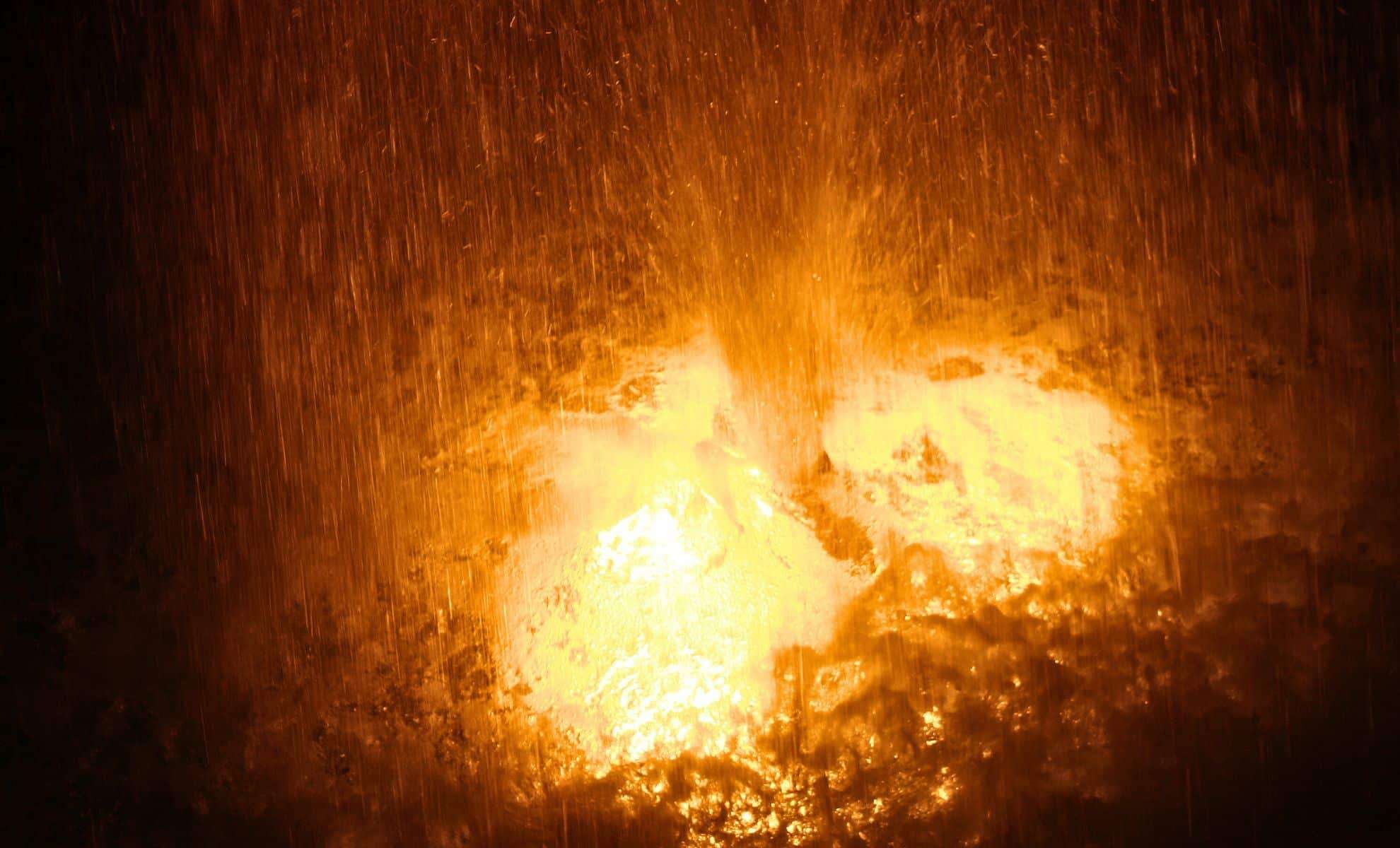
Far beneath the volcanic landscapes of Hawaii, a geological puzzle has emerged from the depths. Researchers studying flowing molten lava have uncovered clues suggesting a remarkable connection to materials originating well below the crust and mantle. This discovery challenges long-standing beliefs about the inner workings of our planet.
Unearthing Evidence in Volcanic Basalt
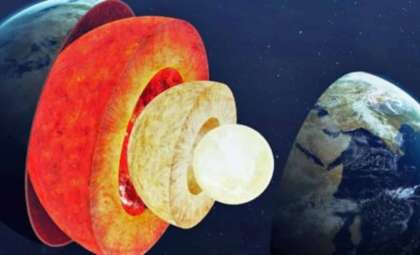
Traditionally, the Earth’s core is viewed as a closed reservoir brimming with metals, inaccessible through any natural or human process. However, a recent Nature publication led by Nils Messling of the University of Göttingen brings new insights. Their analysis of basalt collected from sites like Kaua‘i and the Kīlauea Iki lava lake revealed unexpected traces of the ruthenium isotope ¹⁰⁰Ru, linked to processes deep in Earth's interior.
Messling remarked that the initial results were a revelation: “it was as if we had uncovered gold itself.” The isotope levels indicated sources beyond the upper mantle, pointing toward the core–mantle boundary nearly 2,900 kilometers below the surface.

Peering Into the Planet’s Deep Interior
This breakthrough was made possible by advanced isotopic measurement methods that differentiate isotopes previously indistinguishable due to their close atomic identities. These refined techniques revealed a unique chemical signature mirroring that of the Earth’s core — believed to house most of the planet’s precious metal deposits.
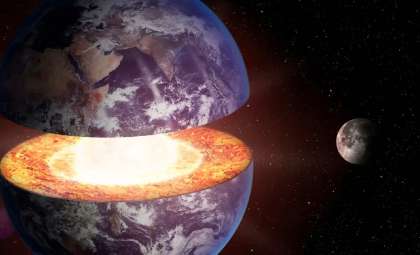
Scientists estimate the core contains a staggering 99.999% of Earth's gold alongside large amounts of platinum and other highly siderophile elements. These metals, tightly bound to iron, sank inward during Earth’s formation some 4.5 billion years ago and were thought to remain trapped. The new data suggest that this deep metallic reservoir may not be entirely isolated from the mantle and surface.
Tracing Deep Mantle Upwellings
The team concentrated on ocean island basalts, which emerge from mantle plumes—vertical columns of intensely hot rock rising from deep within Earth. Hawaiian samples showed enhanced levels of the isotope ε¹⁰⁰Ru, rich in s-process nuclides originating from stellar nucleosynthesis and embedded in Earth’s core at its inception.
Matthias Wilbold, co-researcher, stated their findings “confirm massive quantities of superheated mantle material—hundreds of quadrillions of metric tons—are sourced at the core–mantle interface and ascend to create ocean islands such as Hawai‘i.” These mantle plumes thus transport core-derived materials, offering scientists rare indirect access to a previously concealed part of Earth.
Exploring Mechanisms and Broader Impact
Various explanations were examined for how core metals might migrate into the mantle and reach volcanic sites. One hypothesis involves an oxygen-enriched layer in the outer core crystallizing over time, possibly enabling selective metal diffusion like ruthenium and tungsten. Another possibility is isotopic or elemental exchange across the core–mantle demarcation.
Elevated ε¹⁰⁰Ru signatures discovered in Hawaiian picrite lavas and volcanic samples bolster the hypothesis of core material leakage. A Kaua‘i sample measured ε¹⁰⁰Ru at 0.17 ± 0.13, significantly different from upper mantle baselines. “This discovery reshapes how we view the planet’s internal processes,” Messling commented.
These findings spark new inquiries into the dynamic exchanges between Earth’s core and mantle and their influence on surface chemistry over geological time, suggesting the deep Earth may be more chemically interactive than previously believed.
- Categories:
- News


0 comments
Sign in to Comment