
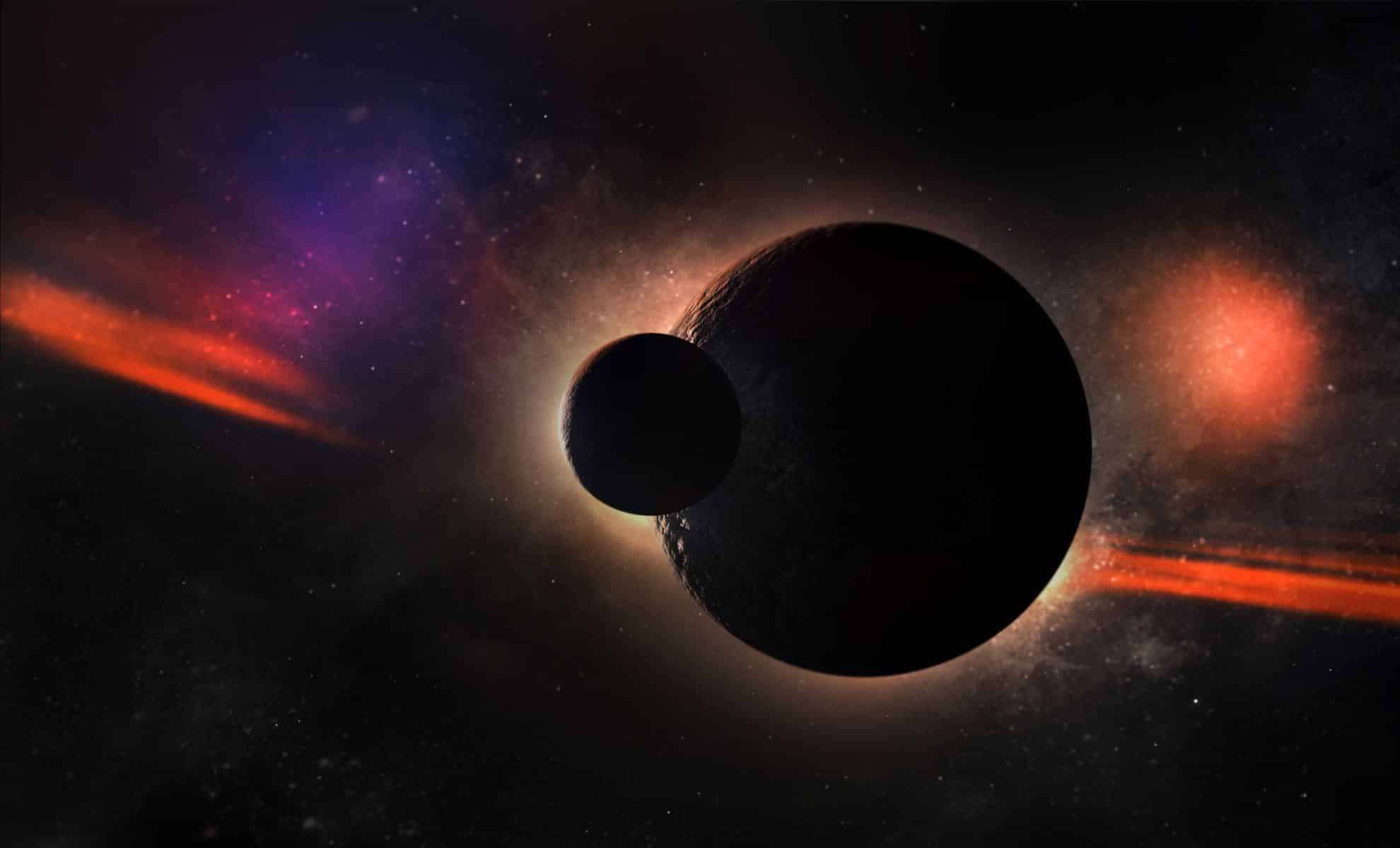
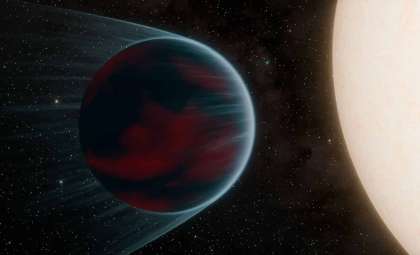
A potentially unknown Earth-sized planet, named Planet Y, might be drifting in the distant fringes of our solar system. A new paper on arXiv by Amir Siraj at Princeton and his team suggests that this hidden world could be causing subtle gravitational effects influencing the paths of icy bodies far beyond Neptune.
Clues Point to an Unseen World
Unlike the hypothesized Planet Nine or the largely disproven Planet X, Planet Y is thought to be smaller and nearer—possibly orbiting much closer than the massive Planet Nine, which is estimated to be about ten times Earth's mass and positioned roughly 300 times the Earth-Sun distance.
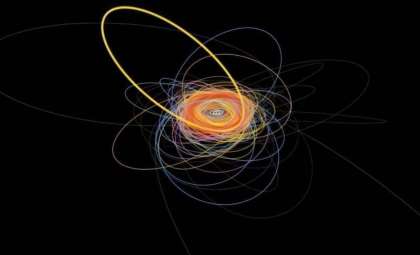
Scientists suspect this mysterious planet may be shaping the orbits within the Kuiper belt, a zone beyond Neptune packed with frozen objects including Pluto. Some of these bodies exhibit unusual tilts relative to the solar system's normally flat orbital plane—an irregularity that intrigued researchers. Siraj and collaborators propose, “if that warp is real, the simplest explanation is an undiscovered inclined planet.”

Subtle Orbital Effects in the Kuiper Belt
This gravitational irregularity manifests as about a 15-degree tilt in the orbits of certain Kuiper belt objects. According to Siraj, a planet with mass ranging between Mercury and Earth could be gently nudging these bodies, causing their orbits to wobble away from the primary solar system plane.
“Our detection is subtle but convincing,” Siraj remarked. He estimates a “2 to 4 percent chance of this being a coincidence,” comparing it to early indications for Planet Nine. Importantly, this new evidence stems from a unique type of orbital behavior, so it’s possible that both Planet Nine and Planet Y exist simultaneously.
Origins of This Elusive Planet
Jonti Horner, astronomer at the University of Southern Queensland, described the hypothesis as “plausible,” noting that much of the region beyond Neptune remains largely uncharted. “It highlights how little we truly understand about what exists out there,” he said. “Systematic exploration of the outer solar system beyond Pluto has only really begun in recent decades.”
Horner also suspects Planet Y likely did not form in its current distant orbit, but was instead ejected outward during the solar system’s early chaotic formation phase. “Gravitational interactions scattering it outward from a more central orbit seem more probable,” he explained.
Upcoming Observations Could Solve the Mystery
The search for Planet Y may receive a major advance thanks to the Vera C. Rubin Observatory, which will soon embark on a decade-long survey of the sky. This observatory will vastly improve the catalog of well-measured objects beyond Neptune, offering precise data essential for confirming or refuting Planet Y’s existence.
“Such detailed orbital measurements were unthinkable just 20 years ago, illustrating how far astronomical technology has progressed. We might be entering a period reminiscent of the 18th or 19th century when discovering new planets was common,” Siraj remarked.
He added that if Planet Y is real, the Rubin Observatory could detect it within the first few years of observation or at the very least gather stronger evidence of the orbital tilt linked to the planet’s gravitational pull.
- Categories:
- News







0 comments
Sign in to Comment