
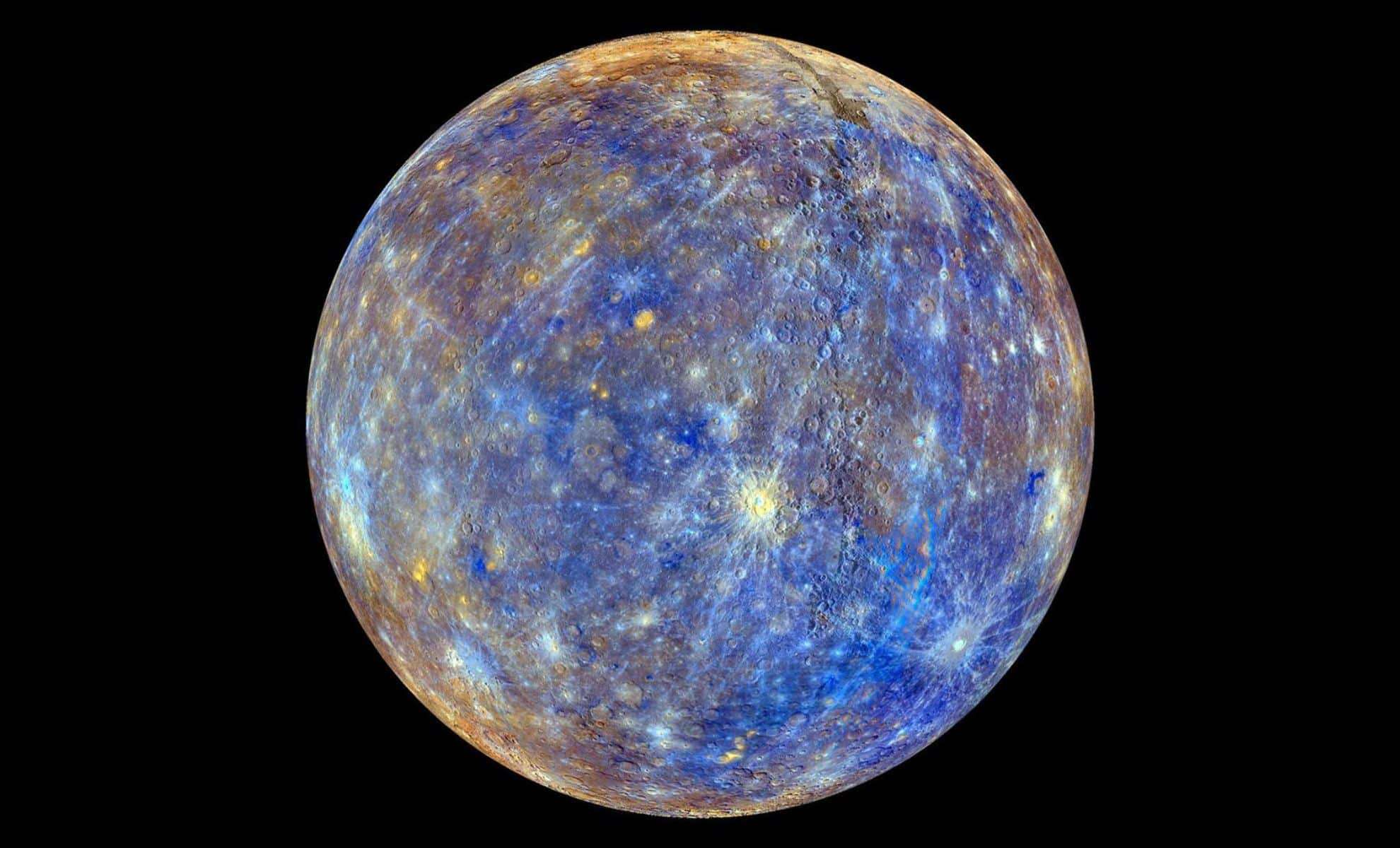
The innermost planet of our solar system, Mercury, may harbor a spectacular hidden layer beneath its rugged terrain—a diamond layer possibly as thick as 11 miles. A recent investigation led by planetary materials specialist Dr. Yanhao Lin and featured in Nature Communications proposes that intense pressures and temperatures inside Mercury’s mantle could have transformed carbon into a dense diamond shell encasing the planet’s metallic core.
From Carbon-Rich Beginnings to Diamond Transformation
Mercury’s surface is peppered with graphite, a carbon allotrope, hinting that its crust once rested atop a carbon-enriched magma ocean. As this ocean solidified, lighter carbon components floated upwards while denser carbon sank deep toward the interior.
When subjected to pressures beyond 5.5 gigapascals and temperatures nearing 3,600°F, this deep carbon likely crystallized into diamond at the interface between Mercury’s mantle and core.

“Years ago, I suspected Mercury’s exceptional carbon levels held important clues,” said Dr. Lin. “It pointed me toward an extraordinary process within the planet’s depths.”
Accounting for the presence of sulfur, which lowers the magma ocean’s melting point and promotes diamond genesis, their experiments demonstrated that diamond could form steadily enough to settle and accumulate, creating a shell as thick as 18 kilometers (11 miles) around the core.
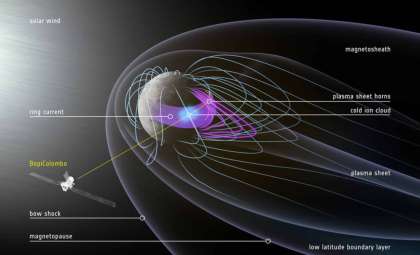
Explaining Mercury’s Strong Magnetic Field
Mercury’s robust magnetic field is unusual for a small planet and has puzzled researchers. Lin’s work suggests that the diamond layer’s excellent thermal conductivity enhances heat transfer from the core to the mantle, preserving the thermal differences needed to drive Mercury’s magnetic dynamo.
“Diamond’s ability to conduct heat efficiently fosters convective motions in the core necessary for maintaining the magnetic field,” Lin noted.
This distinct internal heat flow may set Mercury apart from other planets and could shed light on the magnetic characteristics of rocky worlds beyond our solar system.
Broader Implications for Planetary Evolution
A diamond layer within Mercury reveals more than just a geologic curiosity. Unlike Earth, Venus, and Mars, which have lost significant surface carbon through geological activities, Mercury seems to have preserved a concentrated carbon reservoir, making its chemistry uniquely distinct.
“This finding could also aid in understanding other terrestrial planets, particularly those with similar size and composition,” Lin added. The study opens the possibility that diamond-rich layers might exist on other planetary bodies or carbon-abundant asteroids that experienced analogous formative conditions.
- Categories:
- Space



0 comments
Sign in to Comment