
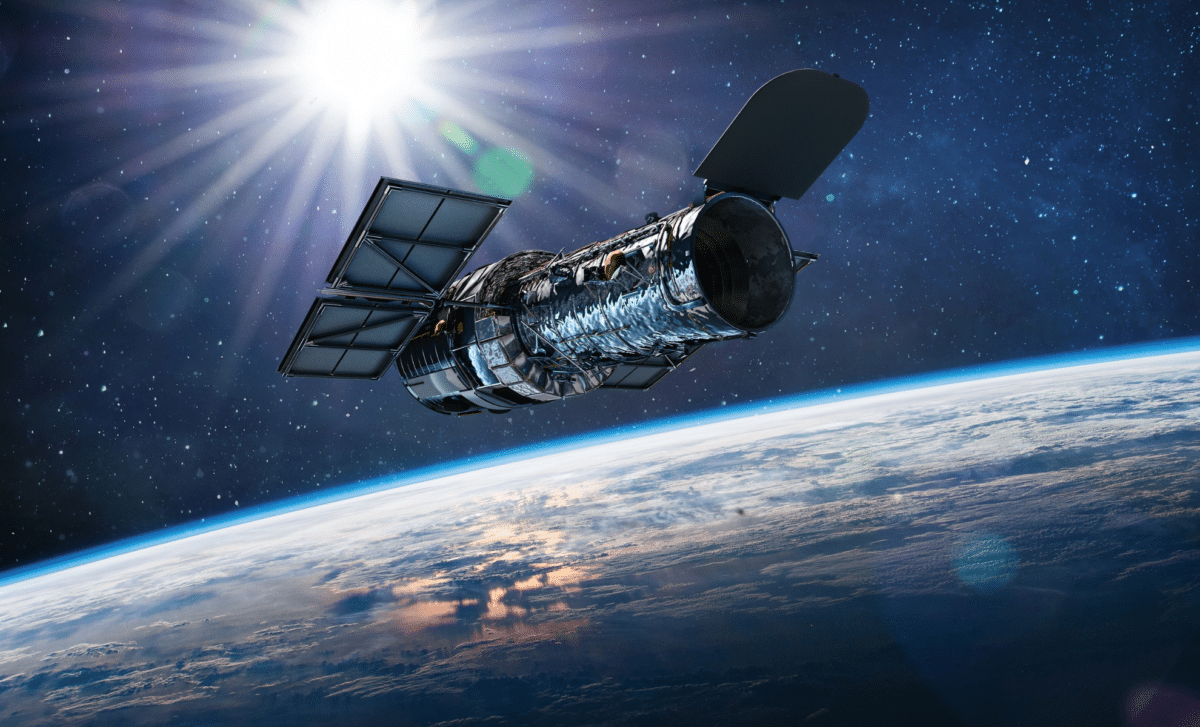
The Hubble Space Telescope has served as a vital asset for astronomers around the world for more than 30 years. Yet, new analyses indicate its orbit is deteriorating faster than experts had predicted, sparking worries about its impending fate. The Register reports that Hubble might plunge back into Earth's atmosphere as soon as 2028, as ongoing orbital decay lowers its altitude.
Rapid Orbital Decline Poses a Threat to Hubble’s Longevity
Since its 1990 deployment, Hubble has delivered breathtaking images and revolutionary scientific insights that have transformed astrophysics. However, the telescope now faces a critical moment in its operational lifespan. Astronomer Jonathan McDowell recently highlighted that Hubble's orbit is shrinking significantly, with its altitude dropping below 500 kilometers from the original orbit exceeding 600 kilometers. This descent has intensified partly due to heightened solar activity, which causes Earth's atmosphere to swell and increases drag on satellites like Hubble. Currently, no plans exist to perform a reboost of Hubble’s orbit.
The implications are serious because Hubble was never engineered for indefinite service. Earlier servicing missions by the Space Shuttle extended its lifespan, but such missions are no longer feasible. Since its last servicing in 2009, the telescope has relied solely on onboard systems. McDowell’s data suggests that without intervention, Hubble may succumb to atmospheric re-entry around 2028, with solar activity cycles only accelerating the process.

Because it's been a while, here is an update of my plot on the altitude of the Hubble Space Telescope versus time
— Jonathan McDowell (@planet4589.bsky.social) 25 février 2026 à 07:11
[image or embed]
Funding Cuts and Maintenance Challenges Hamper NASA’s Efforts
A significant factor worsening Hubble’s condition is dwindling financial support. Dr. John Grunsfeld, a former NASA astronaut and ex-associate administrator for NASA’s Science Mission Directorate, pointed out that Hubble’s budget has shrunk considerably over recent years. Speaking to The Register, he revealed, “We’re already down about 30 percent in funding for Hubble.” This cut has restricted the capacity to maintain and possibly extend Hubble’s operational life by boosting its orbit.
This budget shortfall reflects the broader financial trade-offs NASA faces, as focus shifts toward launching new missions rather than sustaining legacy projects like Hubble. Despite its ongoing contributions to science and the compelling images it still captures, the telescope is gradually losing support. Grunsfeld’s comment, “They’re just trying to whittle away at it,” highlights the frustration experienced by the mission’s team. This struggle signals a larger pattern of underinvestment in aging but highly productive NASA programs.
With ongoing upkeep becoming more costly and challenging, especially given newer assets such as the James Webb Space Telescope, NASA’s priority appears to be shifting away from Hubble’s continued care. Still, losing Hubble would be a significant setback for astronomy and our quest to understand the cosmos.
Solar Cycles Escalate Atmospheric Drag on Hubble
Increased solar activity plays a critical role in speeding up Hubble’s orbital decay. The intensified solar wind and radiation cause Earth's upper atmosphere to expand, which amplifies drag on satellites in low Earth orbit.
NASA has been vigilantly tracking these changes, but the natural solar cycles that drive atmospheric expansion are beyond human control. As the sun nears a peak in its activity around 2025, this will likely increase atmospheric density further, exerting more drag on Hubble. Despite its functionality, the telescope must contend with this growing challenge, casting uncertainty over its continued operations.
The trend indicates that Hubble’s orbit will keep degrading unless a future mission intervenes with a boost. If no such action occurs, Hubble will eventually re-enter the atmosphere and disintegrate. It is imperative NASA considers strategies to preserve Hubble’s scientific legacy, but with the decade progressing, time to act is running short for this iconic observatory.
- Categories:
- News









0 comments
Sign in to Comment