
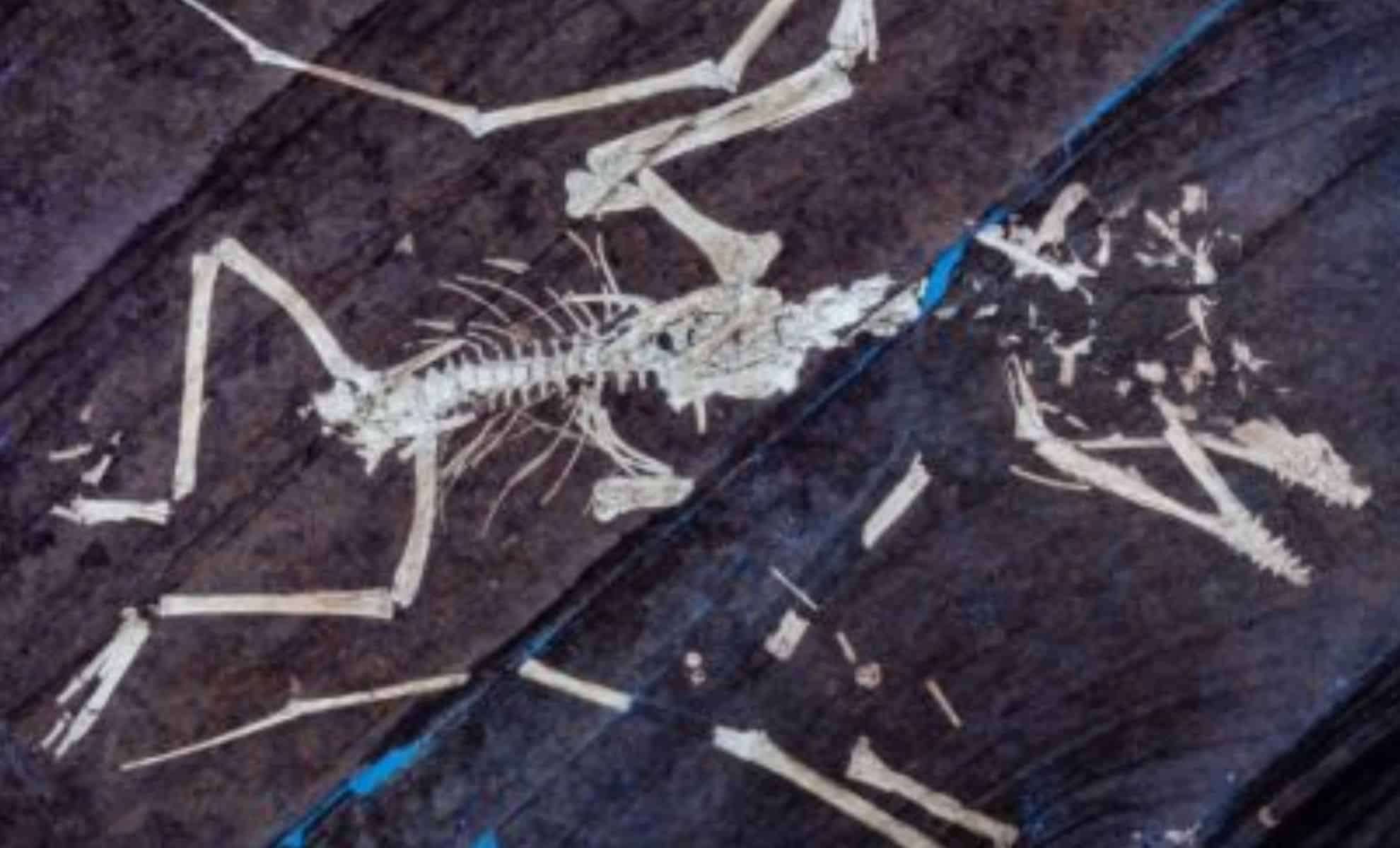
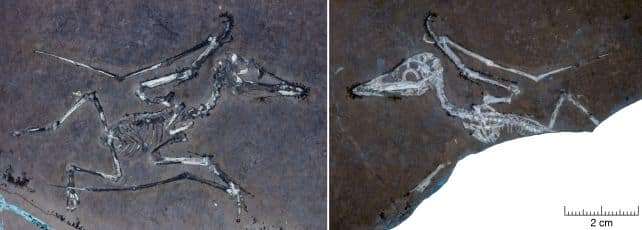
Nearly 150 million years ago, two delicate pterosaur hatchlings were caught in a powerful storm that shattered their fragile wings and hurled them into a lagoon located in present-day southern Germany. These tiny creatures, each no bigger than a mouse, were swiftly covered by fine sediment, preserving some of the most exceptionally complete juvenile fossils ever discovered. A recent paper published in Current Biology uncovers how these two specimens, referred to as Lucky I and Lucky II, provide key insight into a long-debated puzzle in paleontology.
Wing Damage Tells a Harrowing Story
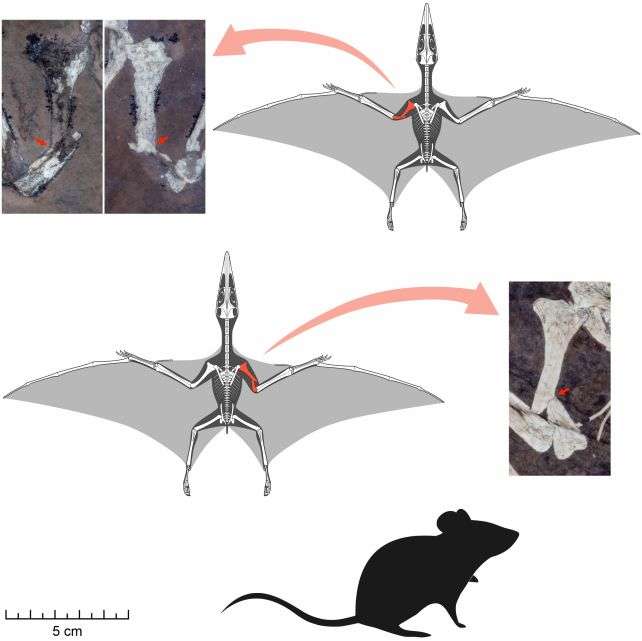
The fossils share a strikingly similar narrative etched into their bones. One shows a broken left humerus, the other a fractured right, each break twisting diagonally, indicative of torsion rather than a simple impact. Scientists drew comparisons between these injuries and those seen in the wings of contemporary birds and bats caught in intense winds. This strongly suggests that the hatchlings were airborne when violent gusts overwhelmed their strength.
The research, conducted by paleontologists including Robert S. H. Smyth and Dave Unwin from the University of Leicester, concludes that storm-force winds snapped the wing bones of these young pterosaurs, causing them to fall fatally into a muddy lagoon. The lack of any bone healing indicates the damage happened while they were alive, leading directly to their deaths.

The Lagoon’s Deadly Role
The hatchlings’ final environment was the Solnhofen Limestone, renowned for preserving fossils with extraordinary detail, from fragile insects to the famous Archaeopteryx. This area functioned like a natural trap: storms pushed hatchlings from nearby islands over the lagoon. Once their wings broke, the juveniles fell into the turbulent waters below. Larger, stronger adults could withstand these storms or escape, explaining why adult pterosaur fossils are much rarer at this site.
Victor Beccari, affiliated with the Bavarian State Collection for Palaeontology and Geology and not involved in the study, highlighted that such perfectly preserved fossils require "an ideal set of conditions." He remarked that the exceptional state of Lucky I and Lucky II captures not only their anatomy but also offers an unprecedented glimpse into injuries sustained in life, a rarity in pterosaur finds.
Cracking an Evolutionary Enigma
The abundance of juvenile fossils found at Solnhofen had long confused scientists, who once thought the ecosystem was dominated by diminutive species. This new research overturns that theory, revealing that preservation bias favors the remains of small young creatures. As Unwin described, the lagoon acted like a "Medusa effect," preserving fragile hatchlings completely while leaving almost no trace of adults.
Moreover, the findings enrich ongoing discussions regarding how soon after hatching pterosaurs could begin flying. The fracture evidence implies these hatchlings had some flight capability, even if brief, before the storm ultimately claimed their lives. This paints a vivid picture of a perilous early life where immediate flight was critical for survival, yet one unlucky crashing wind could abruptly end it all.
- Categories:
- News








0 comments
Sign in to Comment