
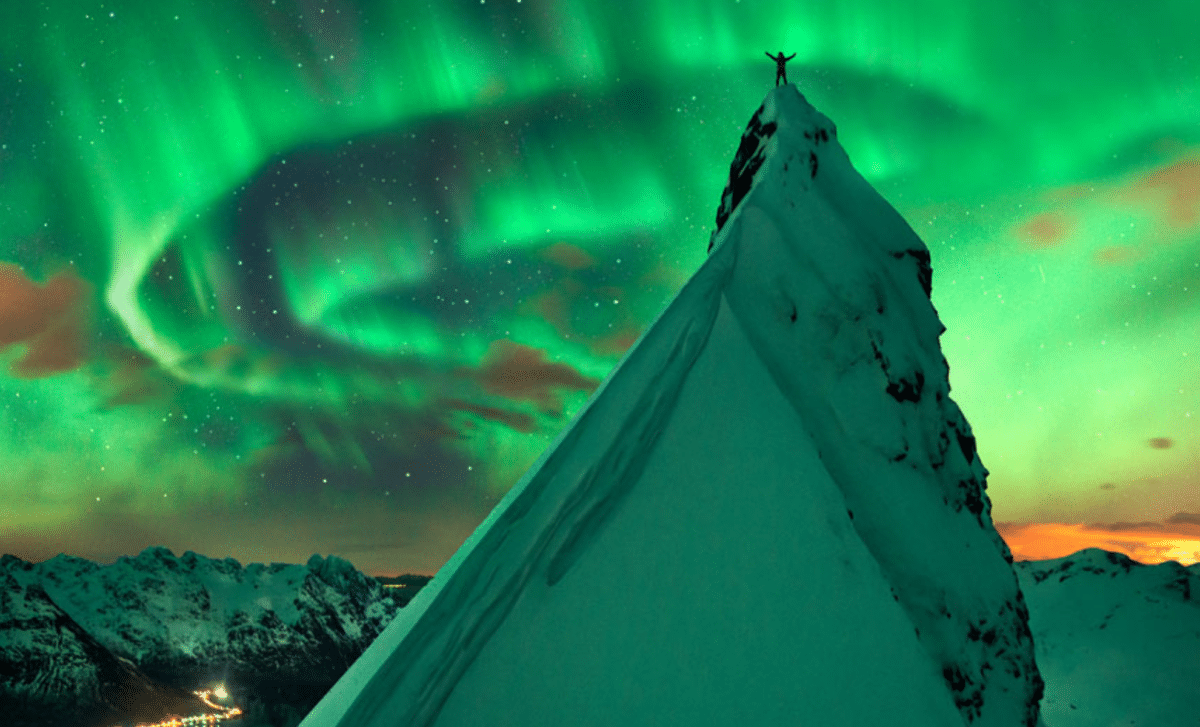
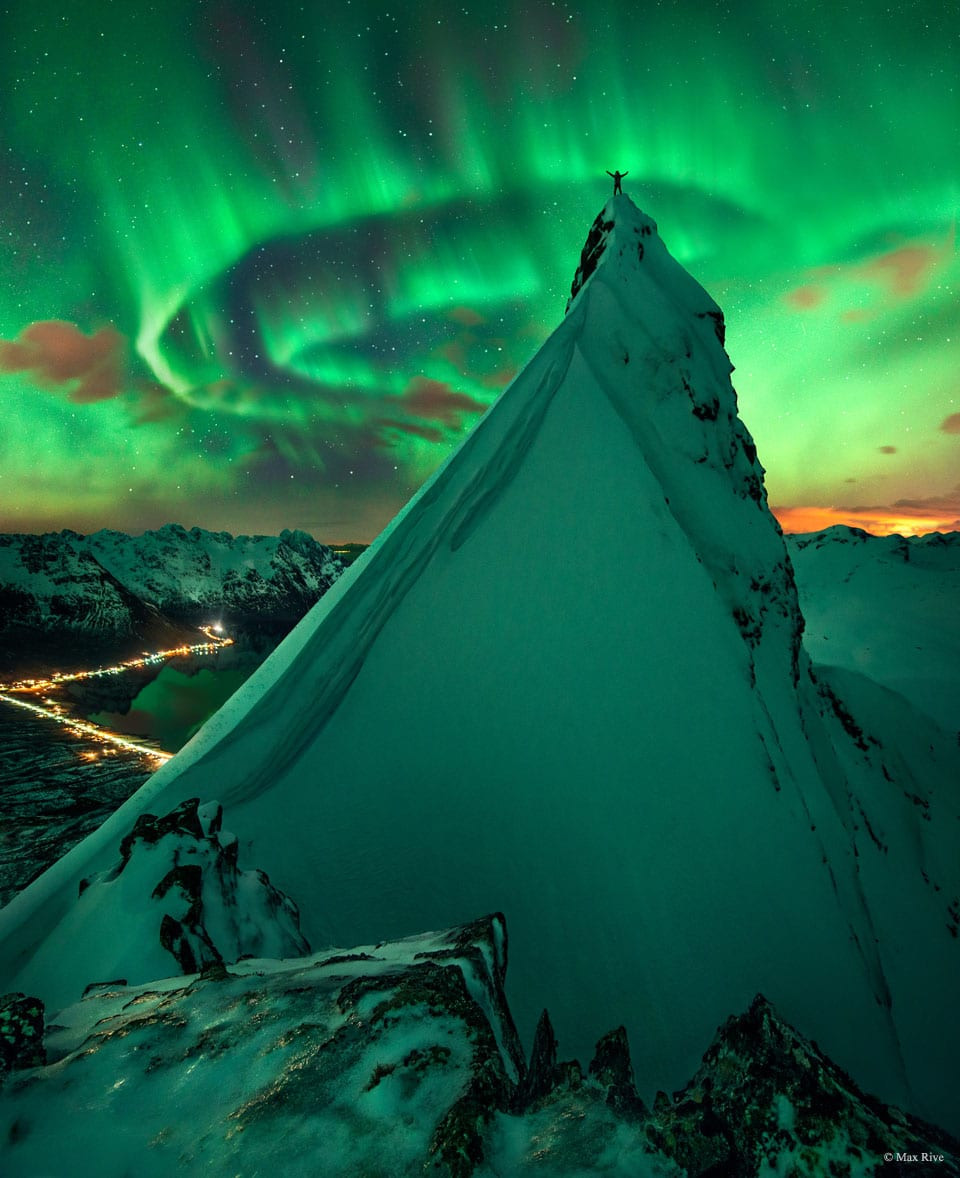
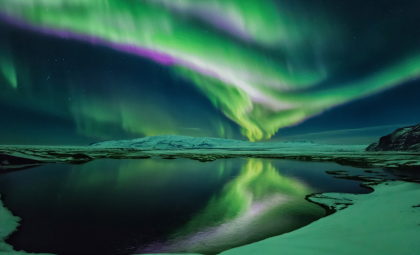
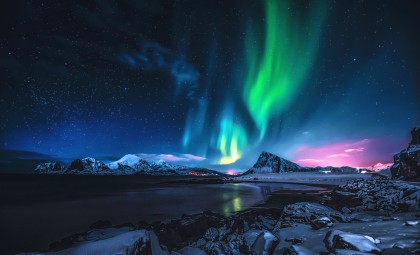
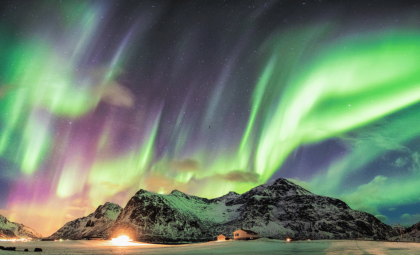
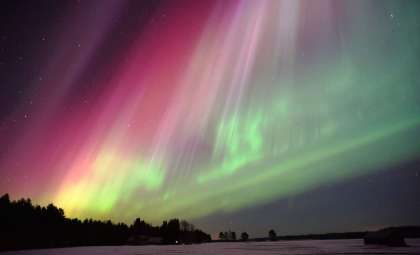
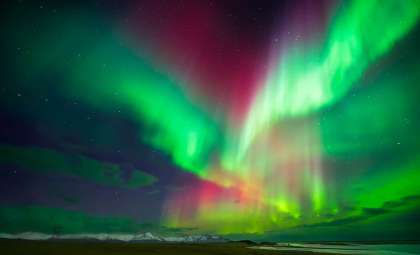
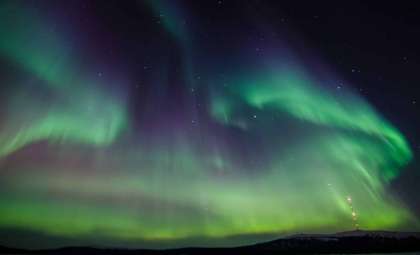
The enchanting display of auroras never fails to captivate with their vibrant hues and ethereal glows. Featured in the Astronomy Picture of the Day (APOD) on February 10, 2026, this extraordinary photo by Max Rive reveals a radiant aurora dancing above Norway’s Lofoten Islands.
Understanding the Science Behind Auroras
Commonly known as the Northern Lights in the northern hemisphere, auroras result from interactions between Earth’s magnetic field and solar wind. Charged particles emitted by the Sun collide with atmospheric atoms, triggering ionization that releases shimmering light. The colors vary depending on the gases involved: oxygen typically generates red and green glows, whereas nitrogen produces purple and blue shades.
The phenomenon of auroras is closely linked to solar activity cycles. During the Sun’s 11-year solar cycle, periods called solar maximum see an escalation in solar wind intensity, which enhances auroral intensity and frequency. The captivating aurora depicted in the APOD image was captured amidst such a peak, highlighting the direct influence of solar dynamics on these spectacular sky lights.

How Solar Maximum Drives Auroral Displays
The Sun’s magnetic activity cycles through minimums and maximums every 11 years. At solar maximum, magnetic poles flip, and the Sun’s surface shows increased sunspots, flares, and intensified solar wind flows. These surges disturb Earth's magnetosphere, generating geomagnetic storms that ignite auroras. Such conditions not only brighten auroras but also expand their visibility toward lower latitudes. The 2014 aurora captured by APOD occurred as the Sun approached this active phase, making it an ideal moment for witnessing vivid auroral shows.
The intensifying solar activity impacts more than just auroras, affecting satellite operations, electrical grids, and GPS accuracy. Continuous monitoring of solar behavior helps scientists forecast auroral events and prepare for potential technological disturbances.
The Art and Science of Photographing Auroras
Immortalizing an aurora like Max Rive's image demands patience, expertise, and precise timing. Waiting through multiple nights and coping with cloud cover, Rive’s perseverance paid off when clear skies finally unveiled a magnificent light display.
Captured from the peaks around Austnesfjorden near Svolvear on Norway’s Lofoten Islands, a location famed for dramatic scenery and optimal aurora viewing, the photo is a composite of three exposures skillfully merged to highlight the aurora’s brilliance.
Shooting auroras requires more than just pointing a camera skyward—unpredictable movement and weather factors mean photographers often invest days or weeks to seize the perfect moment, combining dedication with technical skill.
- Categories:
- News


0 comments
Sign in to Comment